
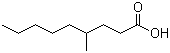
4-Methylnonanoic acid(CAS#45019-28-1)
| Hazard Symbols | C – Corrosive |
| Risk Codes | R34 – Causes burns R43 – May cause sensitization by skin contact R52/53 – Harmful to aquatic organisms, may cause long-term adverse effects in the aquatic environment. |
| Safety Description | S26 – In case of contact with eyes, rinse immediately with plenty of water and seek medical advice. S36/37/39 – Wear suitable protective clothing, gloves and eye/face protection. S45 – In case of accident or if you feel unwell, seek medical advice immediately (show the label whenever possible.) |
| UN IDs | UN 3265 8/PG 2 |
| WGK Germany | 2 |
| TSCA | Yes |
| Hazard Class | 8 |
| Packing Group | III |
Introduction
4-Methylnonanoic acid is an organic compound. The following is an introduction to the properties, uses, preparation, and safety information of 4-methylnonanoic acid:Properties:- Appearance: 4-Methylnonanoic acid is a white crystalline solid.- Solubility: 4-Methylnonanoic acid is poorly soluble in water but soluble in certain organic solvents.Uses:- Surfactant: 4-Methylnonanoic acid is commonly used as a detergent and surfactant and can be used in the preparation of various cleaning agents and detergents, such as laundry powder and dishwashing liquid.- Chemical intermediate: 4-Methylnonanoic acid can also be used as an intermediate in the synthesis of other organic compounds, such as dyes and fluorescent agents.Preparation:4-Methylnonanoic acid can be prepared through the acid-catalyzed reaction of n-heptaldehyde with methanol. The specific steps include the condensation of n-heptaldehyde with methanol under acidic conditions (e.g., sulfuric acid catalysis) to produce 4-methylnonanol, which is then oxidized to 4-methylnonanoic acid.Safety Information:- 4-Methylnonanoic acid is flammable; avoid contact with open flames or high temperatures.- Protective measures should be taken during use, such as wearing protective gloves, goggles, and protective clothing.- Avoid inhalation or contact with skin and eyes. In case of accidental contact, rinse immediately with water.- Store properly in a sealed container, avoiding contact with oxidizers and strong acids.- Follow relevant chemical safety operating procedures during use and storage.