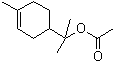

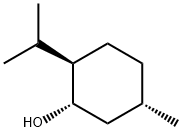
D-Menthol(CAS#15356-60-2)
| Hazard Symbols | Xi – Irritant |
| Risk Codes | R37/38 – Irritating to respiratory system and skin. R41 – Risk of serious damage to eyes |
| Safety Description | S26 – In case of contact with eyes, rinse immediately with plenty of water and seek medical advice. S39 – Wear eye / face protection. |
| UN IDs | UN1230 – class 3 – PG 2 – Methanol, solution |
| WGK Germany | 2 |
| RTECS | OT0700000 |
| TSCA | Yes |
| HS Code | 29061100 |
Introduction
Mandaril is a chemical substance, chemically named 3-(1H-Indol-3-yl)-2-methylacrylic acid. The following is a detailed introduction to Mandaril:Properties:Mandaril is a colorless crystal or white crystalline powder with a distinctive fragrance. It is soluble in ethanol, ether, and chloroform, but insoluble in water.Uses:Preparation Method:The preparation of Mandaril is relatively complex and generally involves chemical synthesis. One common synthesis method is through the Sechsgänger reaction of methyl peptides to synthesize the precursor of 3-(1H-Indol-3-yl)-2-methylacrylic acid into the target product.Safety Information:Mandaril is a chemical substance and should be used in accordance with relevant safety operating procedures, such as wearing appropriate personal protective equipment, including gloves and goggles. During handling or storage, it should be kept away from oxidizers, acids, and bases to avoid hazardous reactions.Mandaril is an irritant and should not come into direct contact with skin or eyes. If accidental contact occurs, rinse immediately with plenty of water and seek medical attention.The toxicity of Mandaril is not fully known, so it should be handled with caution and in accordance with relevant safety guidelines and regulations.Overall, safety measures should be observed when using and handling Mandaril to ensure personal and environmental safety. …