
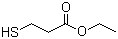
Ethyl 3-mercaptopropionate(CAS#5466-06-8)
| Hazard Symbols | Xi – Irritant |
| Risk Codes | 36/37/38 – Irritating to eyes, respiratory system and skin. |
| Safety Description | S26 – In case of contact with eyes, rinse immediately with plenty of water and seek medical advice. S36/37/39 – Wear suitable protective clothing, gloves and eye/face protection. |
| HS Code | 29309090 |
Introduction
3-Mercaptopropionic acid ethyl ester is an organic compound. The following is an introduction to its properties, uses, preparation, and safety information:Properties:Appearance: Colorless liquidOdor: Slight sulfur smellDensity: 1.030 g/cm³Solubility: Insoluble in water, soluble in organic solvents such as ethanol and ether.Uses:Chemical reagent: Commonly used in organic synthesis reactions as a sulfuration reagent, and can be used to synthesize organic compounds with special functions.Crosslinking agent: Can be used as a crosslinking agent for polymers to improve the physical properties and thermal stability of polymers.Preparation:Typically, 3-mercaptopropionic acid ethyl ester is prepared as follows:React ethyl acrylate with sodium thiocyanate to produce 3-mercaptopropionic acid ethyl ester. Reaction conditions and specific steps can be adjusted according to actual needs. It can also be synthesized by other methods.Safety Information:3-Mercaptopropionic acid ethyl ester is highly irritating and should be kept away from skin and eyes, and its vapors should not be inhaled.When handling, appropriate personal protective equipment such as laboratory gloves and goggles should be worn.Avoid contact with strong oxidizers and strong acids to prevent dangerous reactions.Proper safety measures should be followed during storage and handling, and good ventilation should be maintained.