
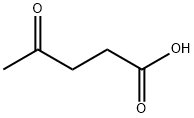
2-Octanol(CAS#123-96-6)
| Hazard Symbols | Xi – Irritant |
| Risk Codes | R36/37/38 – Irritating to eyes, respiratory system and skin. R36/38 – Irritating to eyes and skin. R52/53 – Harmful to aquatic organisms, may cause long-term adverse effects in the aquatic environment. |
| Safety Description | S24/25 – Avoid contact with skin and eyes. S36 – Wear suitable protective clothing. S26 – In case of contact with eyes, rinse immediately with plenty of water and seek medical advice. |
| UN IDs | UN 1987 |
| WGK Germany | 1 |
| RTECS | RH0795000 |
| TSCA | Yes |
| HS Code | 29051620 |
| Toxicity | LD50 orally in Rabbit: 6100 mg/kg |
Properties
A colorless, flammable, oily liquid with an aromatic odor, of low toxicity. Characteristics include: melting point -38°C, boiling point 178–179°C, flash point (open cup) 88°C, refractive index 1.4256, relative density 0.835, viscosity (20°C) 8.2 mPa·s, insoluble in water, soluble in alcohol, ether, and chloroform.
Preparation
Hydrolyze castor oil into mixed fatty acids and glycerol, recover the glycerol, then react ricinoleic acid with alkali to obtain its sodium salt. This sodium ricinoleate is cracked with a strong alkali at high temperature. The molecule undergoes self-oxidation, breaking the chain to produce 2-octanol and disodium sebacate. The water solution of the separated secondary octanol is evaporated to obtain the final product.
Uses
Esterification with phthalic anhydride produces dioctyl phthalate, which is a superior plasticizer for PVC plastics. 2-octanol is also used as a lubricant for synthetic fibers, a defoamer, and as a raw material for surfactants, flotation agents in coal mining, and pesticide emulsifiers. It can also be used as a solvent for fats and waxes.
Safety
Low toxicity, slightly bactericidal. Oral LD50 for mice is 1795 mg/kg. Slightly unpleasant odor. Production equipment should be enclosed to prevent leaks. Operators should wear protective gear. Packaged in 240L iron drums. Store in a cool, ventilated, and dry place. Pay attention to fire and sunlight protection. Handle and transport according to regulations for general flammable liquid chemicals.