bee’s wax(CAS#8012-89-3)
| WGK Germany | 3 |
| HS Code | 1521 90 99 |
| Toxicity | LD50 orally in Rabbit: > 5000 mg/kg |
Application
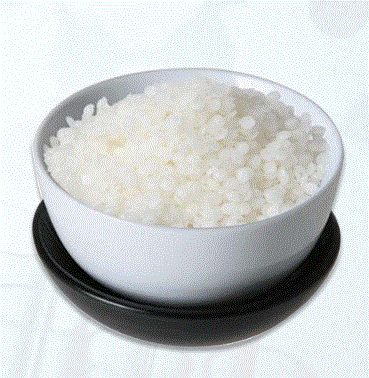
Beeswax (yellow: Cera flava; white: Cera alba; CAS 8012-89-3) is a natural wax secreted by honeybees (Apis mellifera), primarily composed of myricyl palmitate, cerotic acid and esters, as well as long-chain fatty acids, alcohols and hydrocarbons. It has a melting point of 61–65°C, is practically insoluble in water but soluble in organic solvents and oils, and is characterized by a faint, sweet, honey-like aroma. Refined bleached beeswax (white) and unbleached beeswax (yellow) are the two common commercial grades.
In the cosmetics and personal care industry, beeswax functions as a natural emulsifier, emollient, thickener, consistency factor, and film‑former. It is a standard ingredient in lipsticks, lip balms, face creams, lotions, mascaras, eye shadows, foundations, cold creams, depilatories and hair care products, where it improves texture, provides creamy consistency, enhances adhesion to skin, and creates a protective, non‑occlusive barrier against moisture loss without clogging pores. Its high water‑retention capacity makes it an excellent W/O emulsifier when combined with liquid paraffin or oils.
In the pharmaceutical industry, beeswax serves as a versatile pharmaceutical excipient. It is used as a stiffening agent (5–20%) in ointments, creams and cerates; as a polishing agent and glazing agent for sugar‑coated tablets; as a release agent and binder; and to adjust the melting point of suppositories. White beeswax microspheres and thin film coatings are used in sustained‑release oral dosage forms to retard drug absorption in the stomach and enable intestinal delivery. It also functions as an emulsion stabilizer, tablet coating agent, and filler for capsules. Pharmaceutical grades comply with Ph. Eur., USP and EP monographs.
In the food industry, beeswax is authorized as food additive E901 (INS 901). It is primarily used as a glazing and surface‑finishing agent on confectionery, chocolate, jellied sweets, nuts, coffee beans, fresh fruits (citrus, melons, apples, pears, peaches, pineapples), snacks, chewing gum, and food supplements. It also serves as a release agent, lubricant, and carrier for flavors. Beeswax is increasingly utilized in active and intelligent food packaging systems, edible oleogels, edible foams and tableware (spoons, straws, plates), and cheese‑ripening wraps due to its superhydrophobicity, plasticity, and excellent water‑vapor barrier properties.
Beyond these core markets, beeswax is used in candles, wood and leather finishes, furniture polishes, shoe polishes, wax paper, textile sizes and finishes, adhesive compounds, artificial fruit, anatomical specimens, and as a viscosifier in industrial formulations. It also exhibits natural antimicrobial, anti‑inflammatory and antioxidant properties, which are leveraged in nutraceuticals and wound‑healing preparations.