
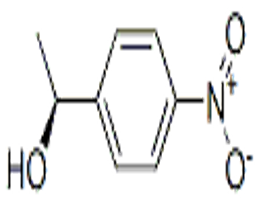
Benzenemethanol alpha-methyl-4-nitro- (alphaS)- (9CI)(CAS# 96156-72-8)
Benzenemethanol alpha-methyl-4-nitro- (alphaS)- (9CI)(CAS# 96156-72-8) Introduction
P-nitronitrophenyl ethanol is an organic compound with the enantiomer (S)-(-). The following is an introduction to the properties, uses, preparation methods and safety information of (S)-(-)-p-nitronitrophenyl ethanol:
Quality:
(S)-(-)-p-nitronitrophenyl ethanol is a colorless to yellowish solid substance with a peculiar odor. It is soluble in alcohol, ether and ketone solvents and slightly soluble in water.
Use:
(S)-(-)-p-nitronitrophenyl ethanol has a wide range of applications in the field of chemical synthesis. It is often used as a synthetic intermediate for chiral organic molecules.
Method:
The preparation method of (S)-(-)-p-nitronitrophenyl ethanol is complex and requires a multi-step synthesis process. The specific preparation method can be obtained by reacting the derivatives of p-nitrobenzoic acid with appropriate reagents, through reduction, esterification and halogenation reactions.
Safety Information:
It is an organic compound with a certain volatility and flammability, and direct contact with an open flame should be avoided.
Avoid inhalation, swallowing, and contact with skin and eyes when using, storing, and handling, and wear appropriate personal protective equipment.
When using or handling (S)-(-)-p-nitronitrophenyl ethanol, it should be operated in a well-ventilated area to avoid inhalation of its vapors.
Try to avoid mixing with other chemicals (such as strong acids, strong alkalis, etc.).
Application
(S)-(-)-1-(4-Nitrophenyl)ethanol (Benzenemethanol, α-methyl-4-nitro-, (αS)-, CAS 96156-72-8) is a high-purity enantiopure secondary alcohol widely used as a chiral building block in asymmetric synthesis. Its defined (S)-stereocenter enables the construction of enantiomerically enriched pharmaceutical intermediates, agrochemicals, and natural products. The nitro group serves as a versatile handle for reduction to the corresponding aniline, enabling further derivatization via amidation or heterocycle formation, while the secondary alcohol allows oxidation, esterification, and substitution reactions. This compound is employed in the synthesis of chiral ligands, enzyme inhibitors, and drug candidates targeting neurological and inflammatory disorders. It also serves as a probe for studying enzyme-catalyzed reactions in biological research and as a research chemical for developing new synthetic methodologies. Xinchem offers custom synthesis, custom chemical synthesis, and contract manufacturing of this high-purity chiral intermediate with flexible scaling from R&D to commercial tons. Contact us for a competitive quote and reliable global supply.