
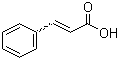
Cinnamic acid(CAS#621-82-9)
| Hazard Symbols | Xi – Irritant |
| Risk Codes | 36/37/38 – Irritating to eyes, respiratory system and skin. |
| Safety Description | S26 – In case of contact with eyes, rinse immediately with plenty of water and seek medical advice. S36 – Wear suitable protective clothing. S37/39 – Wear suitable gloves and eye/face protection |
| WGK Germany | 1 |
| RTECS | GD7850000 |
| TSCA | Yes |
| HS Code | 29163900 |
| Toxicity | LD50 orally in Rabbit: 2500 mg/kg LD50 dermal Rabbit > 5000 mg/kg |
Introduction
Trans-cinnamic acid is an organic compound. It exists in the form of white crystals or crystalline powder.Trans-cinnamic acid is solid at room temperature and can dissolve in alcohols, ethers, and acidic solvents, while being slightly soluble in water. It has a distinctive aromatic smell.Trans-cinnamic acid has various uses.The preparation of trans-cinnamic acid can be achieved through the reaction of benzaldehyde and acrylic acid. Common preparation methods include oxidation reactions, acid-catalyzed reactions, and base-catalyzed reactions, among others. For example, direct contact with skin and eyes should be avoided to prevent irritation and inflammation. Appropriate protective equipment, such as laboratory gloves and safety goggles, should be used during handling. Trans-cinnamic acid should be properly stored, avoiding contact with fire sources and oxidizing agents to prevent fire and explosion accidents. During use, operations should be carried out according to proper procedures and protocols to ensure safety.