Hydroxypropyl Distarch Phosphate (CAS#53124-00-8) – E1442 Food Thickener & Fluid Loss Reducer
1. Properties:
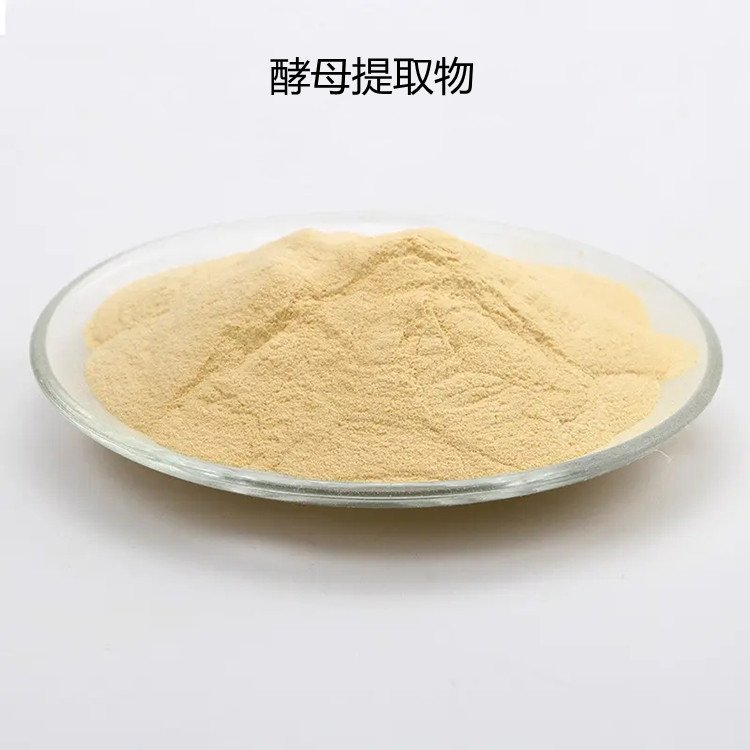
- Appearance and Physical Form: Hydroxypropyl distarch phosphate (E1442, CAS#53124-00-8) is supplied as a white to off‑white free‑flowing powder or granules. Pregelatinised grades are available as flakes, amorphous powder, or coarse particles for instant thickening applications. The product is odourless and tasteless, with a very slight characteristic starch odour when handled in bulk.
- Solubility: The product is insoluble in cold water (unless pregelatinised) and insoluble in ethanol (96%). Upon heating in water to typical processing temperatures, hydroxypropyl distarch phosphate forms a typical colloidal solution with viscous and thickening properties, producing a clear, transparent paste. Its improved cold water solubility relative to native starch arises from the dual modification, which reduces inter‑ and intra‑molecular hydrogen bonding.
- Chemical Properties: Hydroxypropyl distarch phosphate is a non‑ionic, cross‑linked (with phosphate groups) and etherified (with hydroxypropyl groups) dual‑modified food starch. It is obtained by the esterification of food starch with sodium trimetaphosphate or phosphorus oxychloride (cross‑linking) combined with etherification with propylene oxide (hydroxypropylation) in accordance with Good Manufacturing Practice (GMP). The product is chemically modified and stabilised – cross‑linked with phosphate groups and hydroxypropylated – making it a dual‑modified starch that exhibits the advantages of both hydroxypropyl starch and cross‑linked starch simultaneously.
- Dual Modification (Cross‑linking + Hydroxypropylation): Cross‑linking with phosphate groups strengthens the starch granule, improves acid, heat, and shear resistance, and increases viscosity stability. Hydroxypropylation reduces the gelatinization temperature, enhances paste clarity, improves freeze‑thaw stability, and reduces retrogradation. The combination gives E1442 the properties of both hydroxypropyl and cross‑linked starches simultaneously.
- Excellent Freeze‑Thaw Stability: Hydroxypropyl distarch phosphate withstands multiple freeze‑thaw cycles without syneresis (water separation). The cross‑linked network maintains granule integrity and prevents water release during repeated freezing and thawing, ensuring consistent texture in frozen products.
- High Paste Clarity: The introduction of hydroxypropyl groups reduces the turbidity of starch pastes, producing clear, translucent, or transparent gels that are suitable for fruit fillings, glazes, and sauces where clarity is a quality parameter.
- Acid, Heat, and Shear Resistance: Cross‑linking with phosphate groups enhances resistance to acidic conditions (stable and viscosity increases at pH >4, while hydroxypropyl starch alone loses viscosity at pH <4). It is also resistant to high‑temperature processing (e.g., retorting at 121°C) and mechanical shear, where native and singly modified starches degrade. Hydroxypropyl distarch phosphate exhibits viscosity increases during prolonged heat treatment (e.g., up to 30 minutes), whereas hydroxypropyl starch alone loses viscosity.
- Low Gelatinization Temperature: Dual modification lowers the pasting temperature to approximately 55–70°C, compared to 80–85°C for native starch. This allows the starch to hydrate and thicken at lower processing temperatures, conserving energy and preserving the flavour and colour of heat‑sensitive ingredients.
- Controlled Viscosity: Viscosity is inversely related to the degree of cross‑linking; higher cross‑linking yields lower initial viscosity but better processing resistance. The degree of cross‑linking can be precisely controlled to deliver targeted viscosity profiles for specific applications.
- Salt Tolerance: The viscosity of hydroxypropyl distarch phosphate increases with increasing salt concentration due to cross‑linking, whereas hydroxypropyl starch alone shows a decrease in viscosity at high salt concentrations (>4%).
- Digestibility and Caloric Value: Hydroxypropyl distarch phosphate is hydrolysed by intestinal enzymes and fermented by intestinal microbiota. No significant difference in caloric value has been observed compared to native starch.
- Film‑Forming Properties: The product exhibits enhanced water/oil absorption capacity and film‑forming properties, forming oxygen‑impermeable edible films suitable for coatings and biodegradable packaging applications.
- Regulatory Status: Hydroxypropyl distarch phosphate (E1442) is approved as a food additive with an ADI (Acceptable Daily Intake) of “not specified” – the highest safety classification established by the 26th JECFA (1982). It is listed as GRAS (Generally Recognized as Safe) by the US FDA under 21 CFR §172.892 and meets the purity criteria of Commission Regulation (EU) No 231/2012.
2. Applications:
Food & Beverage Industry (Primary – E1442 Thickener, Stabilizer, Binder, Emulsifier):
- Sauces, Dressings and Condiments (Ketchup, Mayonnaise, Salad Dressings, Soy Sauce, Chili Sauce, Tomato Sauce, Oyster Sauce, Barbecue Sauce, Seafood Gravy, Western‑Style Sauce): Hydroxypropyl distarch phosphate provides smooth, thickened surfaces without granular texture, delivering high viscosity, high transparency, and excellent glossiness. It offers excellent heat, acid, and shear stability for high‑temperature processing and long shelf‑life products. Products maintain a smooth, appealing appearance with good stability.
- Frozen Foods (Frozen Ready Meals, Frozen Vegetables in Sauce, Frozen Meat Pies, Frozen Desserts): The superior freeze‑thaw stability makes E1442 the preferred choice for frozen products. It prevents water separation (syneresis) after multiple freeze‑thaw cycles, preserving the creamy, homogenous texture of sauces and fillings, and is ideal for microwave noodles and long‑life noodles.
- Bakery Fillings and Glazes (Fruit Fillings, Jams, Marmalades, Jellies, Custard Powders): E1442 provides a smooth, glossy, high‑clarity texture to fruit fillings and bakery glazes. It prevents boil‑out during baking and maintains viscosity upon cooling, resulting in clean, attractive product presentation. It is widely used in jam, smear jam, and fruit butter.
- Canned Foods and Retorted Products (Soups, Sauces, Canned Vegetables, Canned Fish): Hydroxypropyl distarch phosphate provides excellent heat stability and acid resistance, preventing thinning and syneresis during high‑temperature retort processing at 121°C. It maintains consistent viscosity and texture throughout shelf life, even in low‑pH formulations such as tomato‑based products.
- Dairy Products and Frozen Desserts (Yoghurt, Drinking Yoghurt, Stirred Yoghurt, Lactic Beverages, Pudding, Cream, Custards): The starch improves texture, creaminess, and freeze‑thaw stability while preventing whey separation. It provides excellent viscosity control and water retention.
- Processed Meats and Meat Products (Sausages, Minced Meat, Canned Meat): Hydroxypropyl distarch phosphate functions as a binder and water‑holding agent in processed meat formulations, improving yield, texture, and juiciness while extending shelf life by reducing moisture loss.
- Baby Food and Weaning Formulae: E1442 is approved for use in infant formulas and baby food as a safe thickening agent, providing appropriate viscosity for safe swallowing and improved texture.
- Fruit Preparations and Concentrates (Fruit‑Based Desserts, Purees): E1442 provides controlled viscosity, exceptional water binding, good cold storage stability, and high clarity, making it ideal for fruit‑based fillings and preserves.
- Gluten‑Free and Clean‑Label Products: As a plant‑derived, non‑GMO, non‑allergenic ingredient, hydroxypropyl distarch phosphate is widely used in gluten‑free bakery and clean‑label formulations to replace the functional properties of gluten.
- Instant Noodles and Pasta: In noodles, E1442 reduces dehydration time, improves elasticity, provides a firm, springy texture, and is suitable for microwave and long‑life noodles.
- Instant Beverages and Desserts: Pregelatinised grades dissolve in cold water, providing instant thickening for powdered drink mixes and instant dessert formulations.
- Confectionery and Snacks: The starch functions as a bulking agent, binder, and texturiser in confectionery products, providing the desired chewiness, hardness, and mouthfeel.
Oil & Gas Industry – Drilling Fluids, Cementing & Well Construction (Primary Fluid Loss Control):
- Water‑Based Drilling Fluids (WBM) – Fluid Loss Reducer: Hydroxypropyl distarch phosphate is used as a high‑performance filtration control agent and viscosifier in water‑based drilling muds. It effectively reduces fluid loss into permeable formations by forming a thin, low‑permeability, deformable filter cake on the wellbore wall, protecting oil and gas layers.
- Drill‑In, Completion and Workover Fluids: Hydroxypropyl starch phosphate (HPSP) is employed as a gelling agent in treatment fluids for subterranean formation operations, providing sufficient viscosity to suspend particulates such as proppant. The thin, deformable filter cake is easily removed during well clean‑up, minimising formation damage. HPSP has also been developed as a self‑breakable gelling agent for completion operations.
- Cementing Slurries (Well Cementing): Hydroxypropyl distarch phosphate functions as a fluid loss control additive and rheology modifier in oil well cementing operations, reducing filtrate invasion into permeable formations, preventing gas migration, and ensuring a reliable cement sheath for long‑term zonal isolation. Its excellent salt tolerance and temperature resistance make it suitable for high‑salinity and high‑temperature wells.
- Rheology Stabilisation: E1442 helps maintain optimal viscosity, yield point, and gel strength under downhole conditions, improving cuttings suspension, hole cleaning, and preventing barite sag in weighted mud systems.
- Compatibility: The non‑ionic nature of hydroxypropyl distarch phosphate ensures compatibility with most drilling fluid additives including PAC, CMC, bentonite, barite, polymers, biocides, corrosion inhibitors, and scale inhibitors.
- Environmental Profile: As a biodegradable modified starch derived from renewable sources, it offers an environmentally friendly alternative to synthetic polymers in drilling operations.
Paper & Pulp Industry:
- Paper Coating Binder: Hydroxypropyl distarch phosphate functions as a binder and adhesive in paper coating formulations, enhancing surface strength, printability, gloss, and resistance to ink feathering.
- Surface Sizing Agent: In surface sizing, E1442 improves paper surface properties, including smoothness, stiffness, and water resistance.
- Pigment Dispersant: The starch aids in the uniform dispersion of pigments (clay, calcium carbonate, titanium dioxide) in coating colour formulations.
Textile Industry:
- Warp Sizing Agent: Hydroxypropyl distarch phosphate is used in textile warp sizing to improve yarn strength, reduce hairiness and breakage during weaving, and enhance fabric quality. Its good film‑forming properties and low viscosity build contribute to excellent size penetration.
- Textile Printing Thickener: It functions as a thickener in textile printing pastes, providing sharp pattern definition, uniform dye transfer, and easy wash‑off after printing.
- Fabric Finishing: E1442 imparts stiffness and body to finished fabrics.
Adhesives & Industrial Binders:
- Biodegradable Adhesives: As a renewable, biodegradable polymer, hydroxypropyl distarch phosphate is used as a base for environmentally friendly adhesives, including laminating adhesives, paper bag adhesives, wallpaper pastes, envelope glues, and food packaging adhesives. The esterified starch provides high viscosity stability.
- Packaging Adhesives: The starch functions as a binder in corrugated board adhesives and carton sealing glues.
Other Industrial Applications:
- Construction Materials: Hydroxypropyl distarch phosphate is used as a binder in gypsum board, wall putties, and dry‑mix mortar formulations, improving workability and adhesion.
- Water Treatment: The starch functions as a flocculant and coagulant aid in industrial wastewater treatment and sludge dewatering operations.
- Agrochemicals: E1442 is used as a binder, thickener, and suspending agent in pesticide and fertiliser formulations.
- Biodegradable Films & Packaging: The film‑forming properties of hydroxypropyl distarch phosphate are exploited in the production of biodegradable food packaging films, edible coatings for fruits and vegetables, and disposable cutlery.
- Pharmaceuticals: Hydroxypropyl distarch phosphate is used as a stabiliser in liquid medications and suspensions, as well as a filler, binder, and disintegrant in tablet and capsule manufacture.
- Cosmetics and Personal Care: E1442 is used as a thickening agent, bulking agent, viscosity controller, and emulsion stabiliser in cosmetic formulations, including facial cleansers, creams, lotions, and other personal care products. According to 2022 FDA VCRP data, Hydroxypropyl Starch Phosphate is reported to be used in 261 cosmetic products, 193 of which are rinse‑offs.
3. Preparation Method:
- Laboratory Method: Hydroxypropyl distarch phosphate can be synthesised in the laboratory by a two‑step process: (1) Cross‑linking: Native starch is reacted with sodium trimetaphosphate or phosphorus oxychloride under alkaline conditions (pH 8–11) at 40–60°C for 1–3 hours. (2) Hydroxypropylation: The cross‑linked starch is then treated with propylene oxide under alkaline conditions (pH 8–9) at 40–70°C for 4–8 hours. The dual‑modified product is neutralised, washed, dried at 50–60°C, and milled to the desired particle size.
- Industrial Process: Industrial production of high‑quality hydroxypropyl distarch phosphate (E1442) follows a large‑scale dual‑modification process:
- Slurry Preparation: Native starch (from potato, corn/waxy corn, tapioca, or wheat) is slurried in water with stirring.
- Alkaline Activation: Sodium hydroxide is added to raise the pH to approximately 8–11, activating the hydroxyl groups on the starch molecules.
- Cross‑linking: Sodium trimetaphosphate or phosphorus oxychloride is added to the activated starch slurry at controlled temperature (40–60°C) for 1–3 hours, forming phosphate ester cross‑links between starch chains.
- Hydroxypropylation: Propylene oxide is added to the cross‑linked starch under alkaline conditions (pH 8–9) at 40–70°C for 4–8 hours, attaching hydroxypropyl groups (–CH₂–CH(OH)–CH₃) to the starch hydroxyl groups via ether linkages.
- Neutralisation: After the desired degree of substitution is reached, the reaction mixture is neutralised with dilute hydrochloric or phosphoric acid to adjust the pH to 5.0–7.5.
- Purification: The crude product is washed repeatedly with water to remove unreacted propylene oxide, sodium trimetaphosphate, sodium chloride, and residual salts, followed by filtration or centrifugation.
- Optional Drying: The purified wet starch cake is dried in flash dryers, rotary dryers, or fluidised bed dryers to a moisture content of ≤15–21% (starch‑type dependent).
- Milling & Sieving: The dried product is milled to break up agglomerates and sieved to the desired particle size distribution (typically 80–200 mesh).
- Pregelatinisation (Optional): For pregelatinised grades, the product is cooked, dried, and milled to produce flakes, amorphous powder, or coarse particles that dissolve instantly in cold water.
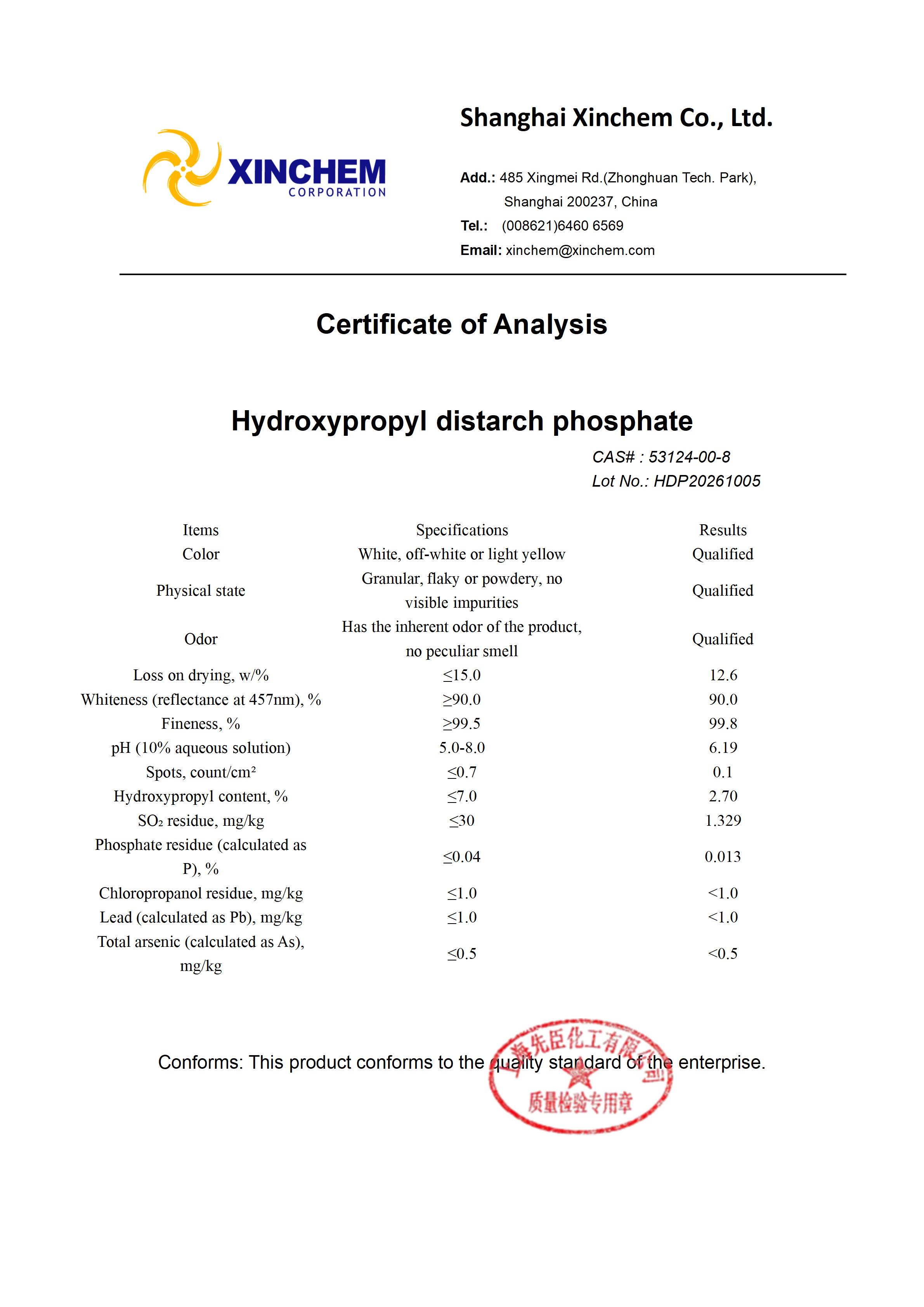
- Blending & Quality Control: Batches are blended for consistency. Key quality parameters include: hydroxypropyl groups (≤7.0% on dry basis, by titration), residual phosphate (≤0.14% or ≤0.04% as P), loss on drying (≤15–21%), pH (5.0–7.5), viscosity (by Brabender or Brookfield), whiteness (≥83%), particle size (≥90% passing 0.18 mm), sulfur dioxide (≤30 ppm), propylene chlorohydrin (≤1 mg/kg), heavy metals (Pb ≤1–2 mg/kg, As ≤1 mg/kg, Hg ≤0.1 mg/kg), and microbiological limits.
- Packaging: The finished product is packaged in 25 kg multi‑wall moisture‑proof bags with PE liners, 500–1000 kg FIBC (jumbo bags), or bulk containers for shipment.
4. Safety Information:
- Hazard Classification: Under GHS/CLP Regulation (EC) No 1272/2008, hydroxypropyl distarch phosphate is generally classified as a non‑hazardous or very low hazard product. Hazard pictograms are not required for most commercial grades. The substance is not classified as a PBT (Persistent, Bioaccumulative, Toxic) or vPvB (very Persistent, very Bioaccumulative) substance under current EU criteria. However, high dust concentrations may carry hazard statement H335 (May cause respiratory irritation). The product is non‑flammable and non‑explosive under standard conditions. UN number not assigned.
- Health Hazards:
- Inhalation: Inhalation of airborne starch dust may cause mild respiratory tract irritation, coughing, or sneezing in sensitive individuals. Prolonged exposure to high dust concentrations may cause respiratory discomfort.
- Skin Contact: Generally non‑irritating to intact skin. Prolonged or repeated contact may cause mild mechanical irritation or drying due to the abrasive effect of the powder.
- Eye Contact: May cause mild mechanical irritation due to dust particles.
- Ingestion: Low acute oral toxicity (LD₅₀ > 5,000 mg/kg). The product is approved as a food additive (E1442) and is generally regarded as safe (GRAS) for human consumption. Hydroxypropyl distarch phosphate is hydrolysed by intestinal enzymes and fermented by intestinal microbiota; it is not absorbed intact by the gut. Ingestion of large amounts may cause mild gastrointestinal discomfort (bloating, diarrhoea) due to its bulking effect.
- First Aid Measures:
- Eye Contact: Rinse cautiously with plenty of water for several minutes. Remove contact lenses if present and easy to do. If eye irritation persists, seek medical attention.
- Skin Contact: Wash skin with plenty of soap and water. Remove contaminated clothing. If skin irritation develops, seek medical advice.
- Inhalation: Move person to fresh air. Keep at rest in a position comfortable for breathing. If symptoms (coughing, throat irritation) persist, seek medical advice.
- Ingestion: Rinse mouth immediately. Do NOT induce vomiting. Drink water to dilute if conscious and able to swallow. Seek medical attention if a large amount is ingested or if symptoms develop.
- Personal Protective Equipment (PPE):
- Respiratory protection: Use a dust mask (N95 or P2 respirator) if airborne dust concentrations are present or when handling powder grades in poorly ventilated areas.
- Eye protection: Safety glasses or dust‑resistant safety goggles to prevent mechanical eye irritation from dust particles.
- Skin protection: Protective gloves (nitrile or neoprene) and protective clothing to minimise skin contact and dust exposure.
- General hygiene: Wash hands thoroughly after handling. Do not eat, drink, or smoke in work areas. Minimise dust generation and avoid breathing dust.
- Fire & Explosion Hazards: Hydroxypropyl distarch phosphate is not combustible but may burn if involved in a fire. Accumulated settled dust may form explosive concentrations in air when disturbed and dispersed, as with any organic dust. In case of fire, use water spray, foam, dry chemical powder, or CO₂ as extinguishing media. Thermal decomposition may produce irritating and toxic fumes including carbon monoxide (CO), carbon dioxide (CO₂), and low molecular weight organic compounds.
- Environmental Precautions: Hydroxypropyl distarch phosphate is a biodegradable modified natural polymer derived from renewable starch sources. The substance is not classified as hazardous to the aquatic environment under current EU criteria. However, avoid large‑scale release into natural water bodies, drains, or soil. Comply with local environmental regulations for disposal.
- Storage & Stability: Store in tightly closed, moisture‑proof containers in a cool, dry, well‑ventilated area away from direct sunlight, heat sources, and strong oxidising agents. Hydroxypropyl distarch phosphate is hygroscopic; exposure to atmospheric moisture leads to caking, lump formation, and reduced functional performance. Under recommended storage conditions (room temperature, low humidity, <30°C), the product has a shelf life of 24 months from the date of manufacture in sealed original containers. Upon opening, use the product as quickly as possible to prevent moisture regain.
- Regulatory Compliance: Hydroxypropyl distarch phosphate (E1442, CAS#53124-00-8) is listed on EINECS (EC 618‑556‑3), TSCA, DSL, AICS, NZIoC, ENCS, KECI, and other regional chemical inventories.
- US FDA Food Regulations: Hydroxypropyl distarch phosphate is affirmed as GRAS (Generally Recognized as Safe) under 21 CFR §172.892 for use as a direct food additive. It is listed in the FDA’s Substances Added to Food (EAFUS) inventory and recognised as a food contact substance under 21 CFR.
- EU Food Additive Status: Hydroxypropyl distarch phosphate is authorised as a food additive under the designation E1442 pursuant to Regulation (EC) No 1333/2008 and meets the purity criteria set out in Commission Regulation (EU) No 231/2012. It is approved for use in food products across the European Union with no maximum usage level (quantum satis), subject to GMP.
- JECFA (Joint FAO/WHO Expert Committee on Food Additives): E1442 has an ADI (Acceptable Daily Intake) of “not specified” – the highest safety category indicating no safety concern at any level of intake – established at the 26th JECFA (1982).
- China GB 2760: In China, hydroxypropyl distarch phosphate is approved under GB 2760 as food additive CNS 20.016. It may be used as a thickener in various food categories as needed, in accordance with GMP.
- Kosher / Halal / Allergen‑Free: Kosher, Halal, non‑GMO, gluten‑free, and allergen‑free certifications are available for food and pharmaceutical grades upon request.
- Cosmetic Use: According to 2022 FDA VCRP data, Hydroxypropyl Starch Phosphate is reported to be used in 261 cosmetic products, 193 of which are rinse‑offs, and is considered safe for use in cosmetic formulations as a bulking agent and viscosity controller.
- Oilfield Compliance: Hydroxypropyl distarch phosphate used as a drilling fluid additive may be subject to local environmental regulations for offshore and onshore discharge.
Write your message here and send it to us