
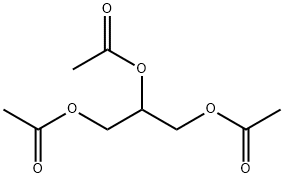
Isophorone oxide(CAS#10276-21-8)
| Hazard Symbols | Xn – Harmful |
| Risk Codes | R20/21/22 – Harmful by inhalation, in contact with skin and if swallowed. R40 – Limited evidence of a carcinogenic effect |
| Safety Description | S23 – Do not breathe vapour. S36 – Wear suitable protective clothing. |
| UN IDs | UN 1993 / PGIII |
| WGK Germany | 3 |
| HS Code | 29142990 |
Introduction
Isophorone oxide (also known as oxytetramethyl-tetrahydrothiophene) is an organic compound. The following is some information about the properties, uses, preparation, and safety of isophorone oxide:Properties:- Appearance: Pure isophorone oxide is a colorless to pale yellow solid, but commercially available samples are often darker and less pure.- Solubility: Isophorone oxide has good solubility in common organic solvents, but its solubility decreases with increasing temperature.- Stability: Isophorone oxide is relatively stable under dry, cool, and dark conditions but may decompose when exposed to light, oxygen, or moisture.Uses:- Isophorone oxide is commonly used as a catalyst in chemical reactions. It can catalyze the oxidation of various organic compounds, such as the oxidation of alkenes and thiols.Preparation:The preparation of isophorone oxide typically involves the following steps:- React isophorone with oxygen under appropriate conditions.- Then, isophorone oxide is obtained through distillation and other purification methods.Safety Information:- Isophorone oxide is an organic compound with potential hazards and risks. Necessary safety measures should be taken during use, including wearing protective gloves, goggles, and laboratory coats.- It may irritate the skin, eyes, and respiratory system.- Avoid inhaling isophorone oxide vapors and keep it away from open flames and high-temperature ignition sources.- Follow proper waste disposal procedures when storing and handling isophorone oxide.