
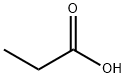
Propionic acid(CAS#79-09-4)
| Hazard Symbols | C – Corrosive |
| Risk Codes | R36/37/38 – Irritating to eyes, respiratory system and skin. R34 – Causes burns R10 – Flammable |
| Safety Description | S26 – In case of contact with eyes, rinse immediately with plenty of water and seek medical advice. S36 – Wear suitable protective clothing. S45 – In case of accident or if you feel unwell, seek medical advice immediately (show the label whenever possible.) S23 – Do not breathe vapour. |
| UN IDs | UN 3463 8/PG 2 |
| WGK Germany | 1 |
| RTECS | UE5950000 |
| TSCA | Yes |
| HS Code | 29155010 |
| Hazard Class | 8 |
| Packing Group | II |
| Toxicity | LD50 orally in rats: 4.29 g/kg (Smyth) |
Introduction
Propionic acid is an organic compound. The following provides an overview of the properties, uses, preparation methods, and safety information of propionic acid:Properties:Appearance: Colorless liquid with a pungent odor.Density: Approximately 1.05 g/mL.Solubility: Soluble in water, alcohol, and common solvents such as ether.Reactivity: Propionic acid can react with bases to form the corresponding propionate salts and undergo esterification with alcohols to form the corresponding propionate esters.Uses:Industrial: Propionic acid can be used as a solvent and is widely applied in paints, dyes, resins, and other industries.Preparation Methods:Via alkylation with bromine: React bromoethane with sodium hydroxide to produce bromopropane, which then reacts with sodium carbonate to form propionic acid.Via hydrolysis of acrylic acid: React acrylic acid with water to obtain hydroxypropionic acid through hydrolysis, which is then oxidized to produce propionic acid.Safety Information:Propionic acid is irritating; contact with skin can cause burning and redness, so direct skin contact should be avoided.Inhaling propionic acid vapors may irritate the respiratory tract, so good ventilation is required.Propionic acid is flammable; it should be kept away from open flames and high temperatures, and stored in a cool, ventilated place.When handling propionic acid, appropriate protective equipment such as gloves and goggles should be worn. Safety precautions should be observed during operation.