
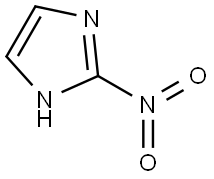
2-Nitroimidazole Azomycin(CAS#527-73-1)
1. Properties:
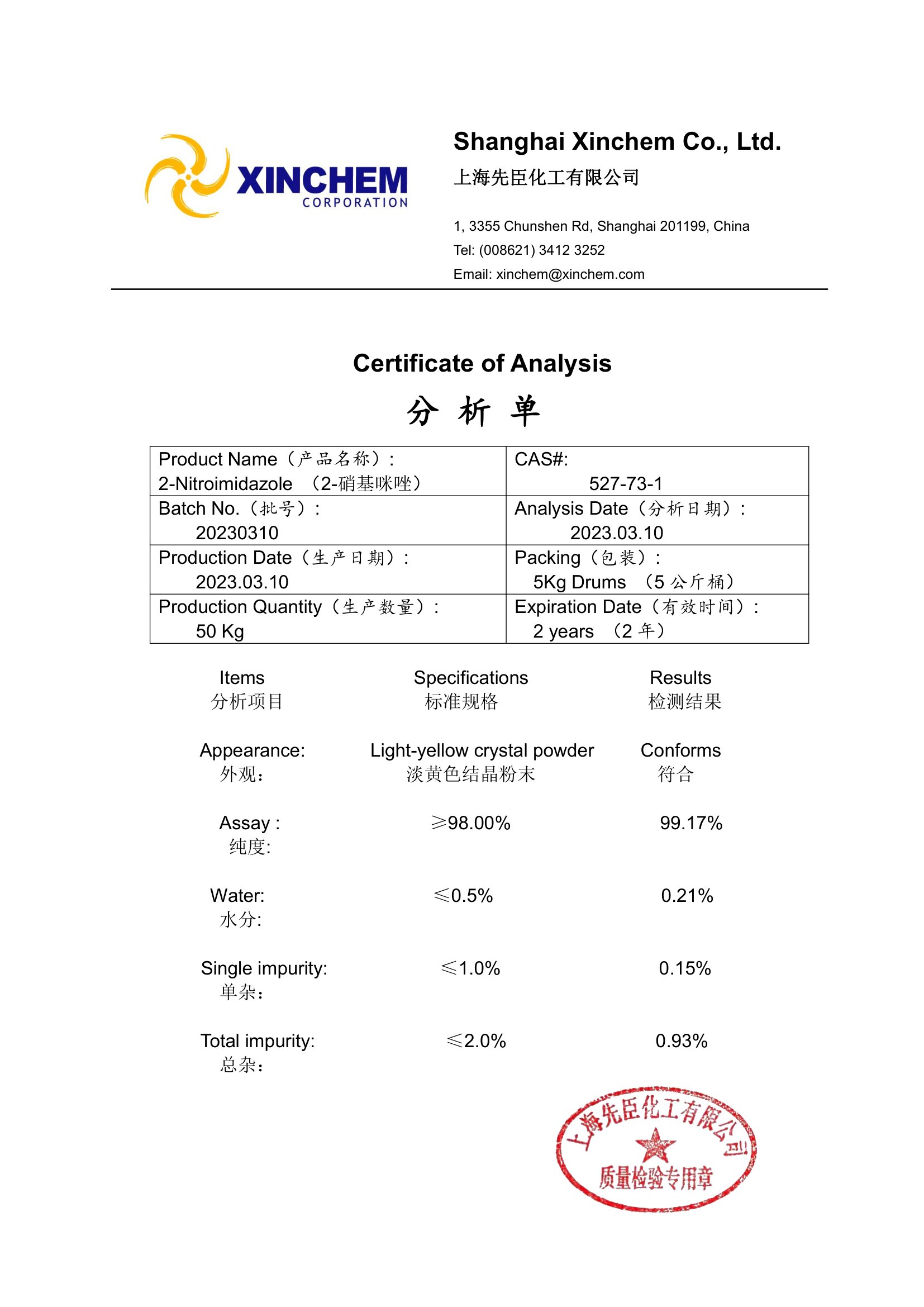
- Appearance and Physical Form: 2-Nitroimidazole is a yellow to orange powder (white to yellow powder/crystals in some grades ). It is available in high-purity grades (≥98.0%) for pharmaceutical R&D and biochemical research .
- Solubility: 2-Nitroimidazole is very soluble in water . It is soluble in acetone, methanol, ethanol , DMSO , and ammonium hydroxide (50 mg/mL) . It is insoluble in chloroform and ether .
- Chemical Properties: 2-Nitroimidazole (C₃H₃N₃O₂) is a natural nitroimidazole antibiotic originally isolated from Nocardia mesenterica and Streptomyces species . Its core structure, a 2-nitroimidazole ring, is central to its biological activity .
- Antimicrobial Activity: 2-Nitroimidazole (Azomycin) is active against Gram-positive bacteria (including mycobacteria), Gram-negative bacteria, and protozoa . It functions as an inhibitor of bacterial ribonucleotide reductase .
- Radiosensitizer: The compound is widely used in cancer research as a radiosensitizer, helping to increase the effectiveness of radiation therapy by making cancer cells more susceptible to radiation damage .
- Hypoxia Research: 2-Nitroimidazole is employed in studies related to tumor hypoxia (low oxygen conditions), providing insights into tumor behavior and potential therapeutic strategies . It is used to prepare nitroimidazole-substituted boronic acids as precursors for imaging hypoxic tissue .
- Versatile Building Block: The compound is used as a synthetic intermediate for the preparation of various derivatives, including radiolabeling precursors, radiosensitizers for estrogen receptor-rich tumors , and other bioactive molecules .
2. Applications:
Cancer Research & Radiotherapy:
- Radiosensitizer Development: 2-Nitroimidazole is a key building block for the synthesis of tumor radiosensitizers, such as misonidazole , which enhance the efficacy of radiation therapy in cancer treatment .
- Hypoxia Imaging Probes: The compound is used to prepare nitroimidazole-substituted boronic acids and other derivatives as precursors for imaging hypoxic tissue .
- Radiopharmaceutical Precursor: It serves as a synthetic intermediate for radiolabeling precursors and other radiopharmaceutical compounds .
Antimicrobial Research:
- Antibiotic Development: 2-Nitroimidazole (Azomycin) is a naturally occurring antibiotic with activity against anaerobic bacteria and protozoa . It serves as a lead compound for the development of new antimicrobial agents .
- Antibacterial Studies: The compound is used in research on bacterial ribonucleotide reductase inhibition and as a reference standard in antimicrobial susceptibility testing.
Chemical Synthesis & Pharmaceutical Research:
- Pharmaceutical Intermediate: 2-Nitroimidazole is a versatile building block for the synthesis of various pharmaceuticals, including nitroimidazole derivatives and other bioactive molecules .
- Biochemical Studies: The compound is utilized in various biochemical assays to investigate cellular responses to oxidative stress and to study cellular mechanisms .
- Drug Development: Its unique properties make it a candidate for developing new drugs, particularly in oncology and infectious disease fields .
3. Preparation Method:
- Chemical Synthesis: 2-Nitroimidazole can be synthesized by diazotizing 2-aminoimidazole or its acid addition salt . Another method involves the reaction of imidazole with nitric acid or other nitrating agents under controlled conditions. Azomycin was originally isolated from soil bacteria but can now be produced by chemical synthesis .
4. Safety Information:
- Hazard Classification: 2-Nitroimidazole is classified as a hazardous substance. Under GHS, it carries the following hazard statements: H301 (Toxic if swallowed) , H315 (Causes skin irritation) , and H319 (Causes serious eye irritation) . Hazard pictogram: GHS06. Signal word: Danger . UN Number: 2811 (Class 6.1, Packing Group III) . WGK Germany: 3 (very hazardous to water) .
- Health Hazards:
- Inhalation: Causes respiratory tract irritation . Can produce delayed pulmonary edema .
- Skin Contact: Causes skin irritation .
- Eye Contact: Causes eye irritation . May cause chemical conjunctivitis .
- Ingestion: Toxic if swallowed (H301). May cause gastrointestinal irritation with nausea, vomiting, and diarrhea .
- First Aid Measures:
- Eye Contact: Immediately flush eyes with plenty of water for at least 15 minutes, occasionally lifting the upper and lower eyelids. Get medical aid .
- Skin Contact: Flush skin with plenty of soap and water for at least 15 minutes while removing contaminated clothing and shoes. Wash clothing before reuse .
- Inhalation: Remove from exposure to fresh air immediately. If breathing is difficult, give oxygen. Get medical aid. DO NOT use mouth-to-mouth resuscitation .
- Ingestion: Do NOT induce vomiting. If conscious and alert, rinse mouth and drink 2-4 cupfuls of milk or water. Get medical aid .
- Personal Protective Equipment (PPE):
- Respiratory protection: Dust mask type N95 (US) .
- Eye protection: Eyeshields, faceshields .
- Skin protection: Gloves .
- General hygiene: Do not eat, drink, or smoke when using this product . Wash skin thoroughly after handling . Minimize dust generation and accumulation .
- Fire & Explosion Hazards: During a fire, irritating and highly toxic gases may be generated by thermal decomposition or combustion . Use water spray, dry chemical, foam, and carbon dioxide fire extinguisher .
- Storage & Stability: Store in a tightly closed container in a cool, dry, well-ventilated area away from incompatible substances . Recommended storage: room temperature in a cool and dark place (<15°C) , or 2–8°C for some grades . Under recommended storage conditions, 2-nitroimidazole has a shelf life of 12 to 24 months from the date of manufacture in sealed original containers.
- Regulatory Compliance: 2-Nitroimidazole (CAS#527-73-1) is listed on EINECS (208-425-5) , TSCA, DSL, and other regional chemical inventories. It is classified under HS code 2933299090 . This product is for R&D use only and is not intended for medicinal, household, or other uses. Always consult the Safety Data Sheet (SDS) and local regulations for complete safety, environmental, and regulatory information specific to each product grade and application jurisdiction.
Write your message here and send it to us