
2,4-Dihydroxy-6-methylpyrimidine(CAS#626-48-2)
1. Properties:
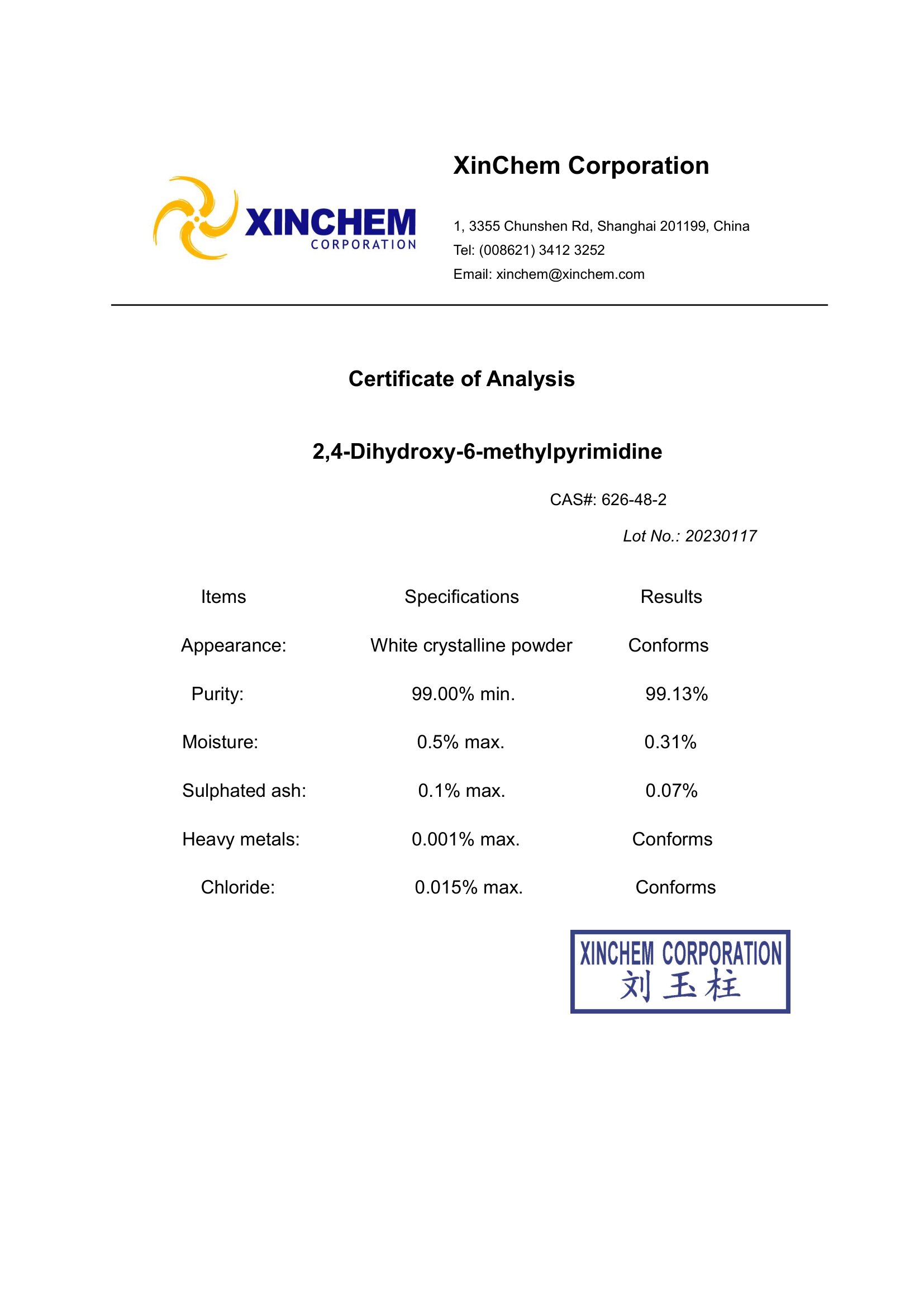
- Appearance and Physical Form: 2,4-Dihydroxy-6-methylpyrimidine (6-Methyluracil) is supplied as a white to off-white fine crystalline powder, odorless. It is available in various high-purity grades (≥95%–97% by HPLC) for pharmaceutical R&D, agrochemical synthesis, and organic chemistry applications.
- Solubility: The compound is slightly soluble in water (7 g/L at 22°C). It is slightly soluble in DMSO and methanol (heated, sonicated) and soluble in alkaline solutions. This solubility profile allows for versatile handling in various synthetic protocols.
- Chemical Properties: 2,4-Dihydroxy-6-methylpyrimidine (C₅H₆N₂O₂) is a pyrimidine derivative featuring a uracil core with a methyl group at the 6-position. It is a stable compound under normal temperatures and pressures, with a melting point of 318°C (dec.) and a pKa of 9.52 at 25°C.
- Versatile Building Block: As a key pyrimidine intermediate, it serves as a versatile building block for the synthesis of complex heterocyclic structures, pharmaceuticals, and agrochemicals. Its reactive sites allow for diverse functionalization and ring modifications.
- Pharmaceutical Intermediate: This compound is notably used as a precursor in the synthesis of cardiovascular drugs such as Dipyridamole. It also serves as an intermediate for the analgesic mepirizole and the feed additive orotic acid.
- Radioprotective Agent: 6-Methyluracil has demonstrated radioprotective effects in vivo, producing a pronounced protective effect in animal models.
- Antimetabolic Activity: Analogs of 2,4-dihydroxy-6-methylpyrimidine have been synthesized and tested for antimetabolic activity, including inhibition of dihydrofolic acid reductase.
2. Applications:
Pharmaceutical Industry:
- Cardiovascular Drug Synthesis: 2,4-Dihydroxy-6-methylpyrimidine is a key intermediate in the synthesis of Dipyridamole, a widely used cardiovascular drug.
- Analgesic Production: It serves as an intermediate in the production of the analgesic mepirizole.
- Radioprotective Agent Research: The compound is studied for its potential therapeutic effects as a radioprotective agent, promoting tissue repair.
- Pharmaceutical Intermediate: Used as a versatile building block for the synthesis of various pharmaceutical compounds and bioactive molecules.
Agrochemical Research:
- Herbicides and Fungicides: 2,4-Dihydroxy-6-methylpyrimidine is utilized in the production of herbicides and fungicides, where its structural features contribute to the efficacy and specificity of these agricultural chemicals.
- Agrochemical Intermediate: Serves as a building block for the development of crop protection agents.
Organic Synthesis & Chemical Research:
- Heterocyclic Synthesis: The compound is a key intermediate for constructing complex heterocyclic structures, including various pyrimidine derivatives.
- Fine Chemical Production: Its stability and reactivity make it an essential building block in fine chemical production.
- Research Reagent: Used in biochemical research and drug development, particularly in nucleic acid chemistry and metabolic pathway studies.
- Feed Additive Precursor: Serves as an intermediate for the feed additive orotic acid.
3. Preparation Method:
- Industrial Synthesis: 2,4-Dihydroxy-6-methylpyrimidine can be synthesized by the condensation of urea with ethyl acetoacetate, followed by cyclization. It can also be produced by the reaction of diketene with urea. Another synthetic route involves the reaction of 2-amino-4-methylpyrimidine with sodium hydroxide and hydrogen peroxide. The product is typically purified by recrystallization to achieve high purity (≥95%–97%).
4. Safety Information:
- Hazard Classification: 6-Methyluracil is classified as a hazardous substance with a signal word Warning. It carries the following hazard statements:
- H361: Suspected of damaging fertility or the unborn child.
- Hazard pictogram: GHS08.
- Hazard Codes: Xn.
- Risk Phrases: R62, R63 (Possible risk of impaired fertility / risk of harm to the unborn child).
- Safety Phrases: S36/37/39, S45, S36/37.
- WGK Germany: 3 (very hazardous to water).
- UN Number: 1759 (Corrosive solids, n.o.s.).
- Packing Group: II.
- RTECS: YR0700000.
- Health Hazards:
- Inhalation: May cause respiratory tract irritation.
- Skin Contact: May cause skin irritation.
- Eye Contact: May cause eye irritation.
- Ingestion: May cause gastrointestinal irritation with nausea, vomiting, and diarrhea.
- Reproductive Toxicity: Suspected of damaging fertility or the unborn child (H361).
- First Aid Measures:
- Eye Contact: Flush eyes with plenty of water for at least 15 minutes, occasionally lifting the upper and lower eyelids. Get medical aid immediately.
- Skin Contact: Flush skin with plenty of soap and water for at least 15 minutes while removing contaminated clothing and shoes. Wash clothing before reuse.
- Inhalation: Remove from exposure to fresh air immediately. If not breathing, give artificial respiration. If breathing is difficult, give oxygen. Get medical aid.
- Ingestion: Never give anything by mouth to an unconscious person. Get medical aid immediately. Do NOT induce vomiting. If conscious and alert, rinse mouth and drink 2-4 cupfuls of milk or water.
- Personal Protective Equipment (PPE):
- Respiratory protection: Use appropriate respiratory protection if ventilation is inadequate. Avoid breathing dust, vapors, mist, or gas.
- Eye protection: Wear safety goggles or chemical splash goggles.
- Skin protection: Wear chemical-resistant gloves and protective clothing.
- General hygiene: Do not eat, drink, or smoke when using this product. Wash thoroughly after handling. Use only in a well-ventilated area.
- Fire & Explosion Hazards: 6-Methyluracil is non-combustible and does not burn under typical fire conditions (NFPA Fire: 0). In case of fire, use water spray, alcohol-resistant foam, dry chemical, or carbon dioxide as extinguishing media. Hazardous decomposition products may include carbon oxides and nitrogen oxides (NOx).
- Environmental Precautions: 2,4-Dihydroxy-6-methylpyrimidine is slightly hazardous to water (WGK 3). Avoid large-scale release into natural water bodies, drains, or soil. Do not allow product to reach groundwater, water courses, or sewage systems.
- Storage & Stability: Store in tightly closed containers in a cool, dry, well-ventilated area away from incompatible substances. Keep container closed when not in use. Store under inert atmosphere at room temperature. Under recommended storage conditions, 2,4-dihydroxy-6-methylpyrimidine has a shelf life of 12 to 24 months from the date of manufacture in sealed original containers.
- Regulatory Compliance: 2,4-Dihydroxy-6-methylpyrimidine (CAS#626-48-2) is listed on EINECS (210-949-4), TSCA (Yes), DSL, and other regional chemical inventories. This product is for R&D use only and is not intended for medicinal, household, or other uses. Always consult the Safety Data Sheet (SDS) and local regulations for complete safety, environmental, and regulatory information specific to each product grade and application jurisdiction.
Write your message here and send it to us