
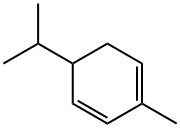
ALPHA-PHELLANDRENE(CAS#99-83-2)
| Risk Codes | R10 - Flammable R22 - Harmful if swallowed R36/37/38 - Irritating to eyes, respiratory system and skin. R43 - May cause sensitization by skin contact |
| Safety Description | S16 - Keep away from sources of ignition. S26 - In case of contact with eyes, rinse immediately with plenty of water and seek medical advice. S36/37 - Wear suitable protective clothing and gloves. |
| UN IDs | UN 2319 3/PG 3 |
| WGK Germany | 3 |
| RTECS | OS8080000 |
| HS Code | 3301 90 10 |
| Hazard Class | 3.2 |
| Packing Group | III |
| Toxicity | LD50 orally in Rabbit: 5700 mg/kg |
ALPHA-PHELLANDRENE(CAS#99-83-2)
nature
Celerene is an organic compound. It is a colorless to pale yellow oily liquid with a unique aroma. Celerene is mainly found in vegetables and fruits, such as celery, parsley, scallions, and citrus fruits. The following are several important properties of water celery:
High volatility: Celerene has high volatility and can quickly emit a rich aroma.
High thermal stability: Water celery can also maintain relative stability at high temperatures and is not easily decomposed.
Polarity: Celerene is a non-polar solvent that is almost insoluble in water, but can be dissolved in organic solvents such as alcohols, ethers, etc.
Biological activity: Water celery has certain biological activities, such as antibacterial and anti-inflammatory effects.
security information
Water celery is usually safe when consumed in moderation, but excessive intake may cause some adverse reactions.
According to research, water celery can have irritating effects on the human body, which may lead to skin sensitivity, eye irritation, etc. Some people may be allergic to carvacrol and experience allergic reactions such as skin itching, erythema, etc.
According to animal experimental studies, high doses of carvacrol may have certain toxic effects on the liver. The applicability of these experimental results in the human body still needs further research.
Application and synthesis method
Celerene is a natural organic compound commonly found in plants of the Apiaceae family, such as Guangdong water celery and water celery.
There are two main methods for synthesizing carvacrol: natural extraction and synthetic chemical methods. Natural extraction is the process of extracting and purifying carvacrol from plants in the family Apiaceae. The synthetic chemistry method is to synthesize carvacene through organic synthetic chemical reactions, among which the most commonly used method is the intermolecular halogenation and dehydration reaction of olefins.
It can be used in sauces, stews, and seasonings to give food a unique aroma and taste.
Application
Alpha-phellandrene (p-Mentha-1,5-diene, FEMA 2856, CAS 99-83-2) is a naturally occurring cyclic monoterpene used as a flavoring and fragrance ingredient. It imparts a fresh, peppery, citrus-lime, minty, and slightly green aroma with black pepper-like nuances. As a flavor additive, it enhances citrus, mint, and herbal notes in beverages, confectionery, baked goods, and oral care products. In perfumery, it contributes bright top notes and fresh, green accords to fine fragrances, cosmetics, soaps, detergents, and household cleaners. Beyond its sensory applications, alpha-phellandrene exhibits documented antimicrobial, anti-inflammatory, insecticidal, analgesic, and anticancer properties, with potential use as a biopesticide, antitumoral agent, and pharmaceutical candidate. It also undergoes [4+2] cycloaddition to form chiral ligands for rhodium-catalyzed asymmetric synthesis. Xinchem offers custom synthesis, custom chemical synthesis, and contract manufacturing of high-purity alpha-phellandrene with flexible scaling from R&D to commercial tons. Contact us for a competitive quote and reliable global supply.