
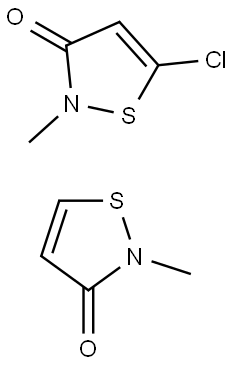
CMI/MI Mixture Kathon(CAS#55965-84-9)–Broad‑Spectrum Preservative & Biocide
1. Properties:
- Appearance and Physical Form: CMIT/MIT mixture (Kathon) is supplied as a colourless to pale yellow or amber transparent liquid, with an active content of 1.5%, 3.0% or 14% (w/w) depending on the commercial grade. The product is formulated in an aqueous matrix containing magnesium salts as stabilisers and is entirely miscible with water for ease of handling at any stage of manufacture.
- Solubility: The mixture is completely miscible with water, lower alcohols and glycols, and has low solubility in hydrocarbon solvents. Its excellent water solubility ensures homogeneous distribution in aqueous formulations and facilitates easy incorporation into industrial processes.
- Chemical Properties: CMIT/MIT is a non‑oxidising, halogenated heterocyclic biocide belonging to the isothiazolinone class of preservatives. It comprises two active ingredients in a nominal 3:1 weight ratio: 5‑chloro‑2‑methyl‑4‑isothiazolin‑3‑one (CMIT, CAS 26172-55-4) and 2‑methyl‑4‑isothiazolin‑3‑one (MIT, CAS 2682-20-4).
- Mechanism of Action: CMIT and MIT contain an electrophilic sulfur moiety that rapidly oxidises thiol (‑SH) groups in essential enzymes and proteins of microbial cell walls. By disrupting thiol‑containing enzymes, the mixture irreversibly inhibits cellular respiration and energy metabolism, leading to rapid cell death. This mode of action is non‑oxidative and highly effective against a broad spectrum of microorganisms.
- Antimicrobial Efficacy: The mixture demonstrates strong bactericidal, fungicidal, algaecidal and slimicidal activity against Gram‑positive bacteria (e.g., S. aureus), Gram‑negative bacteria (e.g., E. coli, Pseudomonas aeruginosa), yeasts (e.g., C. albicans), moulds (e.g., A. niger) and algae. MIC values range from 10–200 mg/L depending on the target microorganism. The dual‑active composition ensures broad‑spectrum coverage and prevents the development of microbial resistance.
- Stability: The mixture is stable across a wide pH range of 2–9, with optimum stability in neutral to weakly acidic conditions. It is compatible with chlorine, scale inhibitors, dispersants and most cationic, anionic and non‑ionic surfactants. Stability decreases significantly under strongly alkaline conditions (pH > 9) and in the presence of strong nucleophiles (e.g., amines, thiols). The product is heat‑sensitive and should not be subjected to prolonged high‑temperature storage.
- Environmental Profile: Kathon is rapidly biodegradable at environmentally relevant concentrations, does not bioaccumulate and has low adsorption potential to soil. It does not impart colour or odour to finished products, even at elevated use levels.
- Low‑Dose Efficacy: The mixture is effective at remarkably low concentrations—typically 0.05–0.15% (500–1500 ppm) of the commercial product, which translates to just 6–22.5 ppm of active isothiazolinones in the final formulation. This low dosage minimises formulation impact while delivering persistent antimicrobial protection.
2. Applications:
Cosmetics & Personal Care (Primary – Rinse‑Off Formulations):
- Shampoos, Conditioners, Body Washes & Liquid Hand Soaps: CMIT/MIT mixture is widely used as a rinse‑off preservative in hair and skin care products. The 3:1 active ratio (CMIT:MIT) provides outstanding antimicrobial activity against Gram‑positive and Gram‑negative bacteria, yeasts and moulds across the typical cosmetic pH range. Cosmetic‑grade formulations (e.g., Kathon® CG) are rapidly biodegradable, do not impart colour or odour, and have a strong environmental acceptability profile. A single preservative system handles the full spectrum of organisms, simplifying formulation and reducing ingredient costs.
- In‑Can Preservation: Personal care and household products require protection from microbial spoilage throughout their shelf life. CMIT/MIT performs as an in‑can preservative in rinse‑off products such as liquid soaps, shower gels, bubble baths and conditioning rinses at typical use levels of 0.05–0.15%(供应的产品).
- Leave‑On Restrictions: Due to the skin sensitisation potential of CMIT, the mixture is restricted to rinse‑off cosmetic products in most major regulatory jurisdictions.
Industrial & Institutional Water Treatment:
- Cooling Water Systems (Petrochemical, Power Plants, Fertiliser Plants): CMIT/MIT is widely used as a non‑oxidising biocide and algaecide in industrial circulating cooling water systems, evaporative condensers and heat exchangers. It controls biofouling, slime‑forming bacteria, algae, fungi and sulphate‑reducing bacteria (SRB) at very low concentrations. Recommended usage: dilute to a 1.5% aqueous solution and add 80–100 ppm once or twice per week depending on microbial growth.
- Oilfield Water Injection & Hydraulic Fracturing: The mixture is used to control SRB and iron bacteria in oilfield waterflood injection wells, produced water systems and fracturing fluids, preventing reservoir souring, hydrogen sulphide (H₂S) generation and microbiologically influenced corrosion (MIC). It is effective against both planktonic and biofilm‑associated microorganisms.
- Reverse Osmosis (RO) Pretreatment: CMIT/MIT is applied in off‑line and on‑line RO system preservation at 50–120 ppm active isothiazoline solution with exposure times of 5–6 hours to prevent biofouling on membrane surfaces.
- Wastewater Treatment: The mixture functions as a biocide and slimicide in municipal and industrial wastewater treatment facilities, controlling biofouling in pipelines, pumps and aeration basins.
Pulp & Paper Industry:
- Paper Mill Slimicide: CMIT/MIT is effective in controlling slime‑forming bacteria in paper machine white water systems, pulp washing, screening, stock preparation and effluent treatment. It prevents sheet defects, reduces downtime and improves paper machine efficiency. Typical dosage rates range from 80–150 ppm of 1.5% active solution depending on microbial loading.
- Paper Coatings and Additives: The mixture prevents microbial spoilage of water‑based pigment pastes, coatings and paper additives during storage and application.
Paints, Coatings & Adhesives:
- In‑Can Preservation: CMIT/MIT is used as a broad‑spectrum in‑can preservative for water‑based paints, latex emulsions, polymer synthetic emulsions, pigment dispersions, filler slurries and printing inks. It protects products during storage, transport and between uses without affecting coating performance or colour.
- Adhesives, Glues and Sealants: The mixture preserves water‑based adhesives used in construction materials and food packaging applications, maintaining bond integrity and preventing microbial degradation. Adhesive applications may require FDA‑compliant grades approved for food packaging.
Metalworking Fluids (MWF):
- Cutting Fluids, Grinding Fluids and Rolling Emulsions: CMIT/MIT is formulated as a biocide in soluble oils, semi‑synthetic and synthetic metalworking fluids to prevent bacterial and fungal contamination. It is highly effective against Pseudomonas species, a common cause of fluid spoilage, and prevents the formation of foul odours, pH drop, reduced tool life and operator dermatitis. Products such as Kathon® 886 MW are specifically designed for metalworking fluid preservation at 13.9% active concentration.
Detergents & Cleaning Formulations:
- Household & Institutional Detergents: The mixture is used as an in‑can preservative in liquid laundry detergents, fabric softeners, all‑purpose cleaners, kitchen cleaners, bathroom cleaners, dishwashing liquids, floor waxes, furniture polishes and automotive washes. It protects water‑based cleaning formulations from bacterial and fungal spoilage without affecting cleaning performance, foaming or fragrance. The mixture is effective across a wide pH range and is compatible with anionic, non‑ionic and cationic surfactant systems.
- Air Fresheners & Specialty Products: CMIT/MIT preserves gel air fresheners, moist towelettes, pre‑moistened sponges and cleaning wipes, preventing bacterial and fungal growth during storage and consumer use.
- Raw Material Preservation: Surfactants, emulsifiers and other raw materials used in cleaning product manufacturing are preserved with CMIT/MIT during storage before incorporation into finished products.
Agriculture & Adjuvants:
- Pesticide Suspensions and Agrochemical Adjuvants: CMIT/MIT is incorporated into water‑based pesticide formulations and agricultural adjuvants to prevent microbial spoilage and maintain product efficacy during storage and field application.
Textile & Leather Processing:
- Textile Processing Chemicals: The mixture preserves spinning fluids, silicone emulsions, finishing auxiliaries and other water‑based textile additives, preventing bacterial degradation and maintaining product performance.
- Leather Processing Baths: CMIT/MIT prevents bacterial and fungal contamination in leather tanning and finishing baths, extending bath life and protecting finished leather from mould and mildew.
Other Industrial Applications:
- Jet Fuels: CMIT/MIT mixture is used as a biocide in jet fuel storage and handling systems to prevent microbial contamination and fuel degradation.
- Milk Sampling and Radiography: Specialised grades of CMIT/MIT are used as preservative agents in milk sampling tubes and radiographic processing solutions.
- Mineral Slurries and Construction Materials: The mixture preserves mineral slurries, concrete admixtures and construction materials by preventing bacterial and fungal spoilage.
- Printing Inks: CMIT/MIT prevents bacterial contamination in water‑based printing inks during storage and press operation, maintaining consistent print quality.
3. Preparation Method:
- Laboratory Method: CMIT/MIT mixture can be prepared by reacting N,N′‑dimethyl‑3,3′‑dithiodipropionamide with chlorine gas at 5–15°C in an organic solvent in the presence of an alkali metal iodide catalyst. The reaction yields CMIT as the major product and MIT as a co‑product. Following neutralisation with sodium bicarbonate solution, the crude product mixture is formulated in water with magnesium salts (typically 23–25% Mg salts) to stabilise the active ingredients. The mixture is adjusted to the desired CMIT:MIT ratio (3:1 w/w) by controlling the chlorination conditions or by blending purified CMI and MIT.
- Industrial Process: Industrial production of high‑purity CMIT/MIT mixture for commercial preservatives follows a multi‑step route that has been refined over 30 years of large‑scale manufacture: (1) Reaction: N,N′‑dimethyl‑3,3′‑dithiodipropionamide (or an analogous starting material) is dissolved in an organic solvent such as methylene dichloride. A chlorinating agent (chlorine gas) is introduced into the reactor at controlled temperatures (5–15°C) under agitation to form CMIT hydrochloride as the primary product and MIT hydrochloride as a minor co‑product. (2) Neutralisation: The hydrochloride salts are neutralised with an aqueous sodium bicarbonate solution, yielding the free isothiazolinone bases. (3) Blending and Ratio Adjustment: The crude product mixture is adjusted to a nominal 3:1 weight ratio of CMIT:MIT by controlling the chlorination stoichiometry or by blending purified CMI and MIT fractions. The final ratio is verified by HPLC to a specification of 2.5–3.5 (CMIT:MIT). (4) Stabilisation: Magnesium salts (typically 23–25% by weight of the concentrate) are added to the aqueous formulation to stabilise the active ingredients. (5) Formulation and Dilution: The stabilised concentrate is diluted with deionised water to commercial active contents of 14%, 3.0% or 1.5% (w/w) active isothiazolinones. (6) Quality Control: Key quality parameters tested include active ingredient content (by HPLC), CMIT/MIT ratio (by HPLC), pH (2.0–4.0), density (1.27–1.33 g/mL), appearance (colourless to amber transparent liquid), heavy metals (Pb ≤ 0.001%), arsenic (As ≤ 0.0001%) and microbiological stability tests. (7) Packaging: The final product is packaged under inert gas in sealed containers of 1 L, 5 L, 25 kg drums, 200 kg drums, 1000 kg IBC totes or bulk road tankers for shipment. Custom concentrations (14%, 1.5%, etc.) and adjustable CMIT/MIT ratios are available upon request.
4. Safety Information:
- Hazard Classification: According to GHS/CLP Regulation (EC) No 1272/2008, the CMIT/MIT mixture (reaction mass 3:1) is classified as hazardous with severe hazard statements: H310 (Fatal in contact with skin), H301 (Toxic if swallowed), H330 (Fatal if inhaled), H314 (Causes severe skin burns and eye damage), H317 (May cause an allergic skin reaction), H410 (Very toxic to aquatic life with long‑lasting effects) and AUH071 (Corrosive to the respiratory tract). Hazard pictograms: GHS06 (Skull and Crossbones), GHS05 (Corrosion), GHS09 (Environment). Signal word: Danger. UN Number: 3077, Class 9 (Environmentally hazardous substance). The substance is classified as Acute Toxicity Category 2 (inhalation and dermal) and Category 3 (ingestion), Skin Corrosion Category 1C, Eye Damage Category 1, Skin Sensitisation Category 1A, Aquatic Acute Category 1 and Aquatic Chronic Category 1.
- Health Hazards:
- Inhalation: Fatal if inhaled (H330). Inhalation of mists or vapours may cause severe respiratory tract corrosion and chemical pneumonitis.
- Skin Contact: Fatal in contact with skin (H310). Causes severe skin burns (H314). May cause an allergic skin reaction (H317). CMIT is a well‑known skin sensitiser; repeated or prolonged exposure may lead to allergic contact dermatitis. The sensitisation cut‑off concentration is 0.0015% (15 ppm) active isothiazolinones.
- Eye Contact: Causes serious eye damage (H314). Direct contact may result in corneal injury and potential visual impairment.
- Ingestion: Toxic if swallowed (H301). May cause severe gastrointestinal irritation, nausea, vomiting and abdominal pain.
- Sensitisation: The mixture is a sensitiser in both animal and human studies. In cosmetics, CMIT/MIT use in rinse‑off products is restricted to maximum concentrations of 15 ppm active isothiazolinones.
- First Aid Measures:
- Eye Contact: Rinse cautiously with plenty of water for at least 15 minutes. Remove contact lenses if present and easy to do. Continue rinsing. Call a POISON CENTER or physician immediately.
- Skin Contact: Take off immediately all contaminated clothing. Rinse skin with water/shower. Wash contaminated clothing before reuse. Call a POISON CENTER or physician immediately.
- Inhalation: Remove victim to fresh air. Keep at rest in a position comfortable for breathing. If breathing stops, immediately apply artificial respiration, if necessary also oxygen. Immediately call a POISON CENTER or physician.
- Ingestion: Rinse mouth immediately. Do NOT induce vomiting (risk of aspiration). Give water to drink (two glasses at most). Seek medical attention immediately.
- Personal Protective Equipment (PPE):
- Respiratory protection: Use a full‑face particle respirator (type N100 (US) or P3 (EN 143)) where risk assessment shows inadequate ventilation. In emergency situations, use a full‑face supplied air respirator.
- Eye protection: Chemical splash goggles and face shield.
- Skin protection: Chemical‑resistant gloves (nitrile, neoprene), acid‑resistant protective clothing and closed‑toe shoes.
- General hygiene: Wash hands, forearms and face thoroughly after handling. Do not eat, drink or smoke in work areas.
- Fire & Explosion Hazards: CMIT/MIT mixture is non‑combustible as an aqueous solution; however, the pure active ingredients have a flash point of 74.9°C. Development of hazardous combustion gases or vapours possible in the event of fire (carbon oxides, nitrogen oxides, sulfur oxides, hydrogen chloride). Use water spray, alcohol‑resistant foam, dry chemical or carbon dioxide as extinguishing media. Prevent fire extinguishing water from contaminating surface water or groundwater systems.
- Environmental Precautions: The mixture is very toxic to aquatic life with long‑lasting effects (H410). Do not let product enter drains. Avoid release to the environment. In case of spillage, cover drains, collect and bind spills, and pump off. Clean up affected area and dispose of properly in accordance with local regulations.
- Storage & Stability: Store in tightly closed, air‑tight, moisture‑proof containers in a cool, dry, well‑ventilated area away from direct sunlight, heat sources and strong oxidising agents. CMIT/MIT is light‑sensitive and temperature‑sensitive. Refrigeration at 2–8°C is recommended for long‑term storage. Protect from freezing; if frozen, warm to 20–30°C and stir gently to restore homogeneity. Under recommended storage conditions (2–8°C, low humidity), the product has a shelf life of 24 months from the date of manufacture in sealed original containers.
- Regulatory Compliance: CMIT/MIT mixture (CAS#55965-84-9) is listed on EINECS (611-341-5), TSCA, DSL, AICS, NZIoC, ENCS, KECI and other regional chemical inventories. It is registered under REACH and subject to use restrictions in cosmetic products under EU Cosmetics Regulation (EC) No 1223/2009 (maximum concentration 15 ppm active for rinse‑off products, with specific labelling and not to be used with nitrosating agents). In the US, the mixture is an EPA‑registered preservative for household, institutional and industrial products. The product is approved for use in food packaging adhesives under FDA 21 CFR 175.105. It is regulated as a hazardous substance for transport under UN3077 (Class 9). Always consult the Safety Data Sheet (SDS) and local regulations for complete safety, environmental and regulatory information specific to each product grade and application jurisdiction.
Write your message here and send it to us
![(4R,12aS)-7-(benzyloxy)-4-Methyl-3,4-dihydro-2H-[1,3]oxazino[3,2-d]pyrido[1,2-a]pyrazine-6,8(12H,12aH)-dione(CAS#1206102-09-1)](https://www.xinchem.com/uploads/benzyloxyb.png)