
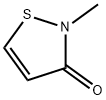
2-Methyl-4-isothiazolin-3-one MIT(CAS#2682-20-4)–Broad-Spectrum Biocide & Preservative
1. Properties:
- Appearance and Physical Form: MIT is supplied as a colourless to light yellow or clear amber liquid (typically as a 9.5%, 14% or 50% aqueous solution), or as a white to yellow solid/crystalline powder. Commercial grades may appear as a clear light yellow liquid with a slight characteristic isothiazolinone odour.
- Solubility: MIT exhibits excellent solubility in water (489 g/L at 20°C; >1000 g/L in certain grades), methanol, ethanol (96%), chloroform and ethyl acetate. The aqueous solutions are fully miscible with water and compatible with most polar organic solvents. Its exceptional water solubility ensures homogeneous distribution when incorporated into aqueous formulations and facilitates easy handling at any stage of production.
- Chemical Properties: MIT is a halogen‑free, non‑oxidising, heterocyclic biocide belonging to the isothiazolinone class. The molecule is characterised by a five‑membered N–S aromatic heterocycle with an electrophilic S–N bond that underlies its broad‑spectrum antimicrobial activity via thiol‑enzyme disruption.
- Mechanism of Action: MIT inhibits enzymes that contain thiol groups at their active sites, disrupting essential metabolic processes in microorganisms. By interfering with these enzymes, it leads to rapid inhibition of growth and metabolism, ultimately causing cell death. The compound is active against gram‑positive and gram‑negative bacteria, fungi (moulds), yeasts and algae.
- Broad‑Spectrum Efficacy: MIT demonstrates strong inhibitory activity against a wide variety of microorganisms, including Pseudomonas aeruginosa (MIC 30 ppm), sulphate‑reducing bacteria (SRB), filamentous fungi and yeast. While MIT has relatively lower antimicrobial activity than CMIT (5‑chloro‑2‑methyl‑4‑isothiazolin‑3-one) alone, it shows synergistic activity when combined with other isothiazolinones. For example, the MIT/BIT combination reduces the MIC against P. aeruginosa from 150 ppm (BIT alone) and 30 ppm (MIT alone) to just 20 ppm in combination.
- Stability: MIT is chemically stable across a wide pH range of 2–9, with optimal activity in neutral to weakly alkaline conditions. Stability decreases significantly at pH levels above 8 and in the presence of strong nucleophiles (amines, thiols). The compound is effective across a broad temperature range but may degrade under prolonged high‑temperature exposure or strong UV light.
- Formaldehyde‑Free: MIT does not release formaldehyde, making it an environmentally favourable alternative to formaldehyde‑releasing preservatives in personal care and industrial applications.
- Synergistic Blends: MIT is frequently blended with CMIT in a 1:3 ratio to enhance antimicrobial efficacy while leveraging the complementary stability profile. CMIT is the more potent biocide but is less stable, while MIT provides extended long‑term preservation.
2. Applications:
Cosmetics & Personal Care (Primary Preservative):
- Rinse‑Off Products (Shampoos, Liquid Soaps, Conditioners): MIT is approved for use in rinse‑off cosmetic products at maximum use levels of 15 ppm (0.0015%) when combined with CMIT. MIT may also be used alone in rinse‑off formulations. It prevents microbial contamination throughout the product's use cycle without affecting colour or odour, even at very low concentrations.
- Leave‑On Products (Lotions, Creams, Moisturisers): MIT use in leave‑on products is restricted in many jurisdictions due to skin sensitisation concerns. However, the Cosmetic Ingredient Review Expert Panel concluded that MIT can be safely used as a preservative in cosmetic products at concentrations of 100 ppm (0.01%) or less, as no treatment‑related increase in tumour incidence, foetotoxicity or teratogenic effects were observed in animal studies. The panel noted that the absence of neurotoxicity in numerous in vivo studies suggests MIT is not neurotoxic when applied to cosmetics.
- Wet Wipes: MIT and CMIT/MIT blends are used as preservatives in the wet wipe industry to control bacterial and fungal growth during storage and use.
Industrial & Institutional Water Treatment:
- Cooling Water Systems (Petrochemical, Power, Central Air Conditioning): MIT is used as a non‑oxidising biocide and algaecide to control biofouling in recirculating cooling towers, industrial cooling water systems, heat exchangers and evaporative condensers. It is effective against slime‑forming bacteria, algae, fungi and sulphate‑reducing bacteria. Typical dosage: 80–100 ppm of 1.5% active solution, applied 1–2 times per week depending on microbial loading.
- Reverse Osmosis (RO) Water Treatment: MIT is applied in off‑line and on‑line RO system preservation to prevent biofouling on membrane surfaces. Dosage rates range from 50–120 ppm of 1.5% active isothiazoline solution with an exposure time of 5–6 hours.
- Oilfield Injection Water & Fracturing Fluids: MIT is used as a biocide in oilfield waterflood operations and hydraulic fracturing fluids to control sulphate‑reducing bacteria (SRB), preventing reservoir souring, hydrogen sulphide (H₂S) generation and microbiologically influenced corrosion (MIC).
- Wastewater Treatment & Effluent Management: MIT is employed in municipal and industrial wastewater treatment facilities to control microbial contamination and reduce biofouling in pipelines, pumps and aeration basins.
Paints, Coatings & Adhesives:
- In‑Can Preservative: MIT is widely used as an in‑can preservative (biocide) to prevent bacterial and fungal spoilage in water‑based paints, latex emulsions, polymer synthetic emulsions, plasters, knifing fillers, pigment pastes, paper coatings and printing inks. It protects products during storage, transport and between uses, extending shelf life without affecting product stability, colour or odour.
- Adhesives, Glues and Sealants: MIT is incorporated into water‑based adhesives, including those used in food packaging materials (under FDA 21 CFR 175.105), to prevent microbial degradation and maintain bond integrity.
Metalworking Fluids (MWF) & Lubricants:
- Cutting Fluids, Grinding Fluids and Rolling Emulsions: MIT and CMIT/MIT blends are used as biocides in metalworking fluid formulations to prevent bacterial and fungal contamination that would otherwise cause foul odours, pH drop, reduced tool life and operator skin irritation. Formaldehyde‑free, VOC‑free grades are available for worker safety and environmental compliance.
Pulp & Paper Industry:
- Paper Machine White Water Systems: MIT is used as a slimicide and preservative in pulp and paper mill water systems to control slime‑forming bacteria, reduce sheet defects and improve paper machine efficiency.
- Paper Coatings and Additives: MIT prevents microbial spoilage of water‑based pigment pastes, coatings and paper additives during storage and application.
Textile & Leather Processing:
- Textile Additives (Woven and Non‑Woven): MIT is used to preserve textile processing chemicals (spinning fluids, silicone emulsions, finishing auxiliaries) and to protect finished textiles from mould and mildew during storage and transport.
- Leather Process Chemicals: MIT prevents bacterial and fungal degradation in leather processing baths, including wet‑state timber treatment solutions and leather additives.
Household & Industrial Detergents:
- Liquid Detergents and Cleaning Products: MIT is added to household and industrial cleaning formulations (surface cleaners, dishwashing liquids, laundry detergents) as a preservative to prevent microbial growth and extend product shelf life.
Other Industrial Applications:
- Agricultural Adjuvants & Fertilisers: MIT is used to preserve liquid fertilisers, pesticide suspensions and agrochemical adjuvants.
- Photographic Processing Solutions: MIT controls microbial contamination in photo processing chemicals and bath solutions.
- Air Purifier Systems: MIT is formulated into air purifier liquids and humidifier disinfectants to prevent mould and bacterial growth.
- Wood Preservation: MIT is applied in aqueous wood preservative treatment solutions during the wet‑state process to protect timber from fungal decay.
3. Preparation Method:
- Laboratory Method: MIT can be prepared via the cyclisation of cis‑N‑methyl‑3‑thiocyanoacrylamide. The reaction proceeds under controlled conditions to form the isothiazolinone heterocyclic ring.
- Industrial Process: Industrial production of high‑purity MIT follows a multi‑step synthesis: (1) Starting Materials: N,N′‑dimethyl‑3,3′‑dithiodipropionamide or N‑methyl‑3‑mercaptopropionamide are used as primary reactants. (2) Halogenation: The starting materials are dissolved in an organic solvent (e.g., methylene dichloride) with an alkali metal iodide catalyst. A halogenating agent (chlorine) is introduced at controlled temperatures (5–15°C), producing MIT hydrochloride. (3) Neutralisation: The hydrochloride salt is neutralised using a sodium bicarbonate solution to yield the final MIT free base. (4) Purification: The crude product is purified by recrystallisation, solvent extraction or ion exchange. (5) Formulation: The purified MIT is formulated as an aqueous solution at typical concentrations of 9.5%, 14% or 50% for commercial use, optionally blended with CMIT in a 1:3 (MIT:CMIT) ratio. The final product is packaged under inert gas in sealed containers for shipment.
4. Safety Information:
- Hazard Classification: According to GHS/CLP Regulation (EC) No 1272/2008, MIT is classified as hazardous with the following hazard statements: H302 (Harmful if swallowed), H314 (Causes severe skin burns and eye damage), H317 (May cause an allergic skin reaction), H331 (Toxic if inhaled), H335 (May cause respiratory irritation), H400 (Very toxic to aquatic life), H410 (Very toxic to aquatic life with long lasting effects). Hazard pictograms: GHS05, GHS06, GHS09. Signal word: Danger. UN Number: 3077 (Class 9, PG III). RIDADR: UN 3077 9/PG 3.
- Health Hazards:
- Inhalation: Toxic if inhaled (H331). Inhalation of mists or vapours may cause respiratory tract irritation, coughing and throat discomfort. High‑concentration exposure may cause chemical pneumonitis.
- Skin Contact: May cause an allergic skin reaction (H317) and sensitisation. MIT is a known skin sensitiser (contact dermatitis). Repeated or prolonged exposure may lead to allergic contact dermatitis. Causes severe skin burns and eye damage (H314).
- Eye Contact: Causes serious eye damage (H318). Direct contact may result in corneal injury, conjunctival swelling and potential visual impairment.
- Ingestion: Harmful if swallowed (H302). May cause gastrointestinal irritation, nausea, vomiting and abdominal pain.
- Sensitisation: MIT is a sensitiser in both animal and human studies. The Cosmetic Ingredient Review Expert Panel concluded that concentrations of MIT of 100 ppm (0.01%) or less in cosmetics were not expected to pose a sensitisation risk, due to the existence of a threshold dose response.
- First Aid Measures:
- Eye Contact: Rinse cautiously with plenty of water for several minutes. Remove contact lenses if present and easy to do. Continue rinsing. Immediately call a POISON CENTER or physician (P310).
- Skin Contact: Take off immediately all contaminated clothing. Rinse skin with water/shower. Wash contaminated clothing before reuse. Call a physician immediately.
- Inhalation: Remove victim to fresh air. Keep at rest in a position comfortable for breathing. If breathing stops, immediately apply artificial respiration, if necessary also oxygen. Immediately call a physician.
- Ingestion: Rinse mouth immediately. Do NOT induce vomiting. Give water to drink (two glasses at most). Seek medical advice immediately.
- Fire & Explosion Hazards: MIT is combustible. Development of hazardous combustion gases or vapours possible in the event of fire (carbon oxides, nitrogen oxides, sulfur oxides). Use water spray, alcohol‑resistant foam, dry chemical or carbon dioxide as extinguishing media. Prevent fire extinguishing water from contaminating surface water or groundwater systems.
- Personal Protective Equipment (PPE):
- Respiratory protection: Use a full‑face particle respirator (type N100 (US) or P3 (EN 143)) where risk assessment shows inadequate ventilation. In emergency situations, use a full‑face supplied air respirator.
- Eye protection: Tightly fitting safety goggles or chemical splash goggles (EN 166 compliant).
- Skin protection: Chemical‑resistant gloves (nitrile), acid‑resistant protective clothing, and closed‑toe shoes. Inspect gloves prior to use. Use proper glove removal technique.
- General hygiene: Wash hands, forearms and face thoroughly after handling (P264). Do not eat, drink or smoke in work areas (P270). Immediately change contaminated clothing.
- Environmental Precautions: MIT is very toxic to aquatic life with long lasting effects (H400/H410). Do not let product enter drains. Avoid release to the environment (P273). In case of spillage, cover drains, collect and bind spills, and pump off. Clean up affected area and dispose of properly in accordance with local regulations.
- Storage & Stability: Store in tightly closed, air‑tight, moisture‑proof containers at 2–8°C (refrigerated) in a cool, dry, well‑ventilated area. Protect from light, air, heat sources and strong oxidising agents. MIT is air‑sensitive; store under inert gas. Keep locked up or in an area accessible only to qualified or authorised persons. Under recommended storage conditions, MIT has a shelf life of 12–24 months from the date of manufacture in sealed original containers. Do not allow to freeze.
- Regulatory Compliance: MIT (CAS#2682-20-4, EC#220-239-6) is listed on EINECS, TSCA, DSL, AICS, NZIoC, ENCS, KECI and other regional chemical inventories. It is registered under REACH and is subject to use restrictions in cosmetic products in the EU (maximum concentration 15 ppm for CMIT/MIT mixtures, with specific labelling requirements). MIT is permitted as a preservative in rinse‑off cosmetic products under EU Cosmetics Regulation (EC) No 1223/2009. In the US, MIT is approved as an indirect food additive for adhesives in food packaging under FDA 21 CFR 175.105. The product is regulated as a hazardous substance for transport (UN3077, Class 9, PG III). Always consult the Safety Data Sheet (SDS) and local regulations for complete safety, environmental and regulatory information specific to each product grade and application jurisdiction.
Write your message here and send it to us