
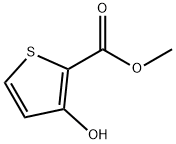
Methyl 3-hydroxythiophene-2-carboxylate(CAS#5118-06-9)
1. Properties:
- Appearance and Physical Form: Methyl 3-hydroxythiophene-2-carboxylate is a white to off-white crystalline solid. It is a thiophene derivative featuring a hydroxy group at the 3-position and a methyl ester at the 2-position of the thiophene ring.
- Solubility: The compound is slightly soluble in water and is expected to be soluble in common organic solvents such as methanol, ethanol, DCM, DMF, and DMSO.
- Chemical Properties: Methyl 3-hydroxythiophene-2-carboxylate (C₆H₆O₃S) is a versatile heterocyclic building block with the molecular formula C₆H₆O₃S. Its structure comprises a five-membered thiophene ring with a hydroxyl group and a methyl ester substituent.
- Reactivity: The compound serves as a nucleophile, participating in various chemical reactions that modify its structure and properties. It can undergo oxidation to form corresponding sulfoxides and sulfones, as well as reduction reactions to yield thiophene derivatives with different functional groups. The presence of both a hydroxyl group and an ester group enables diverse derivatization pathways.
- Pharmaceutical Relevance: This compound is recognized for its applications in organic synthesis, medicinal chemistry, and material science. It has been identified as a key intermediate in the synthesis of prostaglandin E2 receptor EP2/EP4 dual antagonists, CRBN protein regulators, and tricyclic derivative inhibitors. Its derivatives have been investigated for kinase inhibitor development.
- Stability: The compound is stable under recommended storage conditions and should be stored in a cool, dry place in tightly closed containers.
2. Applications:
Pharmaceutical Research & Drug Discovery (Primary Application):
- Kinase Inhibitor Development: Methyl 3-hydroxythiophene-2-carboxylate serves as a precursor for tricyclic derivative inhibitors with potential applications in oncology.
- Prostaglandin Receptor Antagonists: It is used as a key intermediate in the synthesis of prostaglandin E2 receptor EP2/EP4 dual antagonists.
- CRBN Protein Regulators: The compound is a building block for bicyclic compounds that act as CRBN (cereblon) protein regulators.
- Drug Discovery Scaffold: As a versatile thiophene building block, it is widely employed in medicinal chemistry for the synthesis of novel drug candidates and bioactive molecules.
Organic Synthesis & Chemical Research:
- Synthetic Intermediate: Methyl 3-hydroxythiophene-2-carboxylate is used as a reactant in synthesizing nitro-products where reaction occurs with thiophenol.
- Building Block for Thiophene Derivatives: It serves as a valuable starting material for the preparation of various thiophene derivatives with alkyl, aryl, and halogen substituents.
- Heterocyclic Synthesis: The compound is employed in the construction of complex heterocyclic systems for pharmaceutical and agrochemical research.
Agrochemical Research:
- Agrochemical Intermediate: Used as a building block for the development of crop protection agents and other agricultural chemicals.
Materials Science:
- Functional Materials: The compound finds applications in material science research, particularly in the development of novel functional materials.
3. Preparation Method:
- Synthesis from 3-Hydroxythiophene: Methyl 3-hydroxythiophene-2-carboxylate can be synthesized by the reaction of 3-hydroxythiophene with methanol in the presence of an acid catalyst.
- Alternative Synthetic Routes: Another method involves the reaction of methyl thioglycolate with methyl 3-methoxyacrylate under specific conditions. The compound can also be synthesized via the reaction of methyl 2-chloroacrylate with methyl mercaptoacetate (yield ~70%) or from methyl 2,3-dichloropropionate with methyl mercaptoacetate (yield ~56%).
- Industrial Production: Industrial-scale synthesis typically employs optimized conditions to ensure high yield and purity, involving steps such as esterification, purification, and crystallization. The product is purified to achieve high purity (≥97% to ≥98%).
4. Safety Information:
- Hazard Classification: Methyl 3-hydroxythiophene-2-carboxylate is classified as an irritant (Xi). Under GHS, it carries the following hazard statements:
- H315: Causes skin irritation
- H319: Causes serious eye irritation
- H335: May cause respiratory irritation
- H302+H312+H332: Harmful if swallowed, in contact with skin, or if inhaled (for some grades)
- Hazard pictogram: GHS07
- Signal word: Warning
- Risk phrases: R36/37/38 (Irritating to eyes, respiratory system, and skin)
- Safety phrases: S26 (In case of contact with eyes, rinse immediately with plenty of water and seek medical advice), S37/39 (Wear suitable gloves and eye/face protection)
- WGK Germany: 3 (very hazardous to water)
- Health Hazards:
- Inhalation: May cause respiratory tract irritation (H335). Vapors may be irritating to skin and eyes.
- Skin Contact: Causes skin irritation (H315).
- Eye Contact: Causes serious eye irritation (H319).
- Ingestion: Harmful if swallowed (H302).
- First Aid Measures:
- Eye Contact: Rinse immediately with plenty of water for at least 15 minutes, occasionally lifting the upper and lower eyelids. Remove contact lenses if present. Seek medical attention.
- Skin Contact: Wash skin with plenty of soap and water. Remove contaminated clothing.
- Inhalation: Move person to fresh air. If symptoms persist, seek medical advice.
- Ingestion: Rinse mouth. Do NOT induce vomiting. Seek medical attention if a large amount is ingested.
- Personal Protective Equipment (PPE):
- Respiratory protection: Use a dust mask (N95 or P2 respirator) if airborne dust is present.
- Eye protection: Wear safety goggles or chemical splash goggles.
- Skin protection: Wear chemical-resistant gloves (nitrile) and protective clothing.
- General hygiene: Wash hands thoroughly after handling. Do not eat, drink, or smoke in work areas. Use only in a well-ventilated area.
- Environmental Precautions: Avoid large-scale release into natural water bodies, drains, or soil. Comply with local environmental regulations for disposal.
- Storage & Stability: Store in tightly closed containers in a cool, dry, well-ventilated area away from direct sunlight, heat sources, and incompatible materials. Protect from moisture. Under recommended storage conditions, methyl 3-hydroxythiophene-2-carboxylate has a shelf life of 12 to 24 months from the date of manufacture in sealed original containers.
- Regulatory Compliance: Methyl 3-hydroxythiophene-2-carboxylate (CAS#5118-06-9) is listed on EINECS, TSCA, and other regional chemical inventories. The compound is classified under HS code 29349990 (predicted). This product is for R&D use only and is not intended for medicinal, household, or other uses without proper authorization. Always consult the Safety Data Sheet (SDS) and local regulations for complete safety, environmental, and regulatory information specific to each product grade and application jurisdiction.
Write your message here and send it to us