
page_banner

product

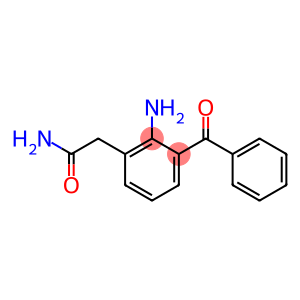
Nepafenac(CAS#78281-72-8)

Chemical Property:

Molecular Formula C15H14N2O2
Molar Mass 254.28
Density 1.249g/cm3
Melting Point 177-181°C
Boling Point 562.5°C at 760 mmHg
Flash Point 294°C
Water Solubility 0.014 mg/mL in water
Solubility DMSO 51 mg/mL Water <1 mg/mL Ethanol 4 mg/mL
Vapor Presure 1.11E-12mmHg at 25°C
Appearance powder
Color faint yellow to dark yellow
Merck 14,6469
Storage Condition room temp
Sensitive Sensitive to heat
Refractive Index 1.641
MDL MFCD08067732
In vivo study Nepafenac showed significantly greater ocular bioavailability, and amfenac had greater COX-2 inhibitory activity than either ketorolac or bromfenac. Nepafenac showed weak COX-1 inhibitory activity with an IC50 of 64.3 mM. In rabbits, Nepafenac inhibited prostaglandin synthesis in the IRIS/ciliary body (85-95%) and retina/choroid (55%). Nepafenac(0.5%) resulted in a 65% reduction in retinal edema, which was associated with a 62% inhibition of blood-retinal barrier breakdown. Nepafenac(0.5%) significantly inhibited (46%) blood-retinal barrier disruption, accompanied by almost complete inhibition of PGE2 synthesis (96%). Nepafenac significantly inhibits retinal prostaglandin E(2), superoxide, cyclooxygenase-2, and leukostasis in the retinal microvasculature of insulin-deficient diabetic rats, does not affect vascular endothelial growth factor (VEGF) and nitric oxide (NO). In diabetic rats, Nepafenac significantly inhibited the number of transferase-mediated dUTP Nick end-labeled positive capillary cells, acellular capillaries, and pericytes. In mice, Nepafenac resulted in significantly reduced choroidal neovascularization and ischemia-Induced Retinal neovascularization compared to controls. Nepafenac also attenuated ischemia-induced increases in retinal VEGF mRNA expression. In ocular and metastatic animal models, Nepafenac delays the progression of malignancy, as well as the reduction in the weight of uveal melanoma.

Product Detail

Product Tags

Hazard Symbols N - Dangerous for the environment
Risk Codes 50/53 - Very toxic to aquatic organisms, may cause long-term adverse effects in the aquatic environment.
Safety Description S60 - This material and its container must be disposed of as hazardous waste.
S61 - Avoid release to the environment. Refer to special instructions / safety data sheets.
UN IDs UN 3077 9 / PGIII
WGK Germany 3
RTECS CY1480710

Application
Nepafenac is a non‑steroidal anti‑inflammatory prodrug that rapidly penetrates the cornea and is converted by ocular tissue hydrolases to its active metabolite, amfenac. As a selective cyclooxygenase‑2 (COX‑2) inhibitor, it suppresses prostaglandin synthesis, directly addressing postoperative inflammation and pain. Clinically, it is the first ophthalmologic NSAID prodrug approved for cataract surgery, available as a 0.1 % ophthalmic suspension or 0.3 % solution. Beyond human use, veterinarians frequently prescribe it off‑label to manage ocular inflammation and pain in cats and dogs, especially after eye surgery or in non‑infectious uveitis. As an active pharmaceutical ingredient (API), nepafenac and its intermediates serve as essential building blocks for pharmaceutical development, generic formulation, and advanced ophthalmic research. Xinchem offers high‑purity nepafenac with flexible custom synthesis, custom chemical synthesis, and contract manufacturing scaled reliably from R&D to commercial tons. Contact us for a competitive quote.
  • Previous:
  • Next:

  • Write your message here and send it to us