
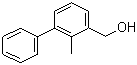
2-Methyl-3-biphenylmethanol(CAS#76350-90-8)
2-Methyl-3-biphenylmethanol(CAS#76350-90-8)
quality
Benzyl alcohol, also known as phenol. Here are some of the properties of biphenyl alcohol:
1. Physical properties: Biphenyl alcohol is a colorless crystal with a special phenolic taste. It is soluble in water, ethanol and ether solvents, and is liquid at room temperature.
2. Chemical properties: Phenyl alcohol is an acidic substance that can react with alkali to form corresponding salts. Under the action of a strong oxidizing agent, biphenyl alcohol can be oxidized to benzoquinone. It can also form quinones through phenolic condensation reactions.
3. Oxidation: Benzyl alcohol can be oxidized into benzoquinone by oxidants such as nitric oxide.
4. Flammability: Phenyl alcohol releases toxic fumes and combustion products when burned.
5. Chemical reaction: Diphenyl alcohol can undergo substitution reaction, and its hydroxyl group can be substituted to form different substituted phenols. Diphenyl alcohol can also be esterified to form ester compounds.
Uses and synthesis methods
Biphenyl alcohol is an organic compound. It is commonly used as a solvent and intermediate and has a wide range of uses in many industrial and laboratory applications.
The main uses of biphenyl alcohol include:
1. Solvent: Phenyl alcohol can dissolve many organic compounds and is often used as a reaction solvent or extraction solvent.
2. Synthetic chemistry: Biphenyl alcohol is a key intermediate in the synthesis of many important organic compounds. It can be used to synthesize ethers, esters, carboxylic acids, acid chloride and other compounds.
3. Nickel battery: Biphenyl alcohol can be used as a cathode material for nickel batteries.
There are many methods for the synthesis of biphenyl alcohol, among which the following are commonly used:
1. Benzyl alcohol oxidation method: benzyl alcohol and oxygen are oxidized in the presence of a catalyst to generate biphenyl alcohol.
2. Condensation reaction of bromobenzene and methanol: bromobenzene and methanol are reacted under alkaline conditions to produce biphenyl alcohol.
3. Benzoaldehyde reduction method: benzaldehyde reacts with a reducing agent such as hydrogen in the presence of a catalyst to generate biphenyl alcohol.
Application
2-Methyl-3-biphenylmethanol (CAS 76350-90-8), also known as Bifenthrin-alcohol, is a key biphenyl building block used as a versatile intermediate in agrochemical, pharmaceutical and organometallic synthesis. It is a major synthetic precursor and hydrolytic metabolite of the pyrethroid insecticide Bifenthrin, making it useful as an analytical standard and toxicology reference for pesticide residue analysis in food crops, environmental monitoring, and Agilent LC-MS quality control (QC) applications. As a pharmaceutical intermediate, its rigid and lipophilic biaryl scaffold is used to construct PD-L1 immune checkpoint inhibitors for cancer immunotherapy, selective COX-2 inhibitors for inflammation, and bioactive fragments in targeted drug discovery. The primary alcohol functionality and methyl-substituted biphenyl core facilitate Suzuki-Miyaura cross-coupling and sequential C–H functionalization, enabling efficient construction of complex heterocyclic libraries. In materials research, it serves as a monomer for high‑thermal‑stability polymers, liquid crystal displays (LCDs), and fluorescent sensors for metal‑ion detection. This building block also acts as a structurally matched low‑potency surrogate for 2,4,6‑trinitrotoluene (TNT) in binding studies, supporting security and diagnostics research. Xinchem offers custom synthesis, custom chemical synthesis, and contract manufacturing of high‑purity 2‑Methyl‑3‑biphenylmethanol with comprehensive batch‑specific COA (HPLC ≥98%) and regulatory documentation (MSDS), flexible from R&D gram quantities to commercial metric tons. Contact us today for a competitive quote and reliable global supply.

![3,3′-Bi-7-oxabicyclo[4.1.0]heptane(CAS#37777-16-5)](https://www.xinchem.com/uploads/33-Bi-7-oxabicyclo4.1.0heptane-37777-16-5-.png)