
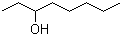
3-Octanol(CAS#589-98-0)
| Hazard Symbols | Xi – Irritant |
| Risk Codes | 36/37/38 – Irritating to eyes, respiratory system and skin. |
| Safety Description | S26 – In case of contact with eyes, rinse immediately with plenty of water and seek medical advice. S36 – Wear suitable protective clothing. |
| UN IDs | NA 1993 / PGIII |
| WGK Germany | 2 |
| RTECS | RH0855000 |
| TSCA | Yes |
| HS Code | 2905 16 85 |
| Toxicity | LD50 orally in Rabbit: > 5000 mg/kg LD50 dermal Rabbit > 5000 mg/kg |
Introduction
3-Octanol, also known as n-octanol, is an organic compound. Below is an introduction to some of its properties, uses, preparation methods, and safety information:Properties:1. Appearance: 3-Octanol is a colorless liquid with a distinctive odor.2. Solubility: It can dissolve in water, ethers, and alcohol solvents.Uses:1. Solvent: 3-Octanol is a commonly used organic solvent, suitable for applications in coatings, paints, cleaners, lubricants, and other fields.2. Chemical synthesis: It can be used as a raw material in certain chemical synthesis reactions, such as esterification and etherification reactions.Preparation:The preparation of 3-octanol is usually achieved through the following steps:1. Hydrogenation: React octene with hydrogen in the presence of a catalyst to obtain 3-octene.2. Hydroxylation: React 3-octene with sodium hydroxide or potassium hydroxide to obtain 3-octanol.Safety Information:1. 3-Octanol is a flammable liquid and should be kept away from open flames or high temperatures.2. When using 3-octanol, appropriate personal protective equipment, such as gloves and goggles, should be worn to avoid direct contact with the skin, eyes, or inhalation.3. Avoid prolonged exposure to 3-octanol vapors to prevent harm to health.4. When storing and using 3-octanol, follow relevant safety procedures and measures.