
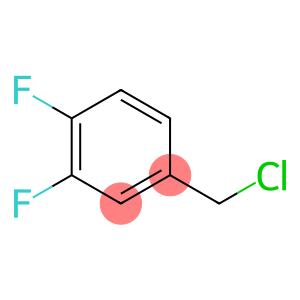
3,4-difluorobenzyl chloride(CAS#698-80-6)
| Hazard Symbols | C - Corrosive |
| Risk Codes | R34 - Causes burns R20/22 - Harmful by inhalation and if swallowed. |
| Safety Description | S45 - In case of accident or if you feel unwell, seek medical advice immediately (show the label whenever possible.) S36/37/39 - Wear suitable protective clothing, gloves and eye/face protection. S26 - In case of contact with eyes, rinse immediately with plenty of water and seek medical advice. |
| UN IDs | 1760 |
| HS Code | 29039990 |
| Hazard Note | Corrosive/Lachrymatory |
| Hazard Class | 8 |
| Packing Group | III |
Introduction
3,4-difluorobenzyl chloride is an organic compound with the chemical formula C7H5ClF2. It is a colorless liquid with a pungent smell. The following is a description of some of the properties, uses, preparation and safety information of the compound:
Nature:
1. Appearance: colorless liquid
2. Boiling point: 133-134°C
3. density: 1.307g/cm³
4. Melting point:-44°C
5. Solubility: Soluble in ethanol, ether and dimethyl sulfoxide and other organic solvents
Use:
1. 3,4-difluorobenzyl chloride is commonly used as a reagent in organic synthesis and can be used to introduce benzyl chloride or fluorine atoms into molecules.
2. It can also be used as a catalyst and intermediate in chemical reactions.
Preparation Method:
One of the commonly used preparation methods is to react 3,4-difluorostyrene with hydrogen chloride to generate 3,4-difluorobenzyl chloride.
Safety Information:
1. The 3,4-difluorobenzyl chloride should avoid contact with skin and inhalation of gas during storage and use.
2. Wear appropriate personal protective equipment, such as gloves, goggles and face shields.
3. It should be operated in a well-ventilated place to avoid exposure to open flames and high temperatures.
4. If accidental contact or inhalation occurs, clean the area immediately and seek medical help.
Application
3,4-Difluorobenzyl chloride (CAS 698-80-6) is a highly reactive fluorinated benzyl halide widely employed as a key pharmaceutical intermediate and versatile building block in organic synthesis. The strategic incorporation of two fluorine atoms at the 3- and 4-positions enhances the metabolic stability, lipophilicity, and bioavailability of drug candidates. Its labile chloromethyl group enables efficient nucleophilic substitution reactions with amines, alcohols, and thiols, facilitating the introduction of the 3,4-difluorobenzyl moiety into active pharmaceutical ingredients (APIs). This compound is extensively utilized in the synthesis of central nervous system (CNS)-active drugs, including antidepressants, antipsychotics, and anticonvulsants, as well as in the development of kinase inhibitors and anti-inflammatory agents. In crop protection, 3,4-difluorobenzyl chloride serves as a critical precursor for selective herbicides, fungicides, and insecticides, where the fluorine substituents enhance biological efficacy and environmental safety. Its high purity ensures reproducible results in structure-activity relationship (SAR) studies, high‑throughput screening, and scalable GMP manufacturing for pharmaceuticals, agrochemicals, and specialty polymers. Xinchem offers reliable custom synthesis, custom chemical synthesis, and contract manufacturing of this high‑purity fluorinated building block with flexible scaling from R&D to commercial tons. Contact us today for a competitive quote and dependable global supply.
Please note that when handling chemicals, relevant safety procedures must be followed and handled according to specific conditions.