
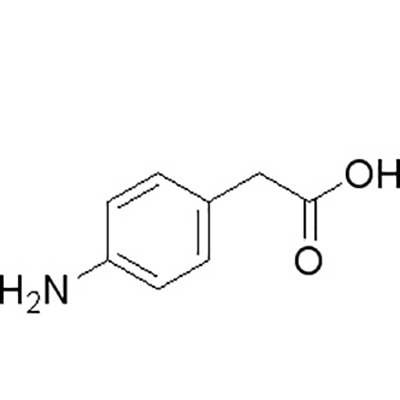
4-Aminophenylacetic Acid (CAS# 1197-55-3)
Application
4-Aminophenylacetic acid (4-APA) is a versatile pharmaceutical intermediate with applications spanning multiple therapeutic areas:
| Application Sector | Key Uses |
|---|---|
| β-Lactam Antibiotics | Critical precursor in the synthesis of ampicillin, cephalexin, cefradine, and other β-lactam antibiotics. The 4-APA structure serves as the side chain in semisynthetic penicillin and cephalosporin derivatives. |
| CNS Drugs | Used in the synthesis of APIs for treating depression, epilepsy, and chronic pain syndromes. |
| Analgesics & Anti-inflammatory Drugs | Serves as a key intermediate in the synthesis of acetaminophen (paracetamol) and atenolol. |
| Peptide Synthesis | Serves as a versatile intermediate in peptide synthesis and peptidomimetic drug development. The amino-carboxylate structure enables amide bond formation for peptide chain elongation. |
| Targeted Kinase Inhibitors | Used as an intermediate in the synthesis of peptidomimetics and targeted kinase inhibitors for oncology applications. |
| PepT1 Inhibition Studies | Functions as a non-translocated competitive inhibitor of the epithelial peptide transporter PepT1, used in peptide transport research. |
| Agrochemicals | Used in the synthesis of multiple pesticides and herbicide intermediates. |
| Dye & Pigment Industry | Used as an intermediate in the synthesis of azo dyes and specialty colorants. |
Custom Development Capabilities:
- ✅ Custom synthesis of 4-APA derivatives (esters, amides, salts)
- ✅ Route optimization for cost-effective large-scale production
- ✅ Impurity synthesis and reference standards
- ✅ Process development from gram to ton scale
- ✅ Peptide coupling and conjugation chemistry
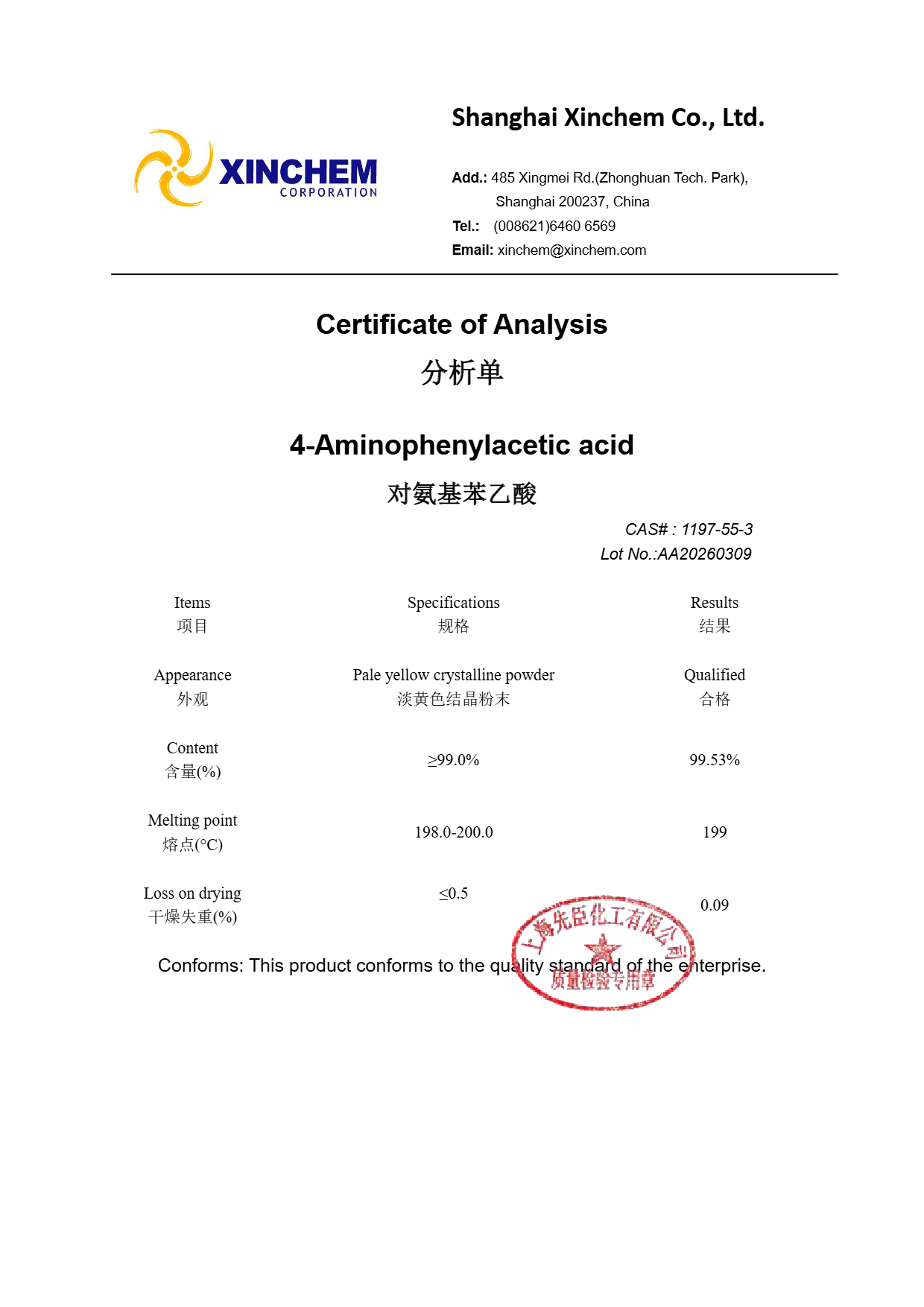
Specification
| Parameter | Specification |
|---|---|
| Product Name | 4-Aminophenylacetic acid (p-Aminophenylacetic acid; 4-APA) |
| CAS No. | 1197-55-3 |
| Molecular Formula | C₈H₉NO₂ |
| Molecular Weight | 151.16–151.17 g/mol |
| IUPAC Name | 2-(4-Aminophenyl)acetic acid |
| Appearance | Colorless to pale yellow crystalline powder |
| Purity (Pharmaceutical Grade) | ≥99.0% (HPLC) |
| Purity (Research Grade) | ≥98.0% (HPLC) |
| Melting Point | 199–201°C (decomposes) |
| Solubility | Soluble in alcohols and alkali solutions; slightly soluble in hot water |
| Water Content (KF) | ≤0.5% |
| Residual Solvents | Meets ICH Q3C guidelines |
| Heavy Metals | ≤10 ppm |
| EINECS No. | 214-828-7 |
| PubChem CID | 14533 |
| InChI Key | CSEWAUGPAQPMDC-UHFFFAOYSA-N |
| SMILES | NC1=CC=C(CC(O)=O)C=C1 |
| HS Code (China Export) | 29224999 |
| Storage Conditions | Keep container tightly closed in a dry, well-ventilated place. Protect from light and moisture. |
| Shelf Life | 24 months under recommended storage |
Safety
S22 - Do not breathe dust.
S24/25 - Avoid contact with skin and eyes.
Packing & Storage
Packed in 25kg/50kg drums. Room Temprature
Introduction
Introducing 4-Aminophenylacetic Acid, a versatile chemical compound that has a wide range of uses in organic synthesis and the pharmaceutical industry. It is commonly found as whitish to yellow crystals that make it easy to handle and use.
Derived from the combination of two primary chemical compounds; aniline and glycolic acid, 4-Aminophenylacetic Acid is widely used in the manufacturing process of various pharmaceutical intermediates and APIs.
The primary use of 4-Aminophenylacetic Acid is as a raw material in the synthesis of organic compounds. It is a crucial ingredient in the production of intermediates like 4-Aminobenzeneacetic Acid, which is vital in the manufacturing of pharmaceuticals, organic pigments, and agrochemicals
In the pharmaceutical industry, 4-Aminophenylacetic Acid is widely used in the manufacturing of APIs. It plays a crucial role in the synthesis of drugs used to treat a wide range of medical conditions such as depression, epilepsy, and chronic pain syndromes. The compound is a primary ingredient in drugs like Gabapentin and Pregabalin, both used to treat epilepsy. The Acid is also an essential ingredient in the production of Diclofenac, a potent nonsteroidal anti-inflammatory drug used for pain relief.
The importance of 4-Aminophenylacetic Acid cannot be overstated in the manufacturing process of intermediates and APIs used in the pharmaceutical industry. Its unique properties as a raw material make it a crucial component in producing various drugs used by millions of people worldwide.
When it comes to production, 4-Aminophenylacetic Acid is highly desirable due to its chemical stability, fast reaction rate, high purity, and low impurity content. These characteristics make it highly efficient in the manufacturing process that requires consistent and reliable quality.
In conclusion, 4-Aminophenylacetic Acid is a highly valuable compound widely used in the organic synthesis and pharmaceutical industry. It is an essential raw material for the manufacture of intermediates and APIs used in the production of various drugs. With its unique properties and high purity levels, 4-Aminophenylacetic Acid is a crucial ingredient in the production of essential drugs used in the treatment of various medical conditions. Indeed, it is a versatile compound that has a broad range of applications, and its importance in the manufacturing process cannot be overstated.
• Official Website: www.xinchem.com
• Email: sales1@xinchem.com
• WhatsApp: +86 18049800532