
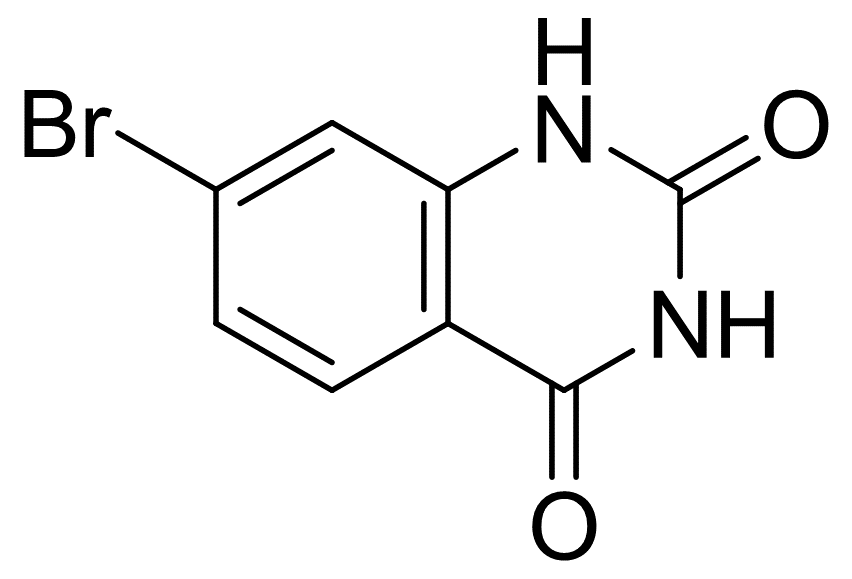
7-Bromoquinazoline-2,4(1H,3H)-dione(CAS#114703-12-7)
Introduction
7-Bromoquinazoline-2, 4-dione is an organic compound, its chemical structure contains bromine atom and two ketone groups. The following is an introduction to its nature, use, preparation and safety information:
Properties: 7-bromo quinazoline -2,4-dione is a solid compound, its molecular formula is C7H3BrN2O3. It is a colorless crystal at room temperature, soluble in some organic solvents, such as dimethyl sulfoxide and chloroform. It decomposes at high temperatures.
Uses: 7-bromoquinazoline-2, 4-dione has certain biological activity, so it can be used for drug research and preparation of synthetic intermediates. It also has applications in agriculture, where it is used as an insecticide and herbicide.
Preparation method: 7-bromoquinazoline-2, 4-dione can be prepared by various methods. One common method is to react 4,6-dibromoquinazoline with a ketone oxidizing agent to produce the desired product. Specific reaction conditions and steps can be adjusted according to actual needs.
Safety Information: Take appropriate safety precautions when handling 7-bromoquinazoline-2, 4-dione. It is an organic compound that should avoid contact with skin and eyes during operation. It should be operated in a well-ventilated place to avoid inhaling its vapors. During storage and handling, care should be taken to avoid reaction with other chemicals, especially substances that may cause fire or explosion.
Application
7-Bromoquinazoline-2,4(1H,3H)-dione (CAS 114703-12-7) is a functionalized heterocyclic scaffold featuring a bromine atom at the 7-position on the quinazoline-2,4-dione core. This compound serves as a key intermediate in medicinal chemistry and pharmaceutical research, particularly for the synthesis of potent tyrosine kinase inhibitors (e.g., EGFR, HER2, and VEGFR inhibitors) used in targeted cancer therapies. The bromine enables efficient cross-coupling reactions such as Suzuki-Miyaura, Buchwald-Hartwig, and Sonogashira to introduce diverse aryl, heteroaryl, or alkyl substituents, allowing rapid structure-activity relationship (SAR) studies. The 2,4-dione system provides hydrogen bond donor and acceptor sites, enhancing target binding affinity. This scaffold is also utilized in the development of antiviral, anti-inflammatory, and antimicrobial agents, as well as in agrochemical research. High purity ensures reproducible results in high-throughput screening and scalable GMP manufacturing. Xinchem offers custom synthesis, custom chemical synthesis, and contract manufacturing of this key intermediate with flexible scaling from R&D to commercial tons. Contact us today for a competitive quote and reliable global supply.