
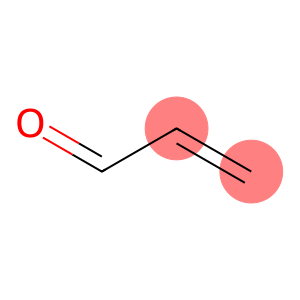
Acrolein(CAS#107-02-8)
| Risk Codes | R11 - Highly Flammable R24/25 - R26 - Very Toxic by inhalation R34 - Causes burns R50 - Very Toxic to aquatic organisms R26/28 - Very toxic by inhalation and if swallowed. R24 - Toxic in contact with skin |
| Safety Description | S23 - Do not breathe vapour. S26 - In case of contact with eyes, rinse immediately with plenty of water and seek medical advice. S28 - After contact with skin, wash immediately with plenty of soap-suds. S36/37/39 - Wear suitable protective clothing, gloves and eye/face protection. S45 - In case of accident or if you feel unwell, seek medical advice immediately (show the label whenever possible.) S61 - Avoid release to the environment. Refer to special instructions / safety data sheets. S16 - Keep away from sources of ignition. |
| UN IDs | UN 1092 6.1/PG 1 |
| WGK Germany | 3 |
| RTECS | AS1050000 |
| FLUKA BRAND F CODES | 8-9 |
| TSCA | Yes |
| HS Code | 29121900 |
| Hazard Class | 6.1 |
| Packing Group | I |
| Toxicity | LD50 orally in rats: 0.046 g/kg (Smyth) |
Introduction
Acrolein. The following is an introduction to the properties, uses, manufacturing methods and safety information of acrolein:Quality:- Acrolein has a strong pungent odor and is soluble in water and a variety of organic solvents.- It is an unstable compound that is susceptible to polymerization reactions.- In air, acrolein slowly polymerizes and forms polymers, which are prone to spontaneous combustion.Use:- Acrolein is widely used in the chemical industry as a starting substance for the synthesis of other compounds.- It can be used to make polymer materials such as resins, rubber, and plastics.- Acrolein can also be used as a reagent in organic synthesis for the synthesis of a variety of organic compounds.Method:- Acrolein can be prepared by the oxidation of acrylenone. Oxidants are commonly used in oxygen, hydrogen peroxide or neutral potassium permanganate solutions.- During the preparation process, it is necessary to control the reaction temperature and the amount of oxidant to avoid the occurrence of side reactions.Safety Information:- Acrolein is irritating and pathogenic, so take care to protect it from contact with skin and eyes.- Avoid inhaling acrolein gases or vapours and keep them well ventilated.- When handling acrolein, wear appropriate protective gloves, goggles, and protective clothing.- Store in an airtight container, away from fire and oxidants.
Application
Acrolein (2-propenal, CAS 107-02-8) is a highly reactive, unsaturated aldehyde that serves as a critical building block and versatile chemical intermediate in a wide range of industrial syntheses. As a key pharmaceutical intermediate, acrolein is utilized in the production of methotrexate, an antimetabolite and antifolate drug used in chemotherapy for various cancers, autoimmune diseases, and ectopic pregnancy treatment. Its principal application is as a precursor for the synthesis of methionine (DL-methionine), an essential sulfur-containing amino acid widely used as a feed additive to improve the efficiency of poultry and livestock production by enhancing growth, egg quality, feather development, and feed conversion rates. Acrolein is also an important non‑isolated intermediate in the industrial production of acrylic acid and its esters, which are key monomers for superabsorbent polymers (SAPs), adhesives, coatings, paints, and textiles. Furthermore, this intermediate enables the synthesis of other high-value chemicals including glutaraldehyde (a disinfectant and crosslinking agent), pyridine and picoline derivatives, diallyl phthalate, and specialty biocides. Direct applications of acrolein include its use as an aquatic herbicide, algaecide, and slimicide for controlling algae, submerged weeds, and microbial slime in irrigation canals, cooling water towers, oilfield water injection systems, paper pulping, and industrial process water. Research laboratories employ acrolein as a valuable reagent for organic synthesis and as a standard for chromatographic analysis. Xinchem offers high-purity acrolein with complete regulatory compliance, including GHS hazard communication (extremely flammable liquid and vapor, toxic, dangerous for the environment with pictograms GHS02, GHS06, GHS09) and EPA labeling for FIFRA (Federal Insecticide, Fungicide, and Rodenticide Act) non‑food use pesticide applications. All products are supplied with comprehensive COA, MSDS, and technical documentation to support global logistics, quality control (QC), method validation (MV), impurity profiling, and ANDA filings. Xinchem provides reliable custom synthesis, custom chemical synthesis, and flexible contract manufacturing of acrolein, with scalable global supply from R&D samples to commercial metric tons. Contact us for a competitive quote.