
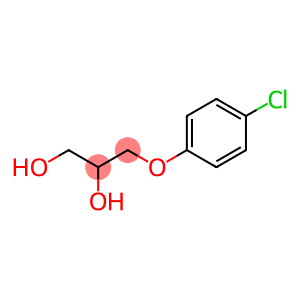
Chlorphenesin(CAS#104-29-0)
104-29-0 – Risk and Safety
| Risk Codes | R20/21/22 – Harmful by inhalation, in contact with skin and if swallowed. R36/37/38 – Irritating to eyes, respiratory system and skin. |
| Safety Description | S26 – In case of contact with eyes, rinse immediately with plenty of water and seek medical advice. S36 – Wear suitable protective clothing. S37 – Wear suitable gloves. |
| RTECS | TY4260000 |
| HS Code | 29094990 |
104-29-0 – Reference Information
| LogP | 1.23 at 23℃ |
| NIST chemical information | Information provided by: webbook.nist.gov (external link) |
| use | chlorfenoxyl ether is a preservative widely used in cosmetics. Europe has been allowed to be used as a preservative in cosmetics since 1996, and Japan and the United States are also allowed to use it. Chlorifenyl ether is more effective against fungi. It is used in combination with other preservatives to enhance the antiseptic effect. |
| introduction | chlorfenoxyl ether is a preservative, widely used in cosmetics, compatible with most preservatives (including potassium sorbate, sodium benzoate, methyl isothiazolinone). It is a white crystal and usually has a weak characteristic smell. Melting point 77.0-80.5 ℃. Slightly soluble in water (about 0.5%). The solubility in 95% ethanol is 5%. Soluble in ethers. Slightly soluble in non-volatile oil, insoluble in white mineral oil. Microbial control performance: can provide improved broad-spectrum antibacterial activity. It has the ability to inhibit and kill G +, G-, Aspergillus niger, Penicillium spp., Candida albicans and Saccharomyces cerevisiae. |
| application area | chlorfenoxyl ether is mainly used as a muscle relaxant, and its working principle is to prevent nerve impulses from being sent to the brain. In cosmetics, it is used as a preservative because of its antifungal and antibacterial properties. As a preservative, it can prevent various products from encountering these problems, such as viscosity changes, pH changes, demulsification problems, visible microbial growth, color changes and unpleasant odor production. In addition to treating nail problems caused by fungi, this ingredient is most commonly used in facial moisturizers, anti-aging essence, sunscreen, foundation, eye cream, facial cleanser, mascara and concealer. In medicine, chlorfenoxane-related preparations are antigen-related immunosuppressants that inhibit ige-mediated histamine release. Chlorifenyl is also an antifungal drug, which is suitable for antifungal, bacteria, vaginal mold, trichomoniasis, and has many drug formulations. In terms of cosmetics, chlorfencyl ether is used as a cosmetic fungicide in the “International Cosmetics Raw Material Dictionary and Handbook”. Chlorfencyl ether can effectively resist Gram-positive and negative bacteria, especially for Aspergillus niger iml149007 and pine Penicillium imi87160 (fungi) have strong bactericidal activity, and have a good inhibitory effect on Candida albicans ncpf3179 and Saccharomyces cerevisiae ncpf3275 (yeast). |
Write your message here and send it to us