
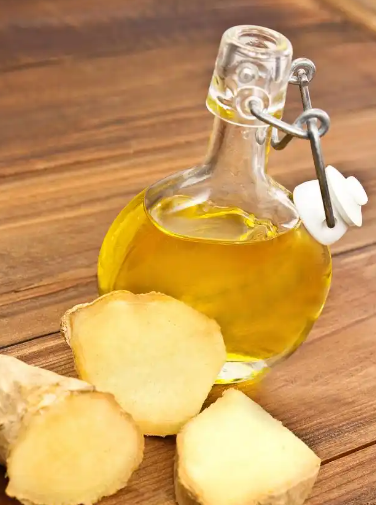
Ginger oil(CAS#8007-08-7)
| WGK Germany | 2 |
| RTECS | LY9480000 |
| Toxicity | Both the acute oral LD50 value in rats and the acute dermal LD 50 value in rabbits exceeded 5 g/kg (Shelanski, 1972). |
Introduction
Ginger oil, also known as fresh ginger oil, is an essential oil extracted from the roots of the ginger plant. Below is an introduction to the properties, uses, preparation, and safety information of ginger oil:
Properties:
- Ginger oil has a strong ginger aroma and a pungent spicy scent.
- It is a yellow to light brown liquid.
- The main component of ginger oil is gingerol, and it also contains compounds such as zingiberene and gingerone.
Uses:
- In traditional herbal medicine, ginger oil is also used to soothe joint and muscle pain.
Preparation:
- The main method of preparing ginger oil is by distilling the roots of the ginger plant.
- First, the ginger roots are crushed, and then essential oil is extracted through steam distillation.
- The final product obtained is ginger oil.
Safety Information:
- Ginger oil is generally regarded as safe and usually has no toxic side effects when used in appropriate amounts.
- For some people, ginger oil may cause allergic reactions, especially for those allergic to ginger.
- The oxide components in ginger oil are prone to oxidation and spoilage, so it should be stored away from direct sunlight and high temperatures.
- When using ginger oil, appropriate concentrations and amounts should be followed to avoid skin burns or mucous membrane irritation.


![2-[(1R)-3-(dipropan-2-ylamino)-1-phenylpropyl]-4-(hydroxymethyl)phenol(CAS#207679-81-0)](https://www.xinchem.com/uploads/phenol.gif)