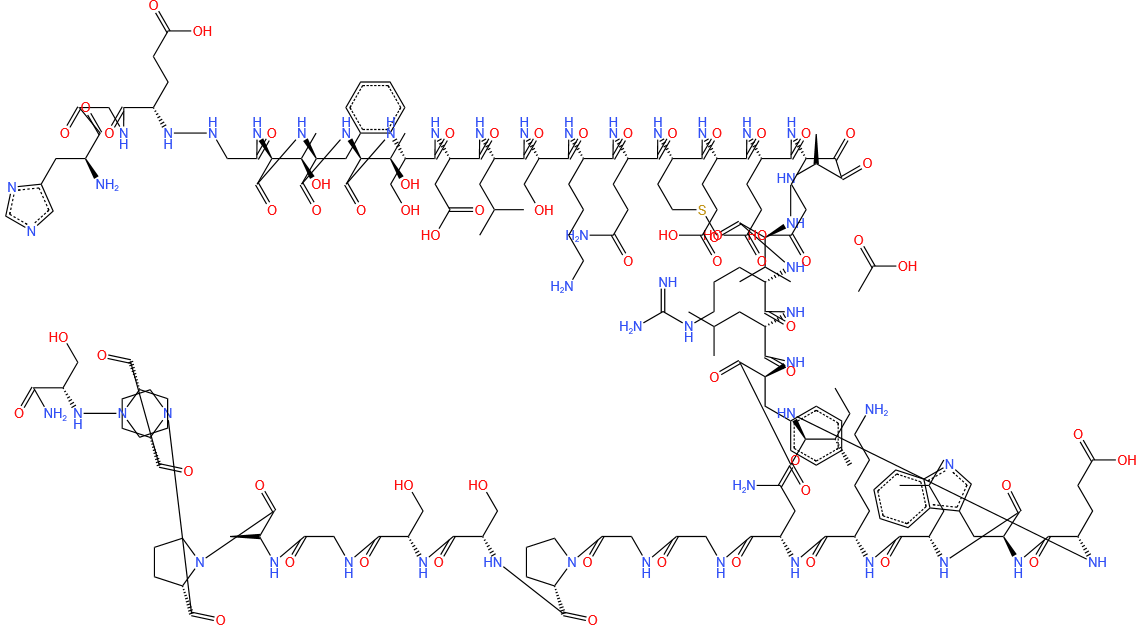

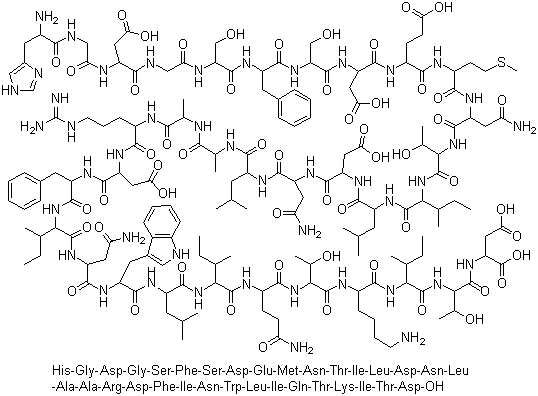
Teduglutide(CAS#197922-42-2)
Teduglutide(CAS#197922-42-2)
Pharmacological effects: It can reduce gastric emptying and secretion, and regulate the growth, proliferation and repair of small intestinal lining cells, increase the number of small intestinal lining cells, thereby increasing small intestinal absorption and reducing diarrhea.
Clinical application: for the treatment of short bowel syndrome in adults, it is the first drug recommended for this rare but extremely debilitating disease.
Pharmacokinetics: The metabolism of teduglutide is not fully understood. Since it is a peptide, it may follow the main mechanism of peptide metabolism. There are currently no specific organs identified as the primary route of elimination.
Adverse reactions: the most commonly reported adverse reactions were abdominal pain and bloating (45%), respiratory tract infection (28%), nausea (26%), injection site reactions (26%), headache (16%), and vomiting (14%).
Precautions: Contraindicated in patients with hypersensitivity to the active substance or any of the listed excipients or trace residues of tetracycline, and in patients with active or suspected malignancy. Patients with colorectal polyps, gastrointestinal tumors, pancreatic diseases, intestinal obstruction, fluid overload, etc., need special attention when using them, and should be evaluated on a case-by-case basis. Pregnant and lactating women are best avoided, and safety and efficacy in children under 1 year of age have not been established.
Application
Teduglutide is a 33‑amino acid recombinant analog of human glucagon‑like peptide‑2 (GLP‑2). Approved by the FDA and EMA for adults and pediatric patients (≥1 year) with short bowel syndrome (SBS) who are dependent on parenteral support, it activates the GLP‑2 receptor in enteroendocrine cells, subepithelial myofibroblasts and enteric neurons. This promotes intestinal epithelial proliferation, inhibits apoptosis, enhances villus height and crypt depth, and upregulates nutrient and fluid absorption. Clinically, teduglutide reduces parenteral support volume and days, with some patients achieving complete independence from intravenous supplementation. Research also supports its investigation for Crohn’s disease, chemotherapy‑induced mucositis, liver fibrosis, and obesity‑related neuroinflammation. As a potent GLP‑2 analogue, teduglutide is an invaluable pharmaceutical tool and API for advancing enteropathy therapeutics and preclinical models. Xinchem provides custom synthesis and contract manufacturing of high‑purity teduglutide with flexible scaling from R&D to commercial tons. Contact us for a competitive quote.
![Urea, N-[[(6'R)-6',7'-dihydro-6'-hydroxy-2',4',6'-trimethyl-7'-oxospiro[cyclopropane-1,5'-[5H]inden]-3′-yl]methyl]-N-hydroxy(CAS#924835-67-6)](https://www.xinchem.com/uploads/hydroxy.gif)