

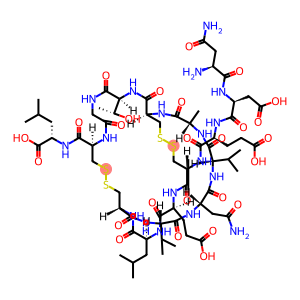
Plecanatide(CAS#467426-54-6)
Plecanatide(CAS#467426-54-6)
Precanatide is an analogue of urinary guanosine protein, which belongs to the class of guanylate cyclase-C (GC-C) receptor agonists. It binds to the GC-C receptor on the surface of intestinal epithelial cells, activates the receptor, and increases intracellular and extracellular concentrations of cyclic guanosine monophosphate (cGMP). The increase in cGMP regulates acid-base ions in the gastrointestinal tract and induces fluid transport into the gastrointestinal tract, thereby softening the stool; At the same time, it can also increase the peristalsis of the gastrointestinal tract and promote the excretion of feces.
Clinical application: It is suitable for the treatment of chronic idiopathic constipation (CIC) and constipation irritable bowel syndrome (IBS-C) in adults. For patients who do not respond well to or are intolerant of traditional laxatives, pukanatide offers a new treatment option.
Pharmacokinetics: Systemic absorption is minimal after oral administration and exerts a local effect in the gastrointestinal tract. It is metabolized in the gastrointestinal tract as an active metabolite that loses the terminal leucine moiety. Pucanatide and its metabolites are proteolytically degraded into smaller peptides and natural amino acids in the intestinal lumen and hardly enter the systemic circulation, so it is not possible to calculate their standard pharmacokinetic parameters such as half-life, area under the plasma concentration-time curve, etc.
Adverse effects: Common side effects include diarrhea, abdominal pain, bloating, nausea, headache, etc., which are usually mild and transient. However, long-term use may increase the risk of cancer, so long-term use is not recommended. If you have serious side effects such as dyspnea, heart palpitations, and chest pain, you should stop the drug immediately and seek medical attention.
Application
Plecanatide (Trulance, CAS 467426-54-6) is a 16-amino acid, orally active, synthetic peptide analog of the endogenous human gastrointestinal hormone uroguanylin. As a potent and selective guanylate cyclase-C (GC-C) receptor agonist, it binds to GC-C on intestinal epithelial cells, activating a cascade that elevates intracellular and extracellular cyclic GMP (cGMP) levels. This biochemical signal, mediated by protein kinase II and the cystic fibrosis transmembrane conductance regulator (CFTR), increases chloride and bicarbonate secretion into the intestinal lumen while inhibiting sodium absorption, leading to enhanced fluid secretion and accelerated gastrointestinal transit. Clinically, plecanatide is approved by the FDA for the treatment of chronic idiopathic constipation (CIC) and irritable bowel syndrome with constipation (IBS-C) in adults. Its effects are unique in being localized primarily to the proximal small bowel, which is believed to minimize systemic exposure and potential off-target effects, resulting in a favorable safety profile with diarrhea as the most common adverse reaction. As a high-value peptide therapeutic, plecanatide is a key active pharmaceutical ingredient (API) and research standard for gastrointestinal drug development, formulation studies, and the investigation of GC-C mediated pathways in constipation and inflammatory bowel disease models. Xinchem is a premier partner for the development and supply of this high-purity peptide, supporting projects from research-grade quantities through custom synthesis, custom chemical synthesis, and full-scale contract manufacturing of plecanatide. Contact us today for a competitive quote and a reliable, compliant global supply.

![2-[(4-methoxy-3-methyl-pyridin-2-yl)methylsulfinyl]-5-pyrrol-1-yl-3H-benzoimidazole(CAS#172152-36-2)](https://www.xinchem.com/uploads/benzoimidazole.png)