
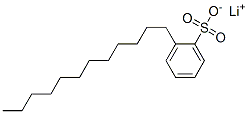
Lithium Dodecylbenzenesulphonate(CAS#29062-27-9)
I.Health Hazard Classification
There is currently no complete and unified GHS hazard classification in public information. However, based on structurally similar substances and limited data, the following known hazards exist:
- It can cause irritation to the respiratory tract, skin and eyes, and inhalation of its dust may cause discomfort.
- If a large amount of dust is inhaled, large-area skin contact or accidental ingestion occurs, adverse health effects may occur.
- According to the occupational health standard of Quebec, Canada, the allowable time-weighted average concentration for this type of substance is 1mg/m³ (calculated as iron).
II. Operation and Protection Requirements
- Operate in a well-ventilated area, avoid dust accumulation, and wear basic protective equipment throughout the process: protective gloves, goggles, and dust mask.
- Clean your skin in time after operation. Eating, drinking, and smoking are strictly prohibited in the operation area to prevent ingestion of dust.
- Store in a cool, dry, light-proof and sealed place, keep away from strong oxidizing agents.
III. Emergency Response Measures
表格
| Exposure Route | Disposal Plan |
|---|---|
| Inhalation of dust | Quickly move to an area with fresh air, keep breathing unobstructed, and seek medical attention in time if you feel unwell |
| Eye contact | Immediately rinse the eyes with plenty of clean water for at least 5 minutes until the substance is completely removed, and seek medical attention if irritation persists |
| Skin contact | Immediately rinse the skin with clean water, seek medical attention if irritation persists, and wash contaminated clothing before reuse |
| Ingestion | Rinse mouth and seek medical attention, and deal with abnormal symptoms in time |
IV. Leakage and Fire Fighting Requirements
- Leakage: Isolate the contaminated area, avoid dust generation, collect the leaked substance into a compliant waste container for disposal; for large-scale leakage, use a covering to enclose the area and dispose of it uniformly.
- Fire fighting: The substance itself is non-flammable, but if it is involved in a fire, it will decompose into toxic fume. Firefighters must wear gas masks when extinguishing the fire, and water, dry powder, and carbon dioxide fire extinguishers can be used.
Write your message here and send it to us