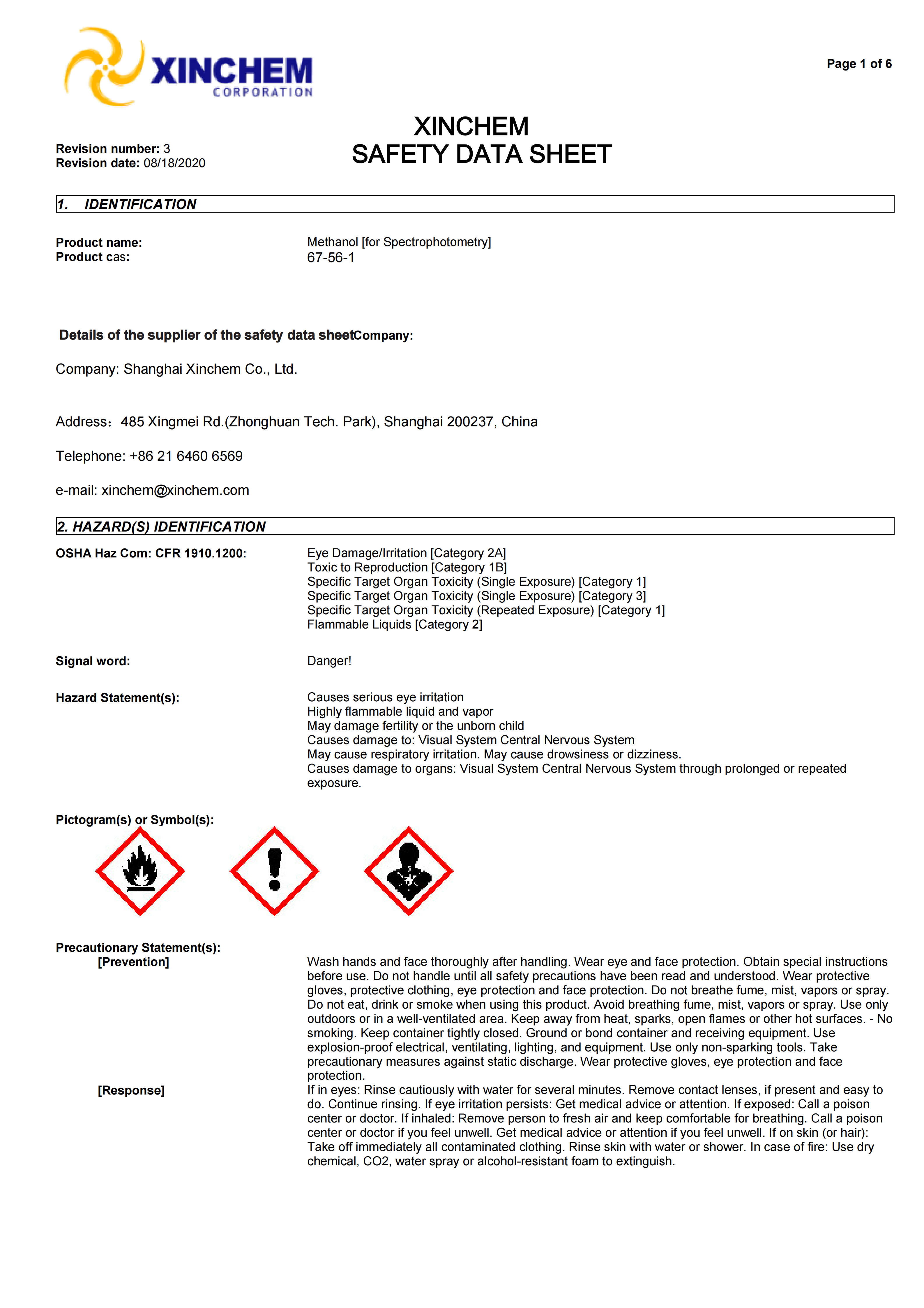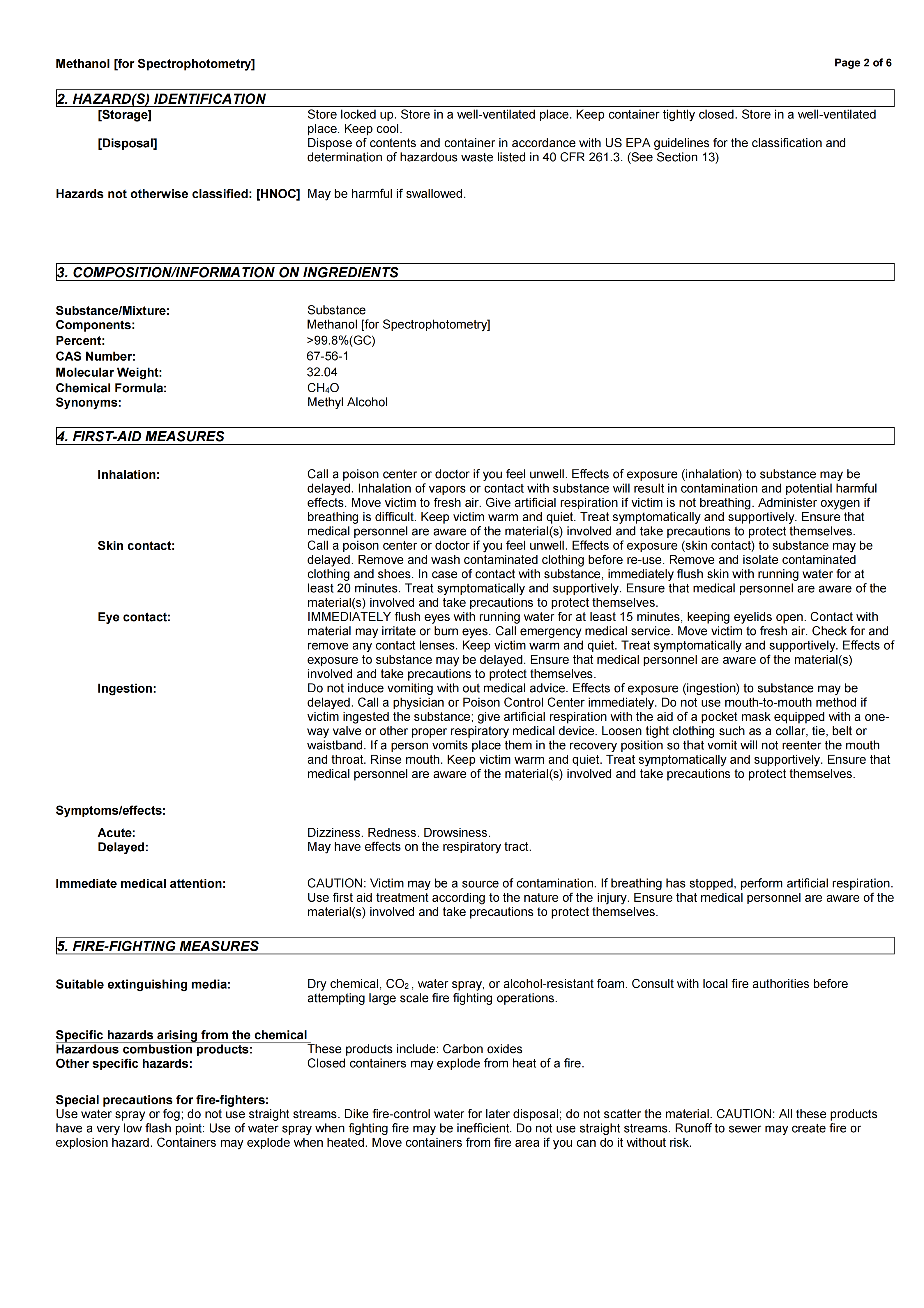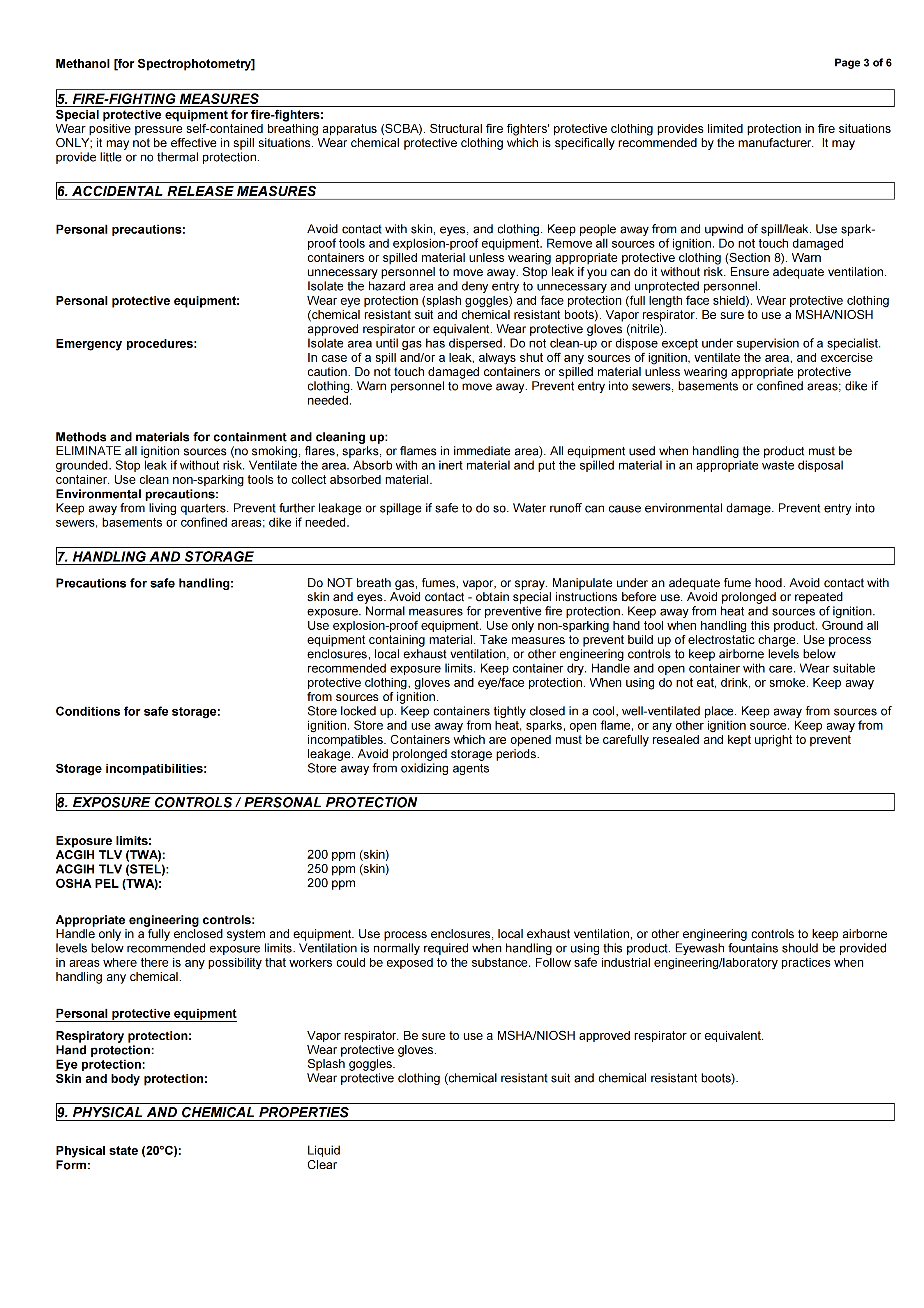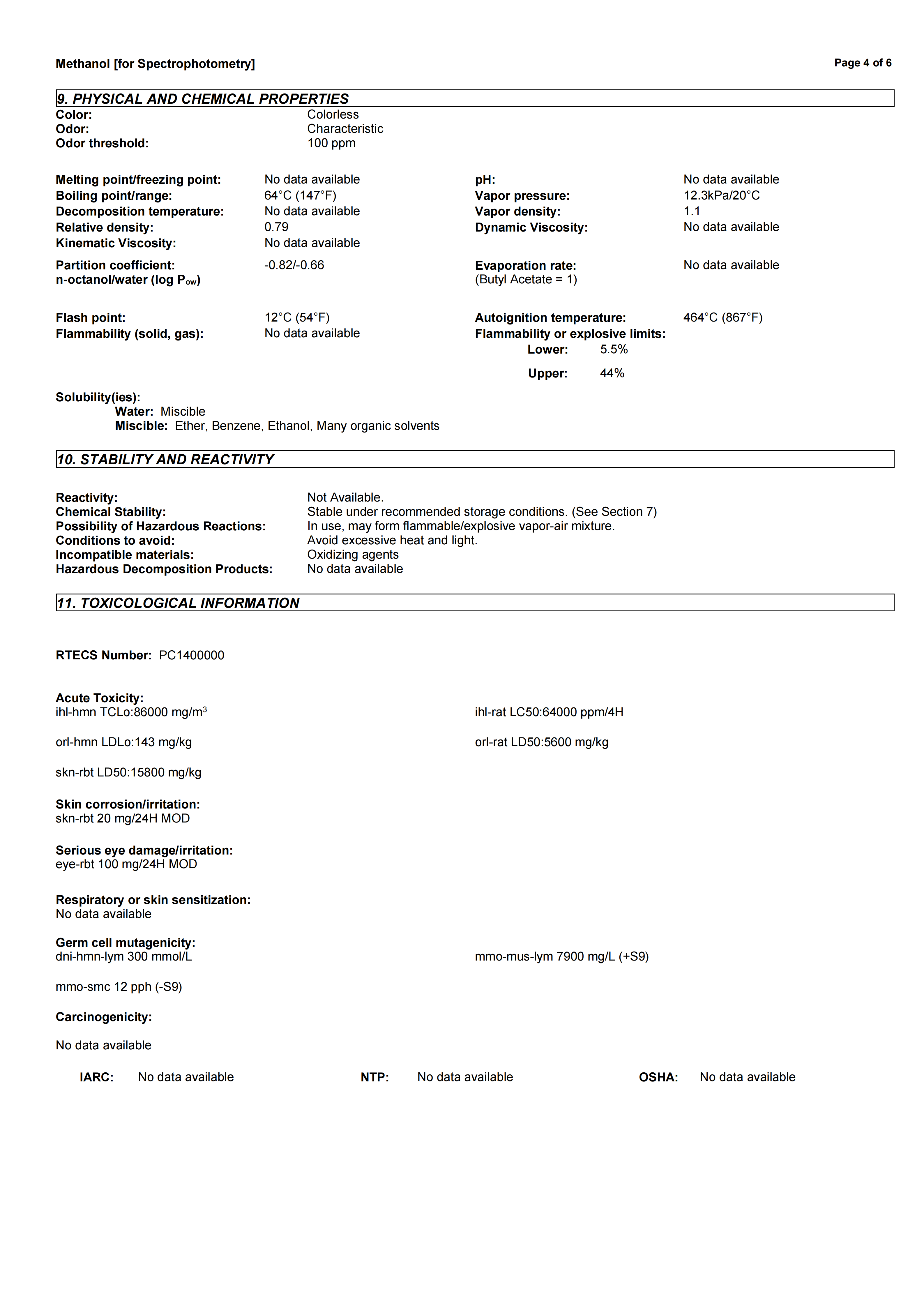


Methanol(CAS#67-56-1)
Chemical Property:
67-56-1 – Names and Identifiers
| Name | Methyl alcohol |
| Synonyms | Methanol Carbinol Methylol wood spirit wood naphtha Wood alcohol Methyl alcohol colonial spirit methyl hydroxide Methanol,refined pyroxylic spirit columbian spirit columbian spirits monohydroxymethane Methanol,anhydrous Methyl alcohol,refined |
| CAS | 67-56-1 170082-17-4 |
| EINECS | 200-659-6 |
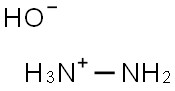
| InChI | InChI=1/CH4O.H2O/c1-2;/h2H,1H3;1H2 |
67-56-1 – Physico-chemical Properties
| Molecular Formula | CH4O |
| Molar Mass | 32.04 |
| Density | 1.053 g/cm3 at 20 °C (lit.) |
| Melting Point | -98℃ |
| Boling Point | 64.5 – 65.4℃ |
| Flash Point | 12°C (54°F) |
| Water Solubility | miscible |
| Vapor Presure | 2.14mmHg at 25°C |
| Color | liquid |
| Storage Condition | room temperature |
| Physical and Chemical Properties | Character colorless transparent flammable volatile polar liquid. Pure product with slightly ethanol odor, crude pungent smell. melting point -97.8 ℃ boiling point 64.7 ℃ relative density 0.7914 refractive index 1.3287 flash point 16 ℃ , diethyl ether, benzene, ketones and most other organic solvents are miscible. |
| Use | Used as basic organic raw materials, solvents and antifreeze. Mainly used in the system of formaldehyde, flavor, dye, medicine, powder, antifreeze, etc. |
67-56-1 – Risk and Safety
| Hazard Symbols | F – Flammable T – Toxic  |
| Risk Codes | R11 – Highly Flammable R23/24/25 – Toxic by inhalation, in contact with skin and if swallowed. |
| Safety Description | S16 – Keep away from sources of ignition. S36/37 – Wear suitable protective clothing and gloves. S45 – In case of accident or if you feel unwell, seek medical advice immediately (show the label whenever possible.) S7 – Keep container tightly closed. |
| UN IDs | UN 1230 |
67-56-1 – Upstream Downstream Industry
| Raw Materials | Diesel oil Carbon Dioxide Coke(coal) Hydrogen Oxygen carbon monoxide,cyl. with 10 L (net~3kg) |
| Downstream Products | Dimethoxymethane 2-Acetyl-6-methoxynaphthalene 1,2,4,5-Tetramethylbenzene Glyoxal |
Properties
A colorless, clear liquid. Its vapor can form explosive mixtures with air. It burns with a blue flame. Critical temperature: 240.0°C; critical pressure: 78.5 atm. It is miscible with water, ethanol, ether, benzene, ketones, and other organic solvents.
Exposure to open flames or high temperatures may cause fire or explosion. It reacts violently with oxidizing agents. When exposed to high temperatures, the pressure inside the container may increase, creating a risk of rupture or explosion. It burns with a non-luminous flame. Static electricity may accumulate and ignite its vapor.
Preparation
Industrial-grade methanol is first subjected to fractional distillation to reduce its water content to below 0.01%. It is then treated with sodium hypoiodite to effectively remove acetone impurities, thereby obtaining purified methanol.
Uses
Used as a chromatographic analytical standard and as a solvent for instrumental analysis.
Safety
- Rat oral LD50: 5,628 mg/kg.
- Rabbit dermal LD50: 15,800 mg/kg.
- Rat inhalation LC50 (4 h): 64,000 × 10⁻⁶.
Methanol is irritating to the mucous membranes of the respiratory and gastrointestinal tracts and has toxic effects on blood vessels and the nervous system. It may cause vascular spasms, resulting in congestion or hemorrhage. It has a particular affinity for the optic nerve and retina, potentially causing retinal necrosis due to impaired nutrition.
Store in a cool, well-ventilated warehouse. Keep away from ignition sources and heat. The storage temperature should not exceed 30°C. Protect from direct sunlight and keep containers tightly sealed. Store separately from oxidizing agents.