
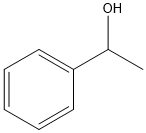
Methyl benzyl alcohol(CAS#98-85-1)
98-85-1 - Risk and Safety
| Hazard Symbols | Xn – Harmful |
| Risk Codes | R22 – Harmful if swallowed R38 – Irritating to the skin R41 – Risk of serious damage to eyes R36/37/38 – Irritating to eyes, respiratory system and skin. |
| Safety Description | S26 – In case of contact with eyes, rinse immediately with plenty of water and seek medical advice. S39 – Wear eye / face protection. S37/39 – Wear suitable gloves and eye/face protection |
| UN IDs | UN 2937 6.1/PG 3 |
| WGK Germany | 1 |
| RTECS | DO9275000 |
| TSCA | Yes |
| HS Code | 29400090 |
| Hazard Class | 6.1(b) |
| Packing Group | III |
98-85-1 - Reference Information
| FEMA | 2685 | ALPHA-METHYLBENZYL ALCOHOL |
| LogP | 1.636 at 25℃ |
| NIST chemical information | information provided by: webbook.nist.gov (external link) |
| EPA chemical substance information | information provided by: ofmpeb.epa.gov (external link) |
| Introduction | styrenol and phenylethyl alcohol are isomers, also known as α-phenylethyl alcohol, these two compounds have different structures and physical and chemical properties, and are also different in fragrance. Su contains aroma and alcohol-like vibrator-like, purple-like aroma, while phenylethyl alcohol is mainly a rose-like aroma. Phenethyl alcohol naturally exists in the Rose, leaf, flower and other plant essential oils, there is no report of the existence of the nature of the vinyl alcohol. |
| Application | α-phenylethanol is an important intermediate of perfume and fine chemical industry, because of its special physical and chemical properties, it is widely used in medicine, perfume manufacturing, cosmetics, food and fine chemical industries. Alpha-phenylethyl alcohol has a soft, pleasant and lasting rose fragrance, which is widely used in fragrance manufacturing, in common soap, cosmetics and perfumes, there is a great demand both at home and abroad. |
| preparation | : a preparation method of α-phenylethyl alcohol, the method is: using acetophenone as raw material under normal pressure, Α-phenylethanol was obtained by using alcohol as hydrogen source, supported alkaline earth metal oxide as catalyst, reacting at 60~130 ℃ for 1~10 hours and post-treating the reaction solution at the end of the reaction; the alcohol is C1-C7 fatty alcohol or C3-C7 alicyclic alcohol; The ratio of the amount of the substance of acetophenone and alcohol is 1:5-30; the supported alkaline earth metal oxide is composed of a carrier and an alkaline earth metal oxide supported on the carrier, the alkaline earth metal oxide is MgO, CaO, SrO or BaO, and the carrier is activated carbon, the loading amount of the alkaline earth metal oxide is 0.5 to 15wt% based on the mass of the carrier. |
| Use | GB 2760-1996 specifies temporary use of flavorants. Mainly used in the preparation of strawberry and tropical fruit flavor. intermediates in organic synthesis. organic synthesis. For daily chemicals and food flavor, can also be made into acetate, propionate and other esters of flavor. |
| production method | 12g of dry acetophenone was dissolved in 30ml of dry isopropanol, and 22g of aluminum isopropoxide was added with stirring, after 2H of reaction, ice precipitated crude product, which was washed with water, dried and distilled under reduced pressure to obtain 9 g1-phenylethanol. From the oxidation of ethylbenzene. Derived from the reduction of acetophenone. |
| category | toxic substances |
| toxicity grade | high toxicity |
| Acute toxicity | oral-rat LD50: 400 mg/kg |
| stimulation data | Skin-rabbits 500 mg/24 h moderate; eye-rabbit 2 mg severe |
| flammability hazard characteristics | combustible fire; Spicy and irritating smoke emitted from fire scene |
| storage and transportation characteristics | The warehouse is ventilated and dried at low temperature; Separate from food and oxidant |
| extinguishing agent | foam, dry powder, sand, 1211 extinguishing agent |
| toxic substance data | information provided by: pubchem.ncbi.nlm.nih.gov (external link) |
Write your message here and send it to us