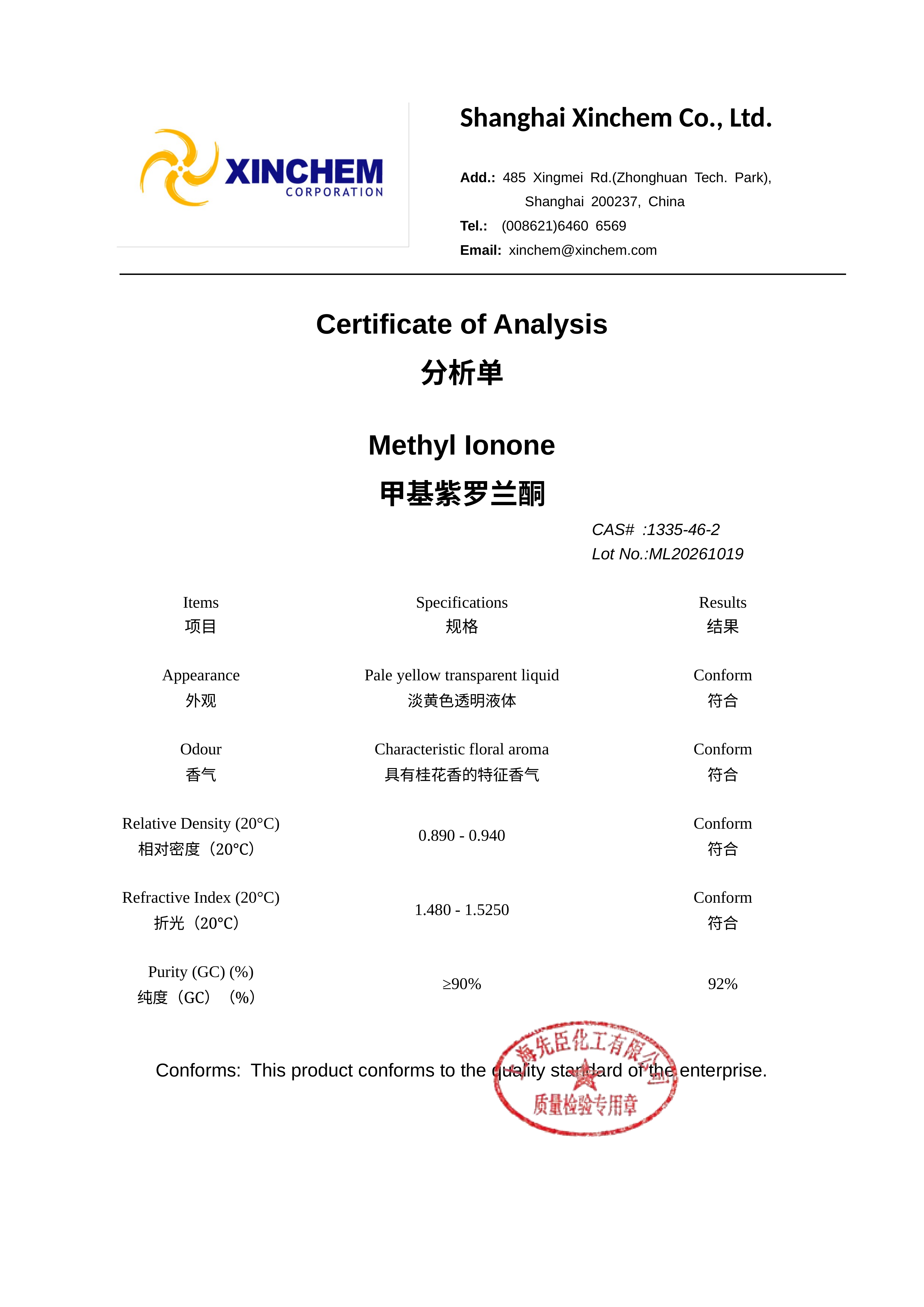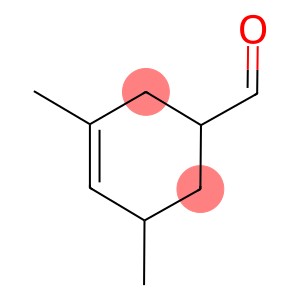

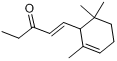
Methyl Ionone(CAS#1335-46-2)
Properties and Odor Profile
Methyl ionone is a synthetic fragrance ingredient made up of closely related cyclic ketones. It gives fragrance blends a soft, powdery floral character reminiscent of violet and orris, with a woody undertone. The isomer profile influences the balance of floral, powdery, and woody notes, so evaluate the grade in your own fragrance base before approving it for production.
Applications of Methyl Ionone
Fine fragrance. Perfumers use methyl ionone to build violet and iris accords, add softness to floral bouquets, and connect floral heart notes with woody, amber, or musk base notes. It is particularly useful when the brief calls for a powdery floral effect that carries through into the dry-down. Evaluate the fragrance on a blotter over time to see how the balance develops after the opening notes fade.
Personal care and soaps. Methyl ionone can give bar soaps, body washes, shampoos, and fragranced cosmetics a soft violet character. Evaluate odor, color, and clarity in the finished base because the surfactant system, pH, and storage conditions can influence how the fragrance performs.
Laundry and home care. In laundry fragrances, fabric care products, and air fresheners, methyl ionone adds a powdery floral note that pairs with woods and musks. For fabric applications, compare the scent in the concentrate and on dried fabric. For liquid air fresheners, check fragrance clarity and odor stability in the intended carrier.
Preparation Method
A conventional industrial route starts with the aldol condensation of citral and methyl ethyl ketone (2-butanone). Dehydration produces pseudo-methyl ionone intermediates, which undergo acid-catalyzed cyclization to form methyl ionone isomers. Distillation can then be used to refine the product. The reaction conditions influence the final isomer distribution and, in turn, the odor profile.
Safety, Storage, and Formulation Limits
Concentrated methyl ionone can irritate the skin and may cause an allergic skin reaction. Wear suitable protective gloves and eye protection, avoid release to drains, and follow the SDS for the selected grade. Keep containers tightly closed in a cool, dry, well-ventilated area.
Check the applicable IFRA Standard for the finished-product category. For cosmetics sold in the EU, quantify alpha-isomethyl ionone (CAS 127-51-5) in the finished product where present. It must be declared when its concentration exceeds 0.001% in leave-on products or 0.01% in rinse-off products.
Ordering and Grade Selection
When matching an existing fragrance, compare the total methyl ionone assay and individual isomer percentages by gas chromatography (GC). Review the odor profile and evaluate a sample in your finished base before placing a bulk order. The CAS number identifies the mixture, while the GC profile helps you select the grade that best matches your formula.
Request a quote from XinChem. Include your application, required quantity, and target odor or isomer profile. Ask for the grade specification, SDS, and a representative CoA for review.