
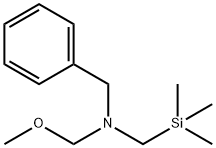
N-Methoxymethyl-N-(trimethylsilylmethyl)benzylamine(CAS# 93102-05-7)
| Hazard Symbols | Xi - Irritant |
| Risk Codes | 36/37/38 - Irritating to eyes, respiratory system and skin. |
| Safety Description | S26 - In case of contact with eyes, rinse immediately with plenty of water and seek medical advice. S37/39 - Wear suitable gloves and eye/face protection |
| UN IDs | 1993 |
| WGK Germany | 3 |
| HS Code | 29319090 |
| Hazard Class | 3 |
| Packing Group | Ⅲ |
Introduction
N-Methoxymethyl-N-(trimethylsilanemethyl)benzylamine is an organic compound. It is a colorless liquid with a strong ammonia odor and can be dissolved in organic solvents such as ethanol, ethers, and hydrocarbons.
N-Methoxymethyl-N-(trimethylsilanemethyl)benzylamine is generally used as a reagent and intermediate, and is often used in organic synthesis reactions. It can be used in the synthesis of organosilicon compounds and olefin polymerization catalysts.
The preparation method of N-methoxymethyl-N-(trimethylsilanemethyl)benzylamine is generally used by chemical synthesis. Specifically, it can be obtained by the reaction of benzylamine and N-methyl-N-(trimethylsilanemethyl)amine.
Safety Information: N-Methoxymethyl-N-(trimethylsilanemethyl)benzylamine is a harmful substance that is irritating to the skin, eyes and respiratory system. Appropriate protective equipment such as gloves, goggles, and respirators should be worn when in use. Avoid contact with skin and eyes, and operate under good ventilation. In case of accidental contact, rinse immediately with plenty of water and seek medical attention.
Application
N-Methoxymethyl-N-(trimethylsilylmethyl)benzylamine (CAS 93102-05-7) is a versatile organosilicon reagent widely employed in organic synthesis as a nonstabilized azomethine ylide precursor. Upon treatment with catalytic trifluoroacetic acid or fluoride sources (e.g., LiF, TBAF), it generates the reactive N-benzyl azomethine ylide in situ, which undergoes [3+2] cycloaddition with alkenes, alkynes, and other dipolarophiles to afford N-benzyl substituted pyrrolidines and 3-pyrrolines in good yields. This compound is preferred over alternative silylmethylamine precursors due to its ease of handling and effectiveness. It participates in asymmetric 1,3-dipolar cycloadditions for the practical, large-scale synthesis of chiral pyrrolidines and is used in the synthesis of 3-carboxy-1-azabicyclo[2.2.1]heptane derivatives, an important class of physiologically active compounds. The cycloaddition proceeds with complete cis stereospecificity, providing access to fused bicyclic and spirocyclic systems depending on the dipolarophile employed. Typical dipolarophiles include α,β-unsaturated esters, ketones, imides, nitriles, and sulfones. Xinchem offers custom synthesis, custom chemical synthesis, and contract manufacturing of this high-purity reagent with flexible scaling from R&D to commercial tons. Contact us for a competitive quote and reliable global supply.