
PPG Buteth Polyether Defoamer(CAS#9038-95-3)–EO/PO Copolymer for Industrial Foam Control
1. Properties:
- Appearance and Physical Form: PPG Buteth polyether defoamer is supplied as a colourless to light yellow or amber clear viscous liquid. Commercial grades are available as both 100% active neat fluids and as 50% active water-based emulsions. The product is characterised by a mild, low-volatility odour and is stable under normal storage conditions.
- Solubility: PPG Buteth exhibits unique solubility behaviour critical to its defoaming function: it is soluble in cold water but shows inverse solubility—phase separation and decreasing solubility with increasing temperature. This inverse solubility profile means the product is more soluble in cold water than in hot water, enabling the defoamer to remain dispersed at lower temperatures but become less soluble and more active at the high temperatures where foam formation is most problematic. The product is miscible with water and fully soluble in most polar organic solvents, hydrocarbons and oils.
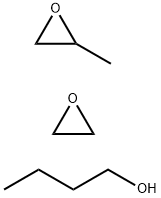
- Chemical Properties: PPG Buteth is a non‑ionic, water‑soluble synthetic block copolymer belonging to the polyalkylene glycol (PAG) class. It consists of a butyl‑capped poly(ethylene glycol‑co‑propylene glycol) structure with the general formula CH₃(CH₂)₃(OCH₂CH₂)ₓ[OCH₂CH(CH₃)]ᵧOH. The ethylene oxide (EO) content imparts water solubility and hydrophilic character, while the propylene oxide (PO) content provides hydrophobic properties essential for defoaming activity.
- Defoaming Mechanism: The defoaming action is driven by the low surface tension of the EO/PO copolymer and its inverse water solubility. When foam forms in an aqueous system at elevated temperature, PPG Buteth becomes less soluble and migrates to the gas-liquid interface. The copolymer spreads rapidly across the foam lamellae, displacing the foam‑stabilising surfactant layer, reducing local surface tension, and causing the foam bubbles to rupture. The effect is rapid foam knockdown combined with persistent foam suppression.
- Thermal Stability: PPG Buteth exhibits exceptional thermal stability at elevated temperatures without decomposition. In high‑temperature applications where decomposition may occur, the product typically does not leave black carbon or sticky residues; decomposition products are volatile or are solubilised into the base stock. The copolymer has a high flash point (min. 100°C, ranging to >250°C depending on grade) and a high auto‑ignition temperature of approximately 271°C (520°F), making it safe for use in high‑temperature industrial processes.
- Lubricity and Material Compatibility: PPG Buteth provides good lubricity under load, is non‑corrosive to metals, and has a very low ash content and low pour point. These properties make it suitable as a base stock for metalworking fluids, hydraulic fluids and industrial lubricants where both foam control and lubrication are required simultaneously. The low ash content ensures clean operation without deposit formation in high‑temperature applications.
- Low Foam Characteristics: The copolymer inherently exhibits low foam generation, making it particularly suitable for formulating low‑foam cleaning and processing aids where residual foam would be detrimental to performance.
- Chemical Stability: PPG Buteth is chemically stable across a wide pH range, resistant to oxidation and hydrolysis, and does not react with most industrial chemicals under normal processing conditions. It is non‑corrosive and does not attack metals or damage seals and gaskets commonly used in industrial equipment.
- Biodegradability: PPG Buteth is biodegradable in its neat form, offering a more environmentally acceptable profile compared to persistent mineral oil‑based defoamers.
- Compatibility: The product is compatible with most surfactant systems, anionic, non‑ionic and cationic species, and does not interfere with the performance of other formulation components such as wetting agents, dispersants, emulsifiers or biocides.
2. Applications:
Paints, Coatings & Inks (Primary Defoaming):
- Water‑Based Paints and Architectural Coatings: PPG Buteth is used as a defoamer in latex paints, acrylic emulsions, and water‑based industrial coatings to eliminate surface foam defects including cratering, pinholes, fish eyes and orange peel. Low surface tension and inverse solubility ensure rapid foam collapse during manufacture, mixing, and application by brush, roller or spray. The product does not affect coating adhesion, gloss, colour or weather resistance.
- Printing Inks: Effective defoamer for water‑based flexographic and gravure printing inks, preventing air entrapment during ink mixing and on‑press operation to ensure consistent print quality, sharp pattern definition and uniform ink transfer.
- UV‑Curable Coatings and Inks: PPG Buteth grades are suitable for use in water‑borne UV‑curable coatings and inks, particularly at low pigment volume concentrations, without interfering with UV curing kinetics or final film properties.
- Wood Coatings and Varnishes: Controls foam in water‑based wood stains, clear varnishes and trim coatings, preventing surface defects that would detract from aesthetic appearance.
Metalworking Fluids (MWF):
- Soluble Oils, Semi‑Synthetic and Synthetic MWFs: PPG Buteth is formulated into metalworking fluids as a defoamer and anti‑foam additive to prevent foam build‑up that would otherwise reduce cooling efficiency, lubricity, chip settling and tool life. The inverse solubility mechanism ensures defoaming activity at operating temperatures where foam formation is most severe.
- Industrial Gear Oils, Hydraulic Fluids and Compressor Lubricants: Used as a base stock component for polyalkylene glycol (PAG)‑based synthetic lubricants in high‑temperature, high‑loading environments including compressors handling non‑oxidising gases (ethylene, neon, helium, argon), gear and bearing applications, calendar lubricants, and rubber lubricants for hoses and tyres.
- Quenchants and Heat Transfer Fluids: PPG Buteth is used in heat transfer fluids, quenchants and solder assist fluids, providing excellent thermal stability, clean burn properties and foam control under demanding conditions. Very low ash content and non‑corrosive properties minimise equipment fouling.
Textile Industry:
- Textile Lubricants and Fiber Finishes: PPG Buteth functions as a base stock or additive for textile lubricants, particularly for the lubrication of polyester, polyamide and polypropylene multifilament yarns in texturising operations, as well as for wool and cellulosic fibres. The low pour point, high viscosity index and inverse water solubility provide consistent lubrication and foam control across the full processing temperature range.
- Textile Dyeing and Printing: Used as a defoamer in dye baths and printing pastes to prevent air entrapment, eliminate print defects and ensure uniform dye transfer. The product does not interfere with dye uptake or colour development.
- Sizing and Finishing Baths: Added to sizing and finishing formulations to control foam during application, ensuring uniform coating of yarns and fabrics without processing interruptions.
Pulp & Paper Industry:
- Paper Machine White Water Systems: PPG Buteth defoamer is used to control foam in paper machine wet ends, white water loops, pulp washing and screening operations, improving drainage, sheet formation and machine runnability while reducing sheet defects caused by air entrapment.
- Paper Coatings and Pigment Dispersions: The product functions as a defoamer and surface‑active agent in paper coating formulations and pigment slurries, preventing foam defects during coating application and ensuring a smooth, uniform coated surface.
Water & Wastewater Treatment:
- Industrial Wastewater Treatment: PPG Buteth is used as a defoamer in industrial effluent treatment plants, particularly in aeration tanks, clarifiers and sludge handling systems where foam formation is triggered by surfactants, organic loading and fine solids. The rapid foam knockdown prevents overflow, improves solids settling and reduces maintenance requirements.
- Cooling Tower Water Treatment: Controls foam in recirculating cooling water systems caused by surfactant carryover, biological activity and process leaks. The product is stable under typical cooling tower operating conditions and does not contribute to biofilm formation or scaling.
Agrochemicals:
- Spray Adjuvants: PPG Buteth is incorporated into herbicide, insecticide and fungicide tank mixes to control foam generated by surfactants and mechanical agitation during preparation and field spraying. Foam‑free spray ensures uniform coverage, accurate dosing, and maximises contact between active ingredient and target foliage.
- Pesticide Suspension Concentrates (SC) and Emulsifiable Concentrates (EC): Used in agrochemical formulations to control foam during manufacturing, packaging and field application without affecting active ingredient stability or efficacy.
Oilfield & Drilling Fluids:
- Water‑Based Drilling Muds: PPG Buteth is added to drilling fluids for oil and gas exploration to eliminate foam that would otherwise reduce pump efficiency, interfere with solids control equipment and cause loss of circulation. The product is compatible with typical drilling fluid additives (barite, bentonite, polymers, salts) and remains active across a wide pH and temperature range.
- Fracturing Fluids and Completion Brines: Used as a foam control agent in hydraulic fracturing operations where foam would hinder accurate blending, proppant suspension and fracture conductivity.
- Upstream Oilfield Production: PPG Buteth functions as a defoamer in crude oil separation, gas sweetening and produced water treatment systems.
Fermentation & Bioprocessing:
- Microbial Fermentation Antifoam: PPG Buteth is used as a foam control agent in aerobic and anaerobic fermentation processes for the production of antibiotics, enzymes, organic acids, alcohol, yeast and other bioproducts. The product does not inhibit microbial growth or interfere with oxygen transfer (kᴸa) at recommended use levels.
- Cell Culture and Pharmaceutical Processing: The biocompatibility and low toxicity of PPG Buteth make it suitable for pharmaceutical and biotechnology applications where foam would otherwise compromise sterile conditions, reduce yield or contaminate product.
Household & Industrial Detergents:
- Liquid Laundry Detergents and Fabric Softeners: PPG Buteth functions as a foam suppressant in concentrated and standard liquid laundry detergents, controlling excessive suds during machine washing to improve rinsing efficiency and reduce water consumption.
- Automatic Dishwashing Rinse Aids: The low foaming and surface tension reduction properties of PPG Buteth provide sheeting action in automatic dishwashing rinse aids, eliminating spots and filming on glassware, dishes and cutlery without residual foam.
- Industrial Cleaners and CIP Formulations: Used in industrial cleaning concentrates and clean‑in‑place (CIP) formulations for food, dairy, beverage and brewery equipment, providing effective foam control during high‑temperature, high‑shear cleaning operations.
Lubricants & Processing Aids:
- Hydraulic Fluids: PPG Buteth grades serve as base stocks for PAG‑based hydraulic fluids, offering excellent viscosity‑temperature behaviour, low pour point, high thermal stability and inherent lubricity.
- Mold Release Agents: Applied as a release agent in rubber hose, tyre and plastic moulding operations, particularly at high operating temperatures and under high loading.
- Polyethylene Extrusion Aids: PPG Buteth functions as a processing aid in extruded polyethylene production, improving flow characteristics and reducing melt fracture.
- Compressor Lubricants: Used as a base stock for synthetic compressor lubricants in applications handling non‑oxidising gases (ethylene, neon, helium, argon), offering oxidation stability, clean operation and foam control.
- Rubber Lubricants: Effective lubricant for rubber hoses and tyres in high‑temperature, high‑loading environments such as tyre manufacturing and rubber processing.
Food & Food Contact Applications (FDA Compliance):
- PPG Buteth is listed in the FDA’s Inventory of Food Contact Substances and is permitted as an indirect food additive under multiple 21 CFR regulations: 173.310 (boiler water additives), 173.340 (defoaming agents in food processing), 175.105 (adhesives for food packaging), 176.210 (defoaming agents in paper and paperboard), 177.1632 (ethylene‑vinyl acetate copolymers), 178.1010 (sanitising solutions) and 178.3570 (lubricants with incidental food contact).
- The product is approved for use in food processing as a defoamer in edible oil refining, fruit juice concentration, potato processing, poultry scalding, meat processing wash water, sugar refining, beverage production and other food manufacturing operations where foam control is required.
- PPG Buteth is also listed as a substance added to food (EAFUS) by the FDA, confirming its regulatory acceptance for food contact applications.
Other Industrial Applications:
- Plasticisers and Solvents: PPG Buteth functions as a plasticiser and solvent in various industrial formulations.
- Biomedical and Protein Research: High‑purity grades are used as polymer lubricants in proteomics research and protein analysis applications.
- Specialty Markets and Personal Care: The product provides emolliency, slip and pigment wetting properties in skin lotions, eye makeup removers and deodorants.
- Mining and Mineral Processing: PPG Buteth controls foam in mineral flotation circuits, slurry transport and tailings treatment operations.
3. Preparation Method:
- Laboratory Method: PPG Buteth polyether defoamer is synthesised in the laboratory by sequential or random anionic ring‑opening polymerisation of a mixture of ethylene oxide (EO) and propylene oxide (PO) in the presence of an initiator. Butanol (n‑butyl alcohol) serves as the monofunctional initiator for the polymerisation reaction. The reaction is carried out in a high‑pressure stirred autoclave at 120–150°C under inert atmosphere using a basic catalyst such as potassium hydroxide (KOH). Ethylene oxide and propylene oxide monomers are metered into the reactor in the desired ratio. The polymerisation continues until the target molecular weight is achieved. The crude product is neutralised with an acid (e.g., phosphoric acid), filtered to remove catalyst residues, and dried to obtain the final polyether. The molecular weight is controlled by the initiator/monomer ratio and the extent of polymerisation. The EO:PO ratio (typically ranging from 10:90 to 90:10) determines the hydrophile‑lipophile balance (HLB) and the solubility profile of the final copolymer.
- Industrial Process: Industrial production of high‑quality PPG Buteth polyether defoamer follows a continuous or batch polymerisation process with strict quality control:
- Initiator Preparation: Butanol (monobutyl ether) is charged into a high‑pressure stirred autoclave along with an alkaline catalyst (typically KOH) in an inert gas atmosphere (nitrogen blanket).
- Monomer Charge: The initiator mixture is heated to 120–150°C, and the EO/PO monomer mix (ratio pre‑selected for the desired HLB and solubility profile) is metered into the reactor under controlled pressure.
- Polymerisation: The exothermic ring‑opening polymerisation proceeds for several hours under conditions of constant temperature and agitation. The molecular weight is determined by the total monomer/initiator ratio.
- Neutralisation and Purification: After the reaction is complete, the crude polyether is neutralised with an acid (phosphoric or acetic acid) to remove residual catalyst, filtered, and vacuum‑stripped to remove unreacted monomers, water, and low molecular weight byproducts.
- Quality Control: The final product is analysed for key parameters including:
- Appearance: Clear to light yellow liquid, free from visible particulate matter.
- Viscosity: Determined by rotational viscometer (grade dependent).
- Cloud Point: Measured at specified concentration (dependent on EO/PO ratio).
- Hydroxyl Value: Determines molecular weight.
- Water Content: Karl Fischer titration (<0.5% typical).
- pH: 5–8 (1% solution in deionised water).
- Colour: APHA (Hazen) scale.
- Residual Monomers: Ethylene oxide and propylene oxide content (<1 ppm for food‑contact grades).
- Formulation (Optional): For emulsion grades (e.g., Antifoam HL™ 550 at 50% active content), the neat polyether is blended with water and suitable non‑ionic/anionic emulsifiers under high‑shear mixing to produce a stable, white, pourable emulsion.
- Packaging: The finished product is packaged under inert gas in 25 kg drums, 200 kg drums, 1000 kg IBC totes or bulk road tankers for shipment.
4. Safety Information:
- Hazard Classification: According to GHS/CLP Regulation (EC) No 1272/2008, PPG Buteth polyether defoamer is generally classified as a low‑hazard or non‑hazardous product, with most commercial grades requiring no hazard labelling under normal conditions. However, depending on concentration, additives and specific grade, the following hazard statements may apply:
- H332 (Harmful if inhaled) – may apply to certain grades.
- H315 (Causes skin irritation) – may apply to concentrated grades.
- H318 (Causes serious eye damage) – may apply to certain formulations.
- H411 (Toxic to aquatic life with long‑lasting effects) – may apply depending on formulation and concentration.
- Hazard Symbols: Xi (Irritant), N (Dangerous for the environment) for certain grades.
- Signal Word: Warning (for hazardous grades); most grades carry no signal word.
- GHS Precautionary Statements: P261 (Avoid breathing dust/fume/gas/mist/vapours/spray), P271 (Use only outdoors or in a well‑ventilated area), P304+P340 (IF INHALED: Remove victim to fresh air and keep at rest in a position comfortable for breathing), P312 (Call a POISON CENTER or doctor/physician if you feel unwell).
- UN Number: 3082 (Environmentally hazardous substance, liquid, n.o.s.) – applicable for certain grades and quantities.
- Hazard Class: Class 9 (Miscellaneous dangerous substances and articles) – applies to specific grades only.
- Transport Information: RIDADR: UN 3082 9/PG 3.
- Health Hazards:
- Inhalation: Inhalation of mists or vapours may cause mild respiratory tract irritation, coughing or throat discomfort in sensitive individuals. Harmful if inhaled for certain grades (H332). Move to fresh air if exposure occurs; if symptoms persist, seek medical advice.
- Skin Contact: Minimally irritating to skin on acute exposure. Prolonged or repeated exposure may cause irritation. Wash off with soap and water. Remove contaminated clothing.
- Eye Contact: Mildly irritating to eyes. May cause more severe irritation in concentrated formulations. Immediately flush eyes with water for at least 15 minutes. Seek medical attention if irritation persists.
- Ingestion: Low acute oral toxicity. Oral, rat LD₅₀ = 12,300 µl/kg; oral, rat LD₅₀ >5 g/kg; dermal rabbit LD₅₀ >20 mL/kg; practically non‑toxic. Ingestion of large amounts may cause mild gastrointestinal discomfort. Rinse mouth with water. Do not induce vomiting. Seek medical attention if large quantity is ingested or if symptoms develop.
- Chronic Hazards: No known chronic health effects from typical industrial use.
- First Aid Measures:
- Eye Contact: Immediately flush eyes with plenty of water for at least 15 minutes, occasionally lifting the upper and lower eyelids. Remove contact lenses if present and easy to do. Seek medical attention if irritation persists.
- Skin Contact: Wash off immediately with plenty of soap and water. Remove contaminated clothing. Seek medical advice if skin irritation develops.
- Inhalation: Move person to fresh air. Keep at rest in a position comfortable for breathing. If not breathing, give artificial respiration. Consult a physician if symptoms persist.
- Ingestion: Rinse mouth immediately. Do not induce vomiting unless directed by medical personnel. Give water to drink if conscious and able to swallow. Seek medical attention if large amount is ingested or if symptoms develop.
- Personal Protective Equipment (PPE):
- Respiratory protection: Use a dust/mist respirator (N95 or P2) if airborne mists are present or when handling the product in poorly ventilated areas. Good general ventilation is normally sufficient.
- Eye protection: Chemical splash goggles or safety glasses recommended to protect from splashing.
- Skin protection: Chemical‑resistant gloves (nitrile, neoprene) to minimise prolonged skin contact. Protective clothing is not normally required for brief handling.
- General hygiene: Wash hands thoroughly after handling. Do not eat, drink or smoke in work areas. Launder contaminated clothing before reuse.
- Fire & Explosion Hazards: PPG Buteth is not classified as flammable but is combustible. The neat product has a flash point typically >100°C, and some high molecular weight grades have flash points as high as 279°C closed cup. Auto‑ignition temperature is approximately 271°C (520°F). In case of fire, hazardous decomposition products may include carbon oxides (CO, CO₂). Use water spray, alcohol‑resistant foam, dry chemical powder or carbon dioxide as extinguishing media. In the event of a spill, avoid allowing run‑off to enter drains or waterways. Wear self‑contained breathing apparatus for firefighting if necessary.
- Environmental Precautions: PPG Buteth is biodegradable in its neat form and does not persist in the environment. However, the product may be classified as hazardous to the aquatic environment (H411) depending on formulation and concentration. Avoid direct release into natural water bodies, drains or soil. Do not let product enter drains. In case of spillage, absorb with inert material (sand, vermiculite, diatomaceous earth) and dispose of as hazardous waste in accordance with local environmental regulations. For water‑based emulsions, the environmental impact is lower than for neat oil.
- Storage & Stability: Store in tightly closed, moisture‑proof containers in a cool, dry, well‑ventilated area away from direct sunlight, heat sources, strong acids, strong bases and strong oxidising agents. For some high molecular weight grades, refrigeration (2–8°C) is recommended for long‑term storage. Protect from freezing; if frozen, warm to room temperature with gentle agitation to restore homogeneity. Incompatible with strong acids, strong bases and strong oxidising agents. Under recommended storage conditions (cool, dry, well‑ventilated, away from incompatible materials), PPG Buteth has a shelf life of 12 to 24 months from the date of manufacture in sealed original containers.
- Regulatory Compliance: PPG Buteth (Poly(ethylene glycol‑ran‑propylene glycol) monobutyl ether, CAS#9038-95-3, EC#618-542-7) is listed on EINECS, TSCA, DSL, AICS, NZIoC, ENCS, KECI and other regional chemical inventories.
- Food Contact (US FDA): The product is listed in the FDA’s Inventory of Food Contact Substances and is permitted as an indirect food additive under 21 CFR 173.310 (boiler water additives), 173.340 (defoaming agents in food processing), 175.105 (adhesives for food packaging), 176.210 (defoaming agents in paper and paperboard), 177.1632 (ethylene‑vinyl acetate copolymers), 178.1010 (sanitising solutions), 178.3570 (lubricants with incidental food contact) and 178.3910 (surface lubricants for metallic articles).
- Food Additive Status: The substance is listed in the FDA’s Substances Added to Food (EAFUS) database under the name “alpha‑butyl‑omega‑hydroxypoly(oxyethylene) poly(oxypropylene)”.
- REACH (EU): PPG Buteth is registered under REACH and is not subject to specific use restrictions for industrial applications. However, downstream users must ensure that formulated products comply with relevant regulations for their specific end uses.
- Biocidal Products Regulation (EU): PPG Buteth is not an active substance under the Biocidal Products Regulation (EU) 528/2012 but may be used as a co‑formulant in biocidal products subject to national authorisations.
- California Proposition 65: PPG Buteth is not listed as a substance known to cause cancer or reproductive toxicity under California Proposition 65. Antifoam HL™ 550 (containing PPG Buteth) is listed as compliant with Proposition 65.
- RoHS Compliant: PPG Buteth grades are RoHS compliant(含有害物质限制指令 compliant)as confirmed by manufacturer certifications.
- Conflict Minerals‑free, Heavy Metal‑free, PFOS/PFOA‑free, SVHC‑free: PPG Buteth grades are certified free from conflict minerals, heavy metals, perfluorooctane sulfonate (PFOS), perfluorooctanoic acid (PFOA), and Substances of Very High Concern (SVHC).
Always consult the Safety Data Sheet (SDS) and local regulations for complete safety, environmental and regulatory information specific to each product grade and application jurisdiction.
Write your message here and send it to us