
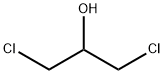
1,3-Dichloro-2-propanol(CAS#96-23-1)
1. Properties:
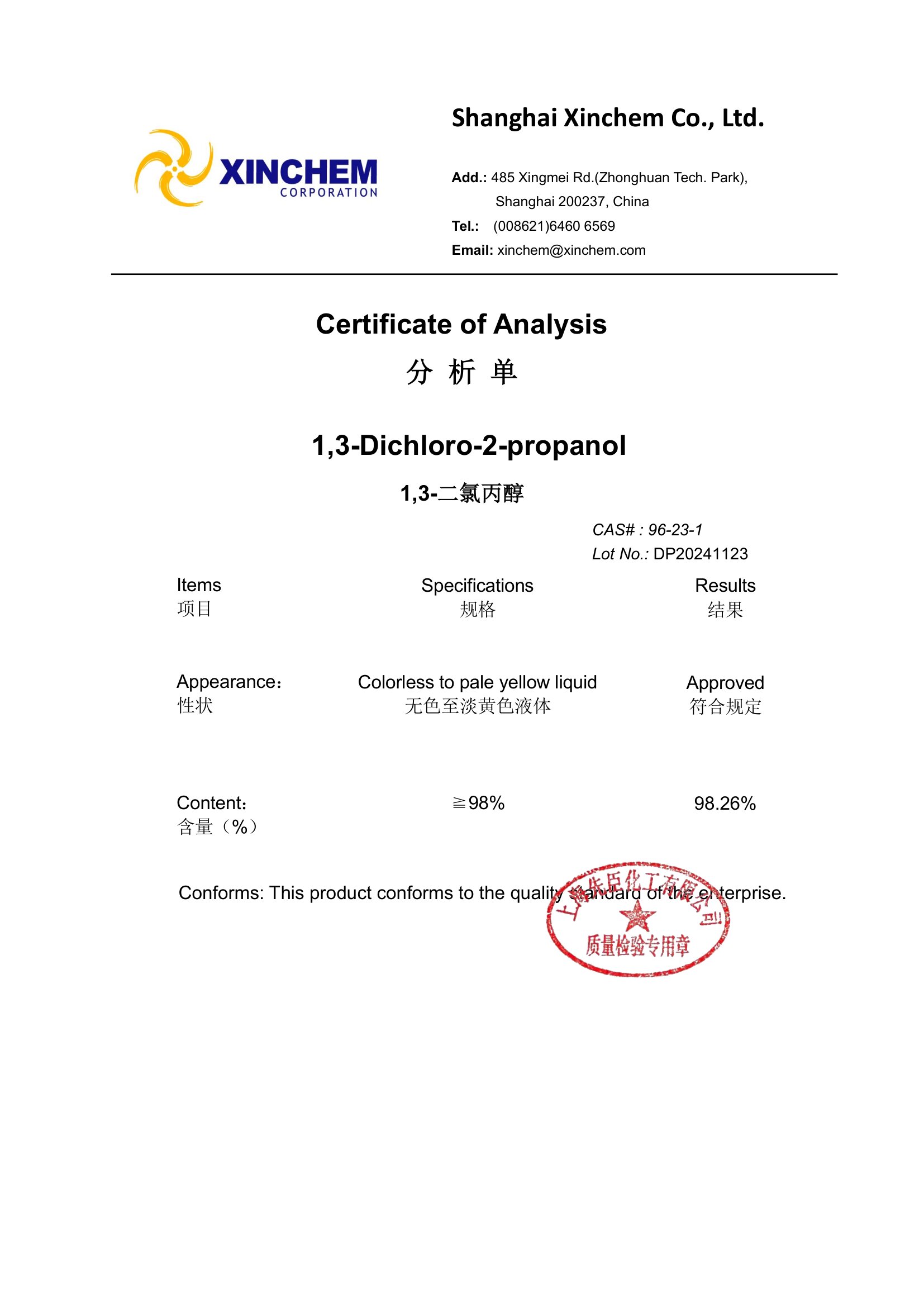
- Appearance and Physical Form: 1,3-Dichloro-2-propanol is a colorless to pale yellow, slightly viscous liquid with a characteristic ethereal or chloroform-like odor. It is supplied in various high-purity grades (typically >98.0% by GC) suitable for industrial synthesis, pharmaceutical R&D, and analytical applications.
- Solubility: 1,3-Dichloro-2-propanol is soluble in water (99 g/L at 25°C, 11 g/100 mL at 20°C) and is miscible with most organic solvents, including ethanol, ether, and acetone.
- Chemical Properties: 1,3-Dichloro-2-propanol (C₃H₆Cl₂O) is a chlorinated secondary alcohol. It has a boiling point of 174.3°C, a melting point of –4°C, and a flash point of 74–86°C. The compound is chemically stable but sensitive to heat and incompatible with oxidizers, strong acids, strong reducing agents, acid chlorides, and acid anhydrides. When heated to decomposition, it emits toxic fumes including hydrogen chloride gas and phosgene. IARC classifies 1,3-dichloro-2-propanol as a Group 2B carcinogen (possibly carcinogenic to humans).
2. Applications:
Epichlorohydrin & Epoxy Resin Production (Primary Application):
- Key Intermediate for Epichlorohydrin: 1,3-Dichloro-2-propanol serves as a critical industrial intermediate in the dehydrochlorination step to manufacture epichlorohydrin, which is the key precursor to epoxy resins. Biotransformation of 1,3-DCP to epichlorohydrin using recombinant Escherichia coli has been investigated.
- Epoxy Resin Intermediate: It is used as an intermediate in the production of epoxy resins and various glycidyl derivatives.
Chemical Synthesis & Industrial Intermediates:
- Pharmaceutical Synthesis: 1,3-Dichloro-2-propanol is used as a pharmaceutical intermediate and as a reactant in the synthesis of various pharmaceutical compounds, including propranolol.
- Glycerol Synthesis: It is used in the synthesis of glycerol.
- Organic Synthesis Building Block: It serves as a key chemical intermediate and building block in organic synthesis, particularly in the preparation of more complex molecules.
- 1,3-Dichloropropene Production: It can be used as a reactant to synthesize 1,3-dichloropropene, a soil fumigant.
Industrial Solvent Applications:
- Solvent for Paints, Lacquers, and Resins: 1,3-Dichloro-2-propanol is used as a solvent for paints, lacquers, epoxy resins, hard resins, and nitrocellulose.
- Cement for Celluloid: It is used as a cement for celluloid.
- Binder for Watercolors: It serves as a binder for watercolors.
- Solvent in Organic Synthesis: It is an effective solvent in various chemical reactions, enhancing the solubility of reactants and improving yields.
Textile & Plastics Industry:
- Production of Plastics and Textiles: It is used in the production of plastics and textiles.
Photographic and Zapon Lacquers:
- Intermediate for Photographic and Zapon Lacquers: It is used as an intermediate in the manufacture of photographic and zapon lacquers.
Analytical Applications:
- Method Development and Validation: 1,3-Dichloro-2-propanol is used in analytical method development, method validation (AMV), and quality control (QC) applications for abbreviated new drug applications (ANDA).
3. Preparation Method:
- Industrial Synthesis from Glycerol: 1,3-Dichloro-2-propanol can be produced by the reaction of glycerol with hydrogen chloride in the presence of carboxylic acid catalysts. Direct preparation from glycerol using acetic acid catalyst has been studied at 363–393 K in a batch reactor.
- Chlorination of Propylene Glycol: It can be synthesized by treating propylene glycol with chlorine gas in the presence of a catalyst.
- Alternative Synthesis Routes: The compound can also be prepared via other chlorination reactions.
4. Safety Information:
- Hazard Classification: 1,3-Dichloro-2-propanol is classified as a hazardous substance. According to GHS/CLP, it carries the following hazard statements: H350 (May cause cancer – Category 1B), H330 (Fatal if inhaled), H301 (Toxic if swallowed), H311 (Toxic in contact with skin), H319 (Causes serious eye irritation), H315 (Causes skin irritation), H373 (May cause damage to organs through prolonged or repeated exposure). Hazard pictograms: GHS06 (Skull and Crossbones) and GHS08 (Health Hazard). Signal word: Danger. NFPA 704: Health 3, Flammability 2, Instability 0. UN Number: 2750 (Class 6.1, Toxic substances).
- Health Hazards:
- Inhalation: Fatal if inhaled. May cause respiratory tract irritation, hemorrhagic gastritis, pharyngitis, headache, vertigo, nausea, vomiting, pulmonary edema, and liver damage.
- Skin Contact: Toxic in contact with skin. Harmful if absorbed through the skin. Causes skin irritation.
- Eye Contact: Causes serious eye irritation.
- Ingestion: Toxic if swallowed. May cause gastrointestinal irritation.
- Chronic Exposure: May cause cancer. IARC classifies 1,3-DCP as a Group 2B carcinogen (possibly carcinogenic to humans). May cause damage to organs through prolonged or repeated exposure.
- First Aid Measures:
- Eye Contact: Rinse cautiously with plenty of water for several minutes. Remove contact lenses if present and easy to do. Continue rinsing. Seek medical attention.
- Skin Contact: Remove contaminated clothing. Rinse skin with plenty of water or shower. Seek medical attention.
- Inhalation: Move person to fresh air. If breathing stops, give artificial respiration. Seek immediate medical attention.
- Ingestion: Rinse mouth. Do NOT induce vomiting. Seek immediate medical attention.
- Personal Protective Equipment (PPE):
- Respiratory protection: Wear a NIOSH-approved respirator with organic vapor/acid gas cartridge.
- Eye protection: Chemical splash goggles or face shield.
- Skin protection: Chemical-resistant gloves (nitrile, neoprene) and protective clothing.
- General hygiene: Do not eat, drink, or smoke during work. Wash thoroughly after handling. Use only in a well-ventilated area with local exhaust ventilation. Keep away from heat, sparks, and open flame.
- Fire & Explosion Hazards: 1,3-Dichloro-2-propanol is combustible (Flash point: 74–86°C). When heated to decomposition, it emits highly toxic fumes of carbon monoxide, carbon dioxide, hydrogen chloride gas, and phosgene. In case of fire, use dry chemical powder, CO₂, or foam as extinguishing media.
- Environmental Precautions: 1,3-Dichloro-2-propanol is harmful to aquatic life. Avoid large-scale release into natural water bodies, drains, or soil. Comply with local environmental regulations for disposal.
- Storage & Stability: Store in tightly closed, moisture-proof containers in a cool, dry, well-ventilated area below 15°C away from direct sunlight, heat sources, and flame. Store under inert gas to prevent air exposure. Keep away from strong oxidizing agents, strong acids, strong reducing agents, acid chlorides, and acid anhydrides. Under recommended storage conditions, 1,3-dichloro-2-propanol has a shelf life of 24 to 36 months from the date of manufacture in sealed original containers.
- Regulatory Compliance: 1,3-Dichloro-2-propanol (CAS#96-23-1, EC#202-491-9) is listed on EINECS, TSCA, DSL, and other regional chemical inventories. It is classified as a Category 1B carcinogen and is subject to strict occupational exposure limits. IARC classifies this compound as Group 2B (possibly carcinogenic to humans). It is regulated as a hazardous substance under OSHA and other regulatory bodies. Always consult the Safety Data Sheet (SDS) and local regulations for complete safety, environmental, and regulatory information specific to each product grade and application jurisdiction.
Write your message here and send it to us