
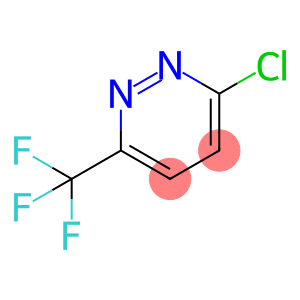
3-Chloro-6-trifluoromethyl-pyridazine(CAS#258506-68-2)
| Hazard Symbols | T - Toxic |
| Risk Codes | R25 - Toxic if swallowed R36/38 - Irritating to eyes and skin. |
| Safety Description | S26 - In case of contact with eyes, rinse immediately with plenty of water and seek medical advice. S45 - In case of accident or if you feel unwell, seek medical advice immediately (show the label whenever possible.) S24/25 - Avoid contact with skin and eyes. |
| UN IDs | 2811 |
| WGK Germany | 3 |
| HS Code | 29339900 |
| Hazard Class | 6.1 |
| Packing Group | Ⅲ |
Introduction
It is an organic compound with the chemical formula C5H2ClF3N2. The following is a description of its nature, use, formulation and safety information:
Nature:
-Appearance: It is a colorless solid and can exist as a crystal or powder.
-Solubility: It has good solubility in some organic solvents, such as dimethyl sulfoxide (DMSO) and dichloromethane.
-Melting point: Melting point is about 80-81 ℃.
Use:
-is an important intermediate compound used in the synthesis of pesticides and other compounds in the pharmaceutical field.
-It can also be used as a reagent in drug synthesis.
Method:
-It can be prepared by different synthetic routes. One commonly used method is the reaction of 3-chloro-6-nitrogen molar benzene (3-chloro-6-nitropyridazine) with trifluoromethyl borate, the target product is then obtained by a reduction reaction.
Safety Information: It is generally relatively safe under normal use conditions, but it still needs to be used carefully.
-Wear appropriate protective equipment such as safety glasses, laboratory gloves and protective clothing when handling and handling.
-Avoid inhaling its dust or solution, avoid contact with skin and eyes.
-After use or handling, wash and clean the work area thoroughly to avoid contamination by other compounds and cross-contamination.
-In the event of an emergency or accident, seek medical help immediately.
Application
3-Chloro-6-trifluoromethyl-pyridazine (CAS 258506-68-2) is a high-purity heterocyclic building block featuring a pyridazine core substituted with a chlorine atom at the 3-position and a trifluoromethyl group at the 6-position. The electron-withdrawing CF3 group enhances metabolic stability and lipophilicity, while the chlorine enables nucleophilic aromatic substitution and cross-coupling reactions (Suzuki-Miyaura, Buchwald-Hartwig). This scaffold is widely used in medicinal chemistry and agrochemical research for the synthesis of kinase inhibitors, antiviral agents, and herbicides. Its derivatives show potential in treating inflammatory diseases, cancer, and neurological disorders. In crop protection, it serves as a key intermediate for developing novel fungicides and herbicides with improved bioavailability. The rigid pyridazine core provides optimal target engagement. High purity ensures reproducible results in high-throughput screening and scalable GMP synthesis. Xinchem offers custom synthesis and contract manufacturing of this versatile intermediate with flexible scaling from R&D to commercial tons. Contact us today for a competitive quote and reliable global supply.