
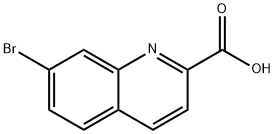
7-Bromoquinoline-2-Carboxylic Acid(CAS#1057217-63-6)
| Hazard Symbols | Xn - Harmful |
| Risk Codes | 22 - Harmful if swallowed |
| WGK Germany | 3 |
Introduction
7-Bromoquinoline-2-carboxylic acid is an organic compound. It is a light yellow solid with special chemical properties and uses.Quality:- Appearance: 7-bromoquinoline-2-carboxylic acid exists as light yellow crystals.- Solubility: Soluble in common organic solvents such as ethanol, dimethyl sulfoxide and methylene chloride, but less soluble in water.Use:- Chemical intermediates: 7-bromoquinoline-2-carboxylic acid is often used as an intermediate in the synthesis of other compounds, and has important application value in organic synthesis reactions.Method:The preparation of 7-bromoquinoline-2-carboxylic acid is usually carried out by the following steps:Quinoline-2-carboxylic acid was reacted with magnesium bromide to obtain 7-bromoquinoline-2-carboxylic acid magnesium salt.The resulting magnesium salt is reacted with concentrated hydrochloric acid to produce 7-bromoquinoline-2-carboxylic acid.Safety Information:- Wear appropriate personal protective equipment such as gloves and safety glasses.- Avoid direct contact with skin and eyes, rinse immediately with plenty of water and seek medical attention in case of accidental contact.- Maintain a well-ventilated laboratory environment during operation and avoid inhaling its powders or gases.- Avoid contact with oxidizing agents and flammable substances to prevent fire or explosion.While there are some safety measures, laboratory safety guidelines and regulations should also be consulted when using and handling the compound.
Application
7-Bromoquinoline-2-carboxylic acid (CAS 1057217-63-6) is a multifunctional heterocyclic building block used in medicinal chemistry and pharmaceutical research. The bromine at the 7-position enables cross-coupling reactions (Suzuki-Miyaura, Buchwald-Hartwig, Sonogashira) to introduce diverse aryl or alkyl groups, while the carboxylic acid at the 2-position allows amide or ester formation for rapid structure-activity relationship (SAR) studies. This scaffold is widely employed in the synthesis of kinase inhibitors targeting cancer, inflammation, and infectious diseases, as well as for developing antimalarial, antibacterial, and antiviral agents. Its rigid quinoline core enhances target binding affinity and metabolic stability. Additionally, it serves as a precursor for fluorescent probes, agrochemicals, and materials for organic electronics. High purity ensures reproducible results in high-throughput screening and scalable GMP synthesis. Xinchem offers custom synthesis, custom chemical synthesis, and contract manufacturing of this key intermediate with flexible scaling from R&D to commercial tons. Contact us today for a competitive quote and reliable global supply.