
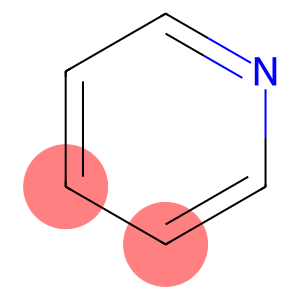
Pyridine(CAS#110-86-1)
| Risk Codes | R11 - Highly Flammable R20/21/22 - Harmful by inhalation, in contact with skin and if swallowed. R39/23/24/25 - R23/24/25 - Toxic by inhalation, in contact with skin and if swallowed. R52 - Harmful to aquatic organisms R36/38 - Irritating to eyes and skin. |
| Safety Description | S36/37/39 - Wear suitable protective clothing, gloves and eye/face protection. S38 - In case of insufficient ventilation, wear suitable respiratory equipment. S45 - In case of accident or if you feel unwell, seek medical advice immediately (show the label whenever possible.) S61 - Avoid release to the environment. Refer to special instructions / safety data sheets. S28A - S26 - In case of contact with eyes, rinse immediately with plenty of water and seek medical advice. S28 - After contact with skin, wash immediately with plenty of soap-suds. S24/25 - Avoid contact with skin and eyes. S22 - Do not breathe dust. S36/37 - Wear suitable protective clothing and gloves. S16 - Keep away from sources of ignition. S7 - Keep container tightly closed. |
| UN IDs | UN 1282 3/PG 2 |
| WGK Germany | 2 |
| RTECS | UR8400000 |
| FLUKA BRAND F CODES | 3-10 |
| TSCA | Yes |
| HS Code | 2933 31 00 |
| Hazard Note | Highly Flammable/Harmful |
| Hazard Class | 3 |
| Packing Group | II |
| Toxicity | LD50 orally in rats: 1.58 g/kg (Smyth) |
Introduction
Quality:
1. Pyridine is a colorless liquid with a strong benzene odor.
2. It has a high boiling point and volatility, and can be soluble in a variety of organic solvents, but it is difficult to soluble in water.
3. Pyridine is an alkaline substance that neutralizes acids in water.
4. Pyridine can undergo hydrogen bonding with many compounds.
Use:
1. Pyridine is often used as a solvent in organic synthesis reactions, and has high solubility for many organic compounds.
2. Pyridine also has applications in the synthesis of pesticides, such as the synthesis of fungicides and insecticides.
Method:
1. Pyridine can be prepared by a range of different synthesis methods, the most commonly used of which is obtained by hydrogenation reduction of pyridinexone.
2. Other common preparation methods include the use of ammonia and aldehyde compounds, the addition reaction of cyclohexene and nitrogen, etc.
Safety Information:
1. Pyridine is an organic solvent and has a certain volatility. Attention should be paid to well-ventilated laboratory conditions when using to avoid inhalation of overdose.
2. Pyridine is irritating and may cause damage to the eyes, skin, and respiratory tract. Appropriate protective equipment, including gloves, glasses, and protective masks, should be worn during operation.
3. Appropriate protective and control measures are required for people who have been exposed to pyridine for a long time.
Pyridine | CAS 110 86 1
One Line Sourcing Position
High purity Pyridine for pharmaceutical synthesis, agrochemical production, and specialty solvent applications.
Quick RFQ Form
Fill below to get instant quote:
Name Email Company Required quantity Delivery destination Submit
Specification
Purity by GC: 99.5 percent minimum, typical batch 99.7 to 99.9 percent
Appearance: Colorless clear liquid
Odor: Characteristic pungent, fishy, amine like
Density at 20 deg C: 0.980 to 0.984 g per mL
Refractive index nD20: 1.509 to 1.512
Boiling point: 115 to 116 deg C
Water content Karl Fischer: 0.05 percent maximum
Color APHA: 20 maximum
Residue on evaporation: 0.005 percent maximum
Assay by titration: 99.5 to 100.5 percent on anhydrous basis
Heavy metals: Less than 5 ppm
Stock Status: In Stock in US warehouse and China hub
Available Quantity and Lead Time
Regular supply: 1 kg to 30 metric tons per shipment
Lead time: 2 to 5 days for standard packaging; bulk orders require 7 to 10 days
Document Support
COA SDS HPLC chromatogram NMR spectrum Mass spectrum MS available upon request
Application
Pyridine is a fundamental heterocyclic building block with broad utility across pharmaceutical, agrochemical, and industrial chemical sectors. In pharmaceutical synthesis, it serves as a precursor and solvent for the production of numerous active ingredients including antihistamines (e.g., pheniramine, chlorpheniramine), corticosteroids, and anticancer agents. The pyridine ring is a core structure in vitamins such as niacin (vitamin B3) and in drugs like isoniazid (antituberculosis). In agrochemistry, pyridine derivatives are essential for synthesizing herbicides (e.g., paraquat, diquat), insecticides (e.g., chlorpyrifos), and fungicides. As a solvent, pyridine is valued for its basicity and aprotic nature, facilitating reactions such as acylation, alkylation, and silylation, and is used in the manufacture of pharmaceuticals, dyes, and rubber chemicals. It is also employed as a denaturant for alcohol, a corrosion inhibitor, and a dehalogenation agent. In analytical chemistry, pyridine is used as a derivatization reagent for GC and HPLC, and as a scavenger for acids in organic reactions. In polymer chemistry, it is used in the synthesis of polypyridine and as a curing agent for epoxy resins. Additionally, pyridine finds use in the production of textile water repellents, photographic chemicals, and as a catalyst in certain condensation reactions.
Custom Synthesis Support
We offer custom synthesis for pyridine derivatives including alkylated, halogenated, and deuterated pyridines. Share your technical datasheet for feasibility review.
Packaging and Shipping
Available in 1 L, 5 L, 20 L, 200 L steel drums or IBC totes. Custom packaging such as amber glass bottles with PTFE lined caps under nitrogen is supported. Fastest dispatch within 7 days after order confirmation. Pyridine is a flammable liquid Class 3, UN 1282, PG II. Store in a cool, well ventilated area away from ignition sources, oxidizers, and acids. Grounding required during transfer.
Why XinChem
XinChem provides pyridine with strict control of purity, water content, and residue levels for US customers. Our ISO 9001 certified facility monitors every batch by GC and Karl Fischer analysis, ensuring consistent performance for pharmaceutical and agrochemical synthesis. We maintain a buffer stock of 20 metric tons in US warehouses for emergency deliveries within 48 hours. Each order includes a full documentation package: COA, SDS, GC chromatograms, and NMR spectra accessible through our online portal. Our technical support team assists with handling precautions, compatibility studies, and regulatory compliance including TSCA, EINECS, and DEA monitoring (where applicable). For contract customers, we offer quarterly price locks and consignment inventory to reduce supply chain risk. Trusted by over 300 pharmaceutical, agrochemical, and specialty chemical companies in North America. We also provide free sample evaluation for qualified R&D projects and a price match guarantee against any valid competitor quote for equivalent quality. Additionally, we offer low water (< 0.02 percent) and low residue (< 0.002 percent) grades for moisture sensitive and high purity syntheses.
FAQ
Q1 How should pyridine be stored safely?
A Store in a cool, dry, well ventilated area away from ignition sources, strong oxidizers, and acids. Keep container tightly sealed and protect from moisture. Shelf life is 24 months under recommended conditions.
Q2 What purity grades do you supply?
A Standard grade is 99.5 percent by GC. We also supply 99.8 percent grade for pharmaceutical synthesis and 99.9 percent grade for electronic and analytical reference applications.
Q3 Is pyridine miscible with water?
A Yes, pyridine is fully miscible with water and most organic solvents including alcohol, ether, and aromatic hydrocarbons.
Q4 Do you provide sample quantities for reaction optimization?
A Yes, free samples of 500 mL are available for qualified US companies. Shipping fee applies for small quantities.
Q5 What are the common impurities in pyridine and how do you control them?
A Key impurities include 2 methylpyridine, 3 methylpyridine, and water. Our specification limits each isomer below 0.1 percent and water below 0.05 percent. Full impurity profile provided per batch.
Q6 Can you supply pyridine with low odor or reduced pungency?
A As a neat chemical, pyridine has intrinsic odor. However, our high purity grade minimizes trace impurities that contribute to off odors. For specific applications, we recommend using in well ventilated areas.
Q7 What safety measures are required when handling pyridine?
A Use in a fume hood with full PPE (nitrile gloves, chemical resistant goggles, lab coat). Pyridine is toxic, flammable, and a skin irritant. Avoid inhalation and prolonged skin contact. Emergency eyewash and shower should be accessible.