
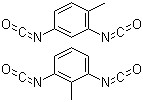
Tolylene diisocyanate(CAS#26471-62-5)
| Risk Codes | R26 - Very Toxic by inhalation R36/37/38 - Irritating to eyes, respiratory system and skin. R40 - Limited evidence of a carcinogenic effect R42/43 - May cause sensitization by inhalation and skin contact. R52/53 - Harmful to aquatic organisms, may cause long-term adverse effects in the aquatic environment. |
| Safety Description | S23 - Do not breathe vapour. S36/37/39 - Wear suitable protective clothing, gloves and eye/face protection. S45 - In case of accident or if you feel unwell, seek medical advice immediately (show the label whenever possible.) S24/25 - Avoid contact with skin and eyes. |
| UN IDs | 2078 |
| RTECS | NQ9490000 |
| HS Code | 29291090 |
| Hazard Class | 6.1(a) |
| Packing Group | II |
| Toxicity | A designated hazardous waste (EPA). It is a colorless to yellow solid, melting at about 20°C. TDI and MDI (diphenylmethane diisocyanate) are used in the manufacture of polyurethane foams by reaction with polyhydroxy compounds. These foams are used for insulation, upholstering, etc. Exposure is commonly by inhalation of the vapor. Both TDI and MDI can cause irritation of eyes and mucous membranes, in severe cases leading to pulmonary edema. Sensitization to TDI is common and frequently rapid, leading to an allergic reaction and some loss of lung function. In the United Kingdom, the threshold limit value is 0.02 ppm for not more than 20 min, or 0.005 ppm for 8 h. |
Introduction
Toluene diisocyanate, also known as TDI, is an organic compound. It is a colorless liquid with a pungent odor. The following is an introduction to some of the properties, uses, manufacturing methods and safety information of toluene diisocyanate:Properties:- Appearance: colorless liquid- Ignition temperature: about 270°C- Specific gravity: 1.22- 1.23 g/cm³ Uses: - TDI is mainly used in the production of polyurethane. Polyurethane has good strength, abrasion resistance and chemical resistance, and is widely used in the manufacture of foams, coatings, adhesives, elastomers and plastic products. Preparation method:- The preparation of TDI is usually carried out under acidic conditions by reacting toluidine with isocyanate (usually benzenediisocyanate). Safety Information:- TDI is irritating and corrosive, and may cause irritation and burns in contact with the skin and eyes. - Inhalation or ingestion of TDI may cause respiratory irritation, sore throat, chest pain, coughing, wheezing, etc. - TDI is toxic to the environment and may cause harm to aquatic life. - When using TDI, wear appropriate protective equipment such as gloves, goggles, and protective clothing. - During storage and use, please strictly follow the corresponding safety operation procedures to ensure good ventilation conditions.
Application
Tolylene diisocyanate (TDI, CAS 26471-62-5) is an aromatic diisocyanate, supplied as an 80:20 or 65:35 isomer blend of 2,4- and 2,6-isomers. As the primary building block for the polyurethane industry, TDI reacts with polyols to produce high-performance materials: flexible polyurethane foam for furniture, automotive seating, bedding, and packaging; polyurethane coatings and sealants for industrial floors, concrete sealers, aircraft, and automobiles; elastomers for industrial wheels, shoe soles, and technical goods; and adhesives for footwear, laminates, and construction. TDI-based prepolymers are also used in radiation-curable formulations and as crosslinkers. As an aromatic intermediate, TDI is also used in the synthesis of specialty chemicals, polyimide fibers, and agrochemicals. Its strong reactivity and bonding properties make it a versatile monomer for polymer modification, structural reinforcement, and durable material applications. Xinchem offers custom synthesis, custom chemical synthesis, and contract manufacturing of high-purity Tolylene diisocyanate with flexible scaling from R&D to commercial tons, supported by rigorous quality control and global regulatory compliance (REACH, TSCA, ISO 9001). Contact us today for a competitive quote and reliable global supply.