
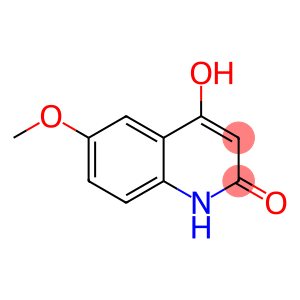
2,4-DIHYDROXY-6-METHOXYQUINOLINE(CAS#14300-45-9)
Introduction
4-Hydroxy-6-methoxyquinoline-2-one is an organic compound. The following is an introduction to its nature, use, manufacturing method and safety information:Quality:- Appearance: White to yellow crystalline solid.- Solubility: soluble in hot alcohols, acids and acetonitrile, slightly soluble in chloroform, almost insoluble in water.Use:- Enzyme inhibition: It has also been used as an enzyme inhibitor for the study of related enzymes.- Others: It can also be used as a starting material for dyes, chemical intermediates and organic synthesis.Method:4-Hydroxy-6-methoxyquinoline-2-one can be synthesized by the following steps:2-Methoxyquinolinone is obtained by aminolysis to obtain 2-methylaminoquinoline-4-one.2-methylaminoquinoline-4-one reacts with copper oxide to give 2,4-dihydroquinoline-6-carbinol.2,4-dihydroquinoline-6-methanol reacts with hydrogen peroxide to give 4-hydroxy-6-methoxyquinoline-2-one.Safety Information:- 4-Hydroxy-6-methoxyquinoline-2-one is toxic and should be handled with care.- Prolonged skin contact and inhalation should be avoided during use.- In case of contact with skin or eyes, rinse immediately with plenty of water and seek medical advice.- Appropriate precautions should be taken during use or handling, such as wearing gloves, respirators, etc.- Avoid contact with fatty substances, acids, oxidants, etc. when storing.- It should be properly stored in a cool, dry and well-ventilated place, away from fire and flammable materials.
Application
2,4-Dihydroxy-6-methoxyquinoline (CAS 14300-45-9) is a functionalized quinoline derivative with two hydroxyl groups at positions 2 and 4 and a methoxy group at position 6. This high-purity heterocyclic building block is widely used in medicinal chemistry and pharmaceutical research as a key intermediate for the synthesis of bioactive molecules with antioxidant, antibacterial, antifungal, and anticancer properties. The 2,4-dihydroxy motif enables metal chelation and hydrogen bonding, making it valuable for developing enzyme inhibitors (e.g., tyrosine kinase and topoisomerase inhibitors) and neuroprotective agents. Its rigid, planar structure enhances target binding affinity and metabolic stability. This scaffold is also utilized in the synthesis of fluorescent probes for bioimaging, as well as in agrochemical and material science applications. Xinchem offers custom synthesis, custom chemical synthesis, and contract manufacturing of high-purity 2,4-dihydroxy-6-methoxyquinoline with flexible scaling from R&D to commercial tons. Contact us today for a competitive quote and reliable global supply.