
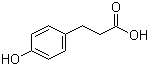
3-(4-Hydroxyphenyl)propionic acid(CAS#501-97-3)
| Hazard Symbols | Xi - Irritant |
| Risk Codes | 36/37/38 - Irritating to eyes, respiratory system and skin. |
| Safety Description | S26 - In case of contact with eyes, rinse immediately with plenty of water and seek medical advice. S36 - Wear suitable protective clothing. S37/39 - Wear suitable gloves and eye/face protection |
| WGK Germany | 3 |
| RTECS | MW5342000 |
| HS Code | 29182990 |
| Hazard Note | Irritant |
| Toxicity | LD50 intravenous in mouse: 1809mg/kg |
Introduction
Hydroxyphenylpropionic acid. The following is an introduction to the properties, uses, preparation methods and safety information of p-hydroxyphenylpropionic acid:Quality:Appearance: White crystalline granules or crystalline powder.Solubility: Easily soluble in water and alcohol solvents, insoluble in organic solvents.Use:Fine Chemicals: Hydroxyphenylpropionic acid can be used as a synthetic dye, photosensitizer, and polymer additive.Preparation method:Hydroxyphenylpropionic acid is usually obtained by reacting p-hydroxyacetophenone with carbon dioxide. The specific preparation methods can be catalytic hydrogenation, sodium iodide catalytic oxidation, cycloaddition reaction, etc.Safety Information:Hydroxyphenylpropionic acid is basically not dangerous under normal use and storage conditions.When in contact with hydroxyphenylpropionic acid, direct skin contact and inhalation of its dust should be avoided.If accidentally touched or swallowed, rinse immediately with water and seek medical treatment.
Application
3-(4-Hydroxyphenyl)propionic acid (CAS 501-97-3), also known as phloretic acid, is a naturally occurring phenolic compound found in plants and a key intermediate in organic synthesis. It serves as a building block for the production of pharmaceuticals, including anti-inflammatory agents, antioxidants, and cardiovascular drugs. Its antioxidant properties make it valuable in food preservation and cosmetic formulations to prevent oxidative degradation. In polymer chemistry, it is used as a monomer for biodegradable polyesters and as a chain extender for high-performance plastics. Additionally, it functions as a precursor for UV stabilizers, flavoring agents, and agricultural chemicals. Its phenolic hydroxyl and carboxylic acid groups enable diverse derivatization. Xinchem offers custom synthesis, custom chemical synthesis, and contract manufacturing of high-purity 3-(4-hydroxyphenyl)propionic acid with flexible scaling from R&D to commercial tons. Contact us today for a competitive quote and reliable global supply.