
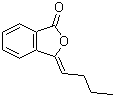
3-Butylidenephthalide(CAS#551-08-6)
| Hazard Symbols | Xn – Harmful |
| Risk Codes | 22 – Harmful if swallowed |
| Safety Description | 23 – Do not breathe vapour. |
| WGK Germany | 2 |
| RTECS | TI3692500 |
| TSCA | Yes |
Introduction
N,N-Dibutyl-1,4-phenylenediamine is an organic compound.Properties:N,N-Dibutyl-1,4-phenylenediamine is a white to pale yellow solid. It has low toxicity and low solubility.Uses:N,N-Dibutyl-1,4-phenylenediamine is commonly used as a catalyst in organic synthesis. It can be used in the synthesis of dyes, polymers, and other organic compounds.Preparation:N,N-Dibutyl-1,4-phenylenediamine is typically prepared by reacting phthalamide with butanol. The specific synthesis steps include heating phthalamide with butanol in an appropriate solvent under suitable reaction conditions to obtain the N,N-dibutyl-1,4-phenylenediamine product.Safety Information:It may cause irritation to the eyes, skin, and respiratory system. Appropriate protective equipment should be worn during use, and good ventilation should be ensured.
![1H-pyrrolo[2,3-b]pyridine-4-carbonitrile(CAS#344327-11-3)](https://www.xinchem.com/uploads/carbonitrile.png)