
3,4-Dihydro-2H-isoquinolin-1-one(CAS#1196-38-9)
Introduction
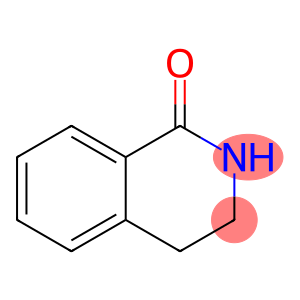
3,4-Dihydroisoquinolinone -1(2H)-one, also known as dihydroquinolinone, is an organic compound. Its molecular formula is C9H9NO and it has two hydrogen atoms and one oxygen atom.
Nature:
3,4-Dihydroisoquinolin-1 (2H)-one is a colorless crystal and can be dissolved in organic solvents. It is weakly alkaline and does not dissolve in water. The compound is stable at room temperature.
Use:
3,4-Dihydroisoquinoline -1(2H)-one is commonly used as an intermediate in the synthesis of drugs. It can be used to synthesize biologically active compounds, such as antibacterial agents, anticancer drugs, etc.
Preparation Method:
A common synthetic method is starting from 3,4-dihydroquinoline starting material. First, 3,4-dihydroquinoline is reacted with an acid chloride by a synthetic reaction to produce the corresponding acylated product. The oxidized product is then reduced to 3,4-dihydroisoquinolin-1 (2H)-one by a reduction reaction.
Safety Information:
There are no clear data on the toxicity and safety of 3,4-dihydroisoquinolin-1 (2H)-one. However, as an organic compound used in the laboratory, necessary safety measures need to be taken, such as wearing protective gloves, goggles and protective clothing. Any chemical should follow safe practices and be evaluated at all times on the basis of relevant information.
Application
3,4-Dihydro-2H-isoquinolin-1-one (CAS 1196-38-9) is a privileged heterocyclic scaffold widely used as a key building block in medicinal chemistry and pharmaceutical research. Its rigid lactam core serves as a central template for the synthesis of diverse bioactive molecules, including potent kinase inhibitors (e.g., Rho-kinase (ROCK) inhibitors for cardiovascular and neurological disorders), PARP inhibitors for cancer therapy, and modulators of neurodegenerative diseases such as Alzheimer's and Parkinson's. The lactam functionality provides a hydrogen bond donor/acceptor site, while the aromatic and aliphatic rings allow further functionalization via cross-coupling, alkylation, or amidation. This intermediate is also employed in the development of anti-inflammatory, antimicrobial, and antiviral agents. Its unique bicyclic structure enhances metabolic stability and target selectivity. High purity ensures reproducible results in high-throughput screening and scalable GMP synthesis. Xinchem offers custom synthesis, custom chemical synthesis, and contract manufacturing of this versatile pharmaceutical intermediate with flexible scaling from R&D to commercial tons. Contact us today for a competitive quote and reliable global supply.