
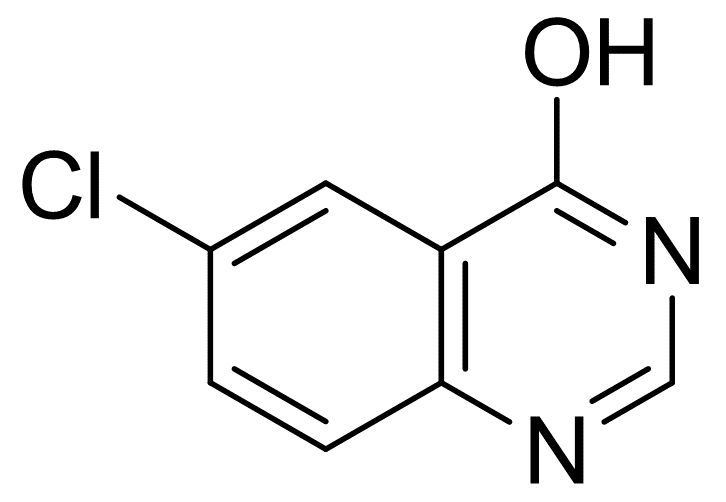
6-Chloro-4-hydroxyquinazoline(CAS#16064-14-5)
| Hazard Symbols | Xi - Irritant |
| Hazard Note | Irritant |
Introduction
Phenol, also known as chloroquinazoline phenol (Chloroxine), is an organic compound. The following is a description of its nature, use, preparation and safety information:
Nature:
-Appearance: White crystalline solid.
-Solubility: Its solubility in water is low, but it can be dissolved in organic solvents, such as ethanol and dichloromethane.
-Stability: The compound is relatively stable and not easy to decompose or degrade.
Use:
-Antibacterial agent: It has strong antibacterial properties and is widely used in personal care products, pharmaceutical preparations and disinfectants.
-Preservative: Due to its antibacterial properties, it is also often used as a preservative for products such as cosmetics and detergents.
-Non-ionic surfactant: It can be combined with other compounds to form a non-ionic surfactant, which is used in cleaners and detergents.
Method:
It can be obtained by reacting 3-chloro-1-hydroxyquinazoline with a phenolic compound. The specific preparation details require further laboratory research and process optimization.
Safety Information:
-It has low toxicity, but it still needs to be used carefully. In case of contact with skin and eyes, wash immediately. Avoid inhalation or ingestion.
-Store out of reach of children and pets.
-Dispose of waste in a suitable manner.
Application
6-Chloro-4-hydroxyquinazoline (CAS 16064-14-5) is a functionalized quinazolinone derivative bearing a chlorine atom at the 6-position. This heterocyclic building block is a key intermediate in medicinal chemistry and drug discovery, particularly for the synthesis of potent tyrosine kinase inhibitors (e.g., EGFR, HER2, and VEGFR inhibitors) for targeted cancer therapy. The 4-hydroxy/4-oxo tautomer provides hydrogen bond donor/acceptor sites, enhancing target binding affinity. The chlorine at C6 enables cross-coupling reactions (Suzuki-Miyaura, Buchwald-Hartwig, Sonogashira) for introducing diverse substituents, facilitating rapid structure-activity relationship studies. This scaffold is also utilized in developing antiviral, anti-inflammatory, and antimicrobial agents. High purity ensures reproducible results in high-throughput screening and scalable GMP manufacturing. Xinchem offers custom synthesis, custom chemical synthesis, and contract manufacturing of this API intermediate with flexible scaling from R&D to commercial tons. Contact us today for a competitive quote and reliable global supply.
![tert-butyl[(1-methoxyethenyl)oxy]dimethylsilane (CAS# 77086-38-5)](https://www.xinchem.com/uploads/tertbutyl1methoxyethenyloxydimethylsilane.png)