
C12-15 Alkyl Benzoate (CAS#68411-27-8)
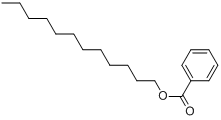
C12-15 Alkyl Benzoate, also known by the INCI name and trade designation Finsolv TN, is a mixture of esters formed from benzoic acid and C12–C15 fatty alcohols. It is supplied as a clear, colorless to pale yellow, low-viscosity liquid with a faint characteristic odor and a refractive index of 1.464–1.468. The compound is insoluble in water but readily emulsifiable and stable over a wide pH range. Its density typically falls between 0.91 and 0.96 g/cm³ at ambient temperature, and its flash point exceeds 150 °C (closed cup), classifying it as a combustible liquid with low volatility under normal handling conditions. Because it is a mixture of homologues, its molecular weight and boiling point are variable; individual C12–C15 alkyl benzoate esters have estimated boiling points in the range of 374–384 °C at 760 mmHg, while the commercial mixture is reported to boil around 250 °C and to have a melting point near −20 °C. The ester is stable at room temperature and does not require special temperature control for routine storage.
Applications
The primary application of C12-15 Alkyl Benzoate is as a multifunctional emollient ester in personal care and cosmetic formulations. It delivers a light, non-greasy, dry skin feel with rapid absorption, making it suitable for skin care, hair care, and color cosmetics where an elegant, non-oily finish is desired. It functions as a skin conditioning agent and softener, improving spreadability and contributing to a smooth, silky texture in lotions, creams, and serums.
A particularly important use is as a carrier and dispersing agent for sunscreens and active ingredients. C12-15 Alkyl Benzoate exhibits excellent solvent and wetting properties, enabling it to dissolve and deliver organic UV filters, colorants, vitamins, and other oil-soluble actives uniformly within a formulation. It has been described as an “ideal sunscreen carrier” because it helps achieve high SPF values while maintaining a non-greasy sensory profile, and it is widely used in sun care products, including lightweight sunscreens where spreadability and skin absorbency are critical. The ester is readily emulsifiable and compatible with a broad range of cosmetic ingredients, supporting its use in emulsions, anhydrous systems, and hot- or cold-processed formulations.
Beyond sun care, C12-15 Alkyl Benzoate is employed in color cosmetics (foundations, lipsticks, and powders) as a binder and emollient, in hair care products to improve combability and add lightness, and in skin care emulsions where it enhances formulation stability and reduces the risk of irritation associated with other emollients. It is also used as a solubilizer and coupling agent for difficult-to-dissolve cosmetic actives and as a diluent or carrier in fragrance and personal care applications.
Preparation Method
C12-15 Alkyl Benzoate is manufactured industrially by the esterification of benzoic acid with a C12–C15 fatty alcohol mixture. The reaction is typically conducted at elevated temperature under an inert atmosphere, with continuous removal of the water formed to drive the equilibrium toward the ester product. A suitable acid catalyst, such as a tin-based catalyst, is introduced once the reaction mixture reaches the target temperature, and the progress of esterification is monitored by acid value or by the volume of water collected.
On a commercial scale, the crude ester is subjected to purification steps that may include washing with aqueous salt solutions (for example, sodium chloride and sodium carbonate) to remove residual acidity and catalyst residues, followed by vacuum dehydration and filtration to obtain a clear, low-acid-value product. More advanced processes may incorporate pretreatment with a reducing agent (such as sodium borohydride) and oxidative bleaching to improve color and odor, although high-quality product can also be obtained without these additional steps. The reaction is typically high-yielding, with reported yields of 90–96% in representative processes, and the final product is a mixture of C12, C13, C14, and C15 alkyl benzoate homologues whose distribution reflects the composition of the starting fatty alcohol feedstock.
Safety Information
C12-15 Alkyl Benzoate is not classified as a dangerous substance under GHS and is not considered hazardous for transportation. It is widely regarded as safe for use in cosmetics, with a long history of use in personal care formulations. The Cosmetic Ingredient Review (CIR) Expert Panel has assessed alkyl benzoates, including C12-15 Alkyl Benzoate, and found them to be non-irritating and non-sensitizing in clinical and animal testing, although there is a single case report of potential allergenicity.
Under normal handling, the principal hazards are mild irritancy rather than acute toxicity. The material may be irritating to the eyes, skin, and respiratory tract, and ingestion may cause nausea, vomiting, or diarrhea. Dermal penetration studies indicate that only a small fraction of applied C12-15 Alkyl Benzoate (approximately 5–8% in pig skin models) reaches the epidermis, and the material is poorly absorbed through intact skin, limiting the potential for systemic toxicity. It is not mutagenic in the Ames test, and repeated-dose and reproductive toxicity data do not indicate a significant hazard at use concentrations.
For safe handling, avoid contact with eyes and prolonged skin contact, and use in a well-ventilated area to minimize inhalation of mists or vapors. Personal protective equipment including safety glasses or goggles and protective gloves is recommended where splashing may occur. In case of eye contact, rinse immediately with large quantities of water for at least 5 minutes and seek medical attention if irritation persists. For skin contact, wash with plenty of soap and water. If ingested, do not induce vomiting and seek medical advice, taking care to avoid aspiration. C12-15 Alkyl Benzoate is combustible at high temperatures, and firefighting should employ foam, dry powder, carbon dioxide, or alcohol-resistant foam, with self-contained breathing apparatus and full protective equipment; water jets should not be used directly on the burning liquid. Store in a cool, dry, well-ventilated area away from direct sunlight, heat sources, and strong oxidizing agents, with containers kept tightly closed when not in use.