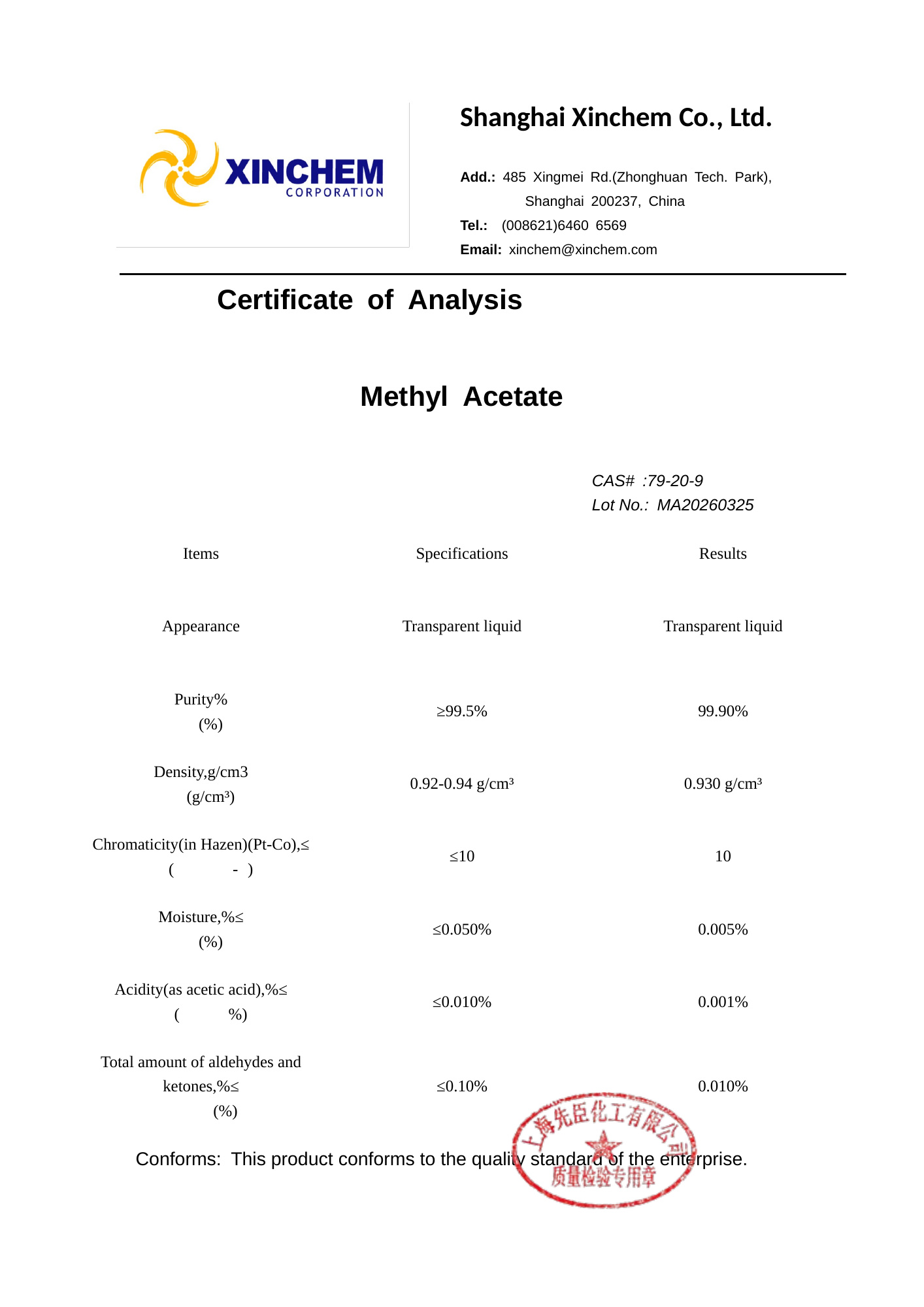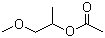


Methyl Acetate (CAS#79-20-9)
Chemical Properties
Methyl Acetate, chemically designated as acetic acid methyl ester or methyl ethanoate, is a clear, colorless liquid with a pleasant, fruity odor. It is a highly volatile, flammable compound with a flash point of -10 °C and a boiling point of 56–58 °C. The substance exhibits a specific gravity of 0.932 at 25 °C and a vapor pressure of 22 kPa at 20 °C. It is highly soluble in water (24–25 g/100 mL at 20 °C) and miscible with most common organic solvents, including ethanol, diethyl ether, and acetone. The compound has a molecular weight of 74.08 g/mol and a log Pow of 0.18, indicating high hydrophilicity. Methyl Acetate forms an azeotrope with water that boils at 56.5 °C and contains 3.5% water by weight.
Applications
Methyl Acetate is a versatile fast-evaporating solvent with broad applications across multiple sectors. In the coatings and paint industry, it is widely used as a solvent for nitrocellulose, cellulose acetate, cellulose ethers, and a wide variety of resins including acrylics, vinyls, epoxies, urethanes, and polyesters. Its fast evaporation rate makes it particularly suitable for fast-drying industrial maintenance coatings, air-dry automotive refinish paints, aerosol coatings, and spray-applied furniture coatings. The compound is often blended with slower-evaporating solvents to maintain the desired overall drying rate in lacquer systems.
In the adhesives and sealants sector, Methyl Acetate serves as a solvent for contact adhesives, pressure-sensitive adhesives, and sealant formulations. The printing industry utilizes it as a solvent for flexographic, gravure, and inkjet inks. Additionally, it is employed as a process solvent for agricultural chemicals, a blowing agent for polyurethane foams, a battery electrolyte component, a cleaner for electronics and precision parts, and a photoresist stripper. In the pharmaceutical industry, it is used as an intermediate in the production of pharmaceutical compounds. It also finds use in the manufacture of artificial leather, perfumes, cosmetics, and dyes.
Preparation Method
Methyl Acetate is commercially manufactured through two primary routes. The classical method involves the direct esterification of acetic acid with methanol in the presence of an acid catalyst such as sulfuric acid. The crude ester is then dehydrated with calcium chloride, neutralized with sodium carbonate, and purified by fractional distillation to obtain the finished product.
On an industrial scale, a more advanced process involves the carbonylation of methanol with carbon monoxide. This method typically employs a heterogeneous catalyst system and offers advantages in terms of atom economy and reduced byproduct formation. Methyl Acetate is also produced as a byproduct in the manufacture of acetic acid via the methanol carbonylation process. The compound can be isolated and purified from this stream, making it an economically attractive co-product of large-scale acetic acid production.
Safety Information
Methyl Acetate is classified as a highly flammable liquid and vapor (Category 2, H225). It causes serious eye irritation (Category 2A, H319) and may cause drowsiness or dizziness (Specific Target Organ Toxicity, Single Exposure, Category 3, H336). Repeated exposure may cause skin dryness or cracking (EUH066). The substance has an autoignition temperature of 505 °C and explosive limits of 3.1%–16% in air.
For safe handling, it is essential to keep the substance away from heat, sparks, open flames, and hot surfaces. No smoking is permitted in areas where the material is stored or handled. Containers must be kept tightly closed, and grounding and bonding procedures should be followed during transfer operations. Explosion-proof electrical, ventilating, and lighting equipment must be used in all areas where the substance is present. Personal protective equipment including eye protection, protective clothing, and protective gloves is required. Inhalation of vapors should be avoided, and the material should only be used outdoors or in a well-ventilated area. In case of fire, alcohol-resistant foam, dry chemical, or carbon dioxide extinguishing media should be used. Storage should be maintained in a cool, well-ventilated, fireproof area separated from strong oxidants, strong acids, and strong bases. The substance attacks rubber and some forms of plastic.