

Sec Butyl Acetate (CAS#105-46-4)
Chemical Properties
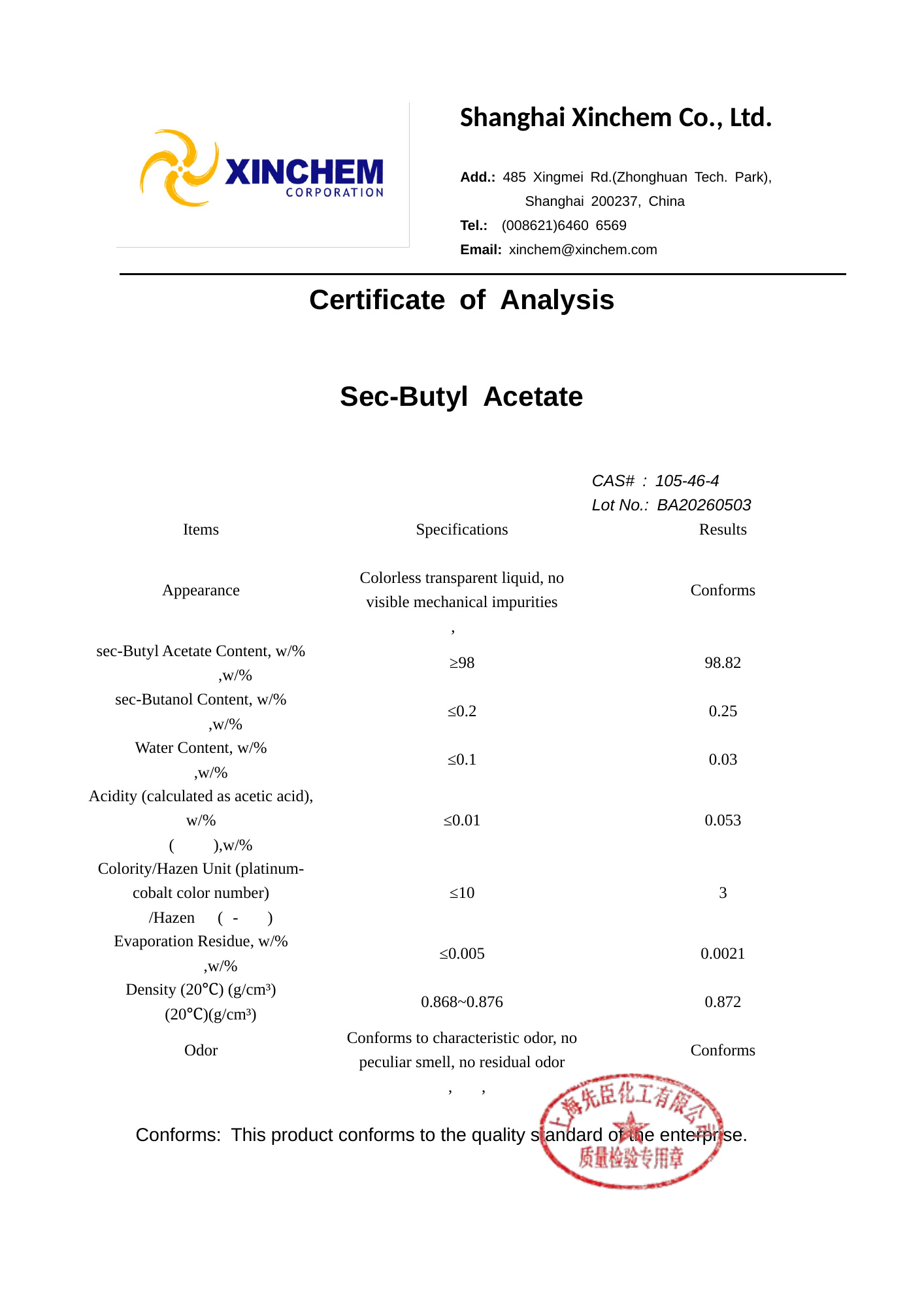
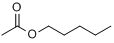
Sec Butyl Acetate, chemically designated as acetic acid sec-butyl ester or 1-methylpropyl acetate, is a clear, colorless liquid with a pleasant, fruity odor. It is a highly flammable, volatile compound with a flash point of 17–18 °C and a boiling point of 111–112 °C. The substance exhibits a specific gravity of 0.87 at 20 °C and a vapor pressure of 10 mmHg at 20 °C. Its solubility in water is approximately 8 g/L at 20 °C, and it is miscible with most common organic solvents, including alcohols, ethers, and aromatic hydrocarbons. The compound has a molecular weight of 116.16 g/mol and a log Pow of 1.51.
Applications
Sec Butyl Acetate is a versatile industrial solvent with broad applications across multiple sectors, widely recognized as a medium-volatility solvent that replaces toluene, xylene, and MIBK in many formulations while supporting HAPs reduction in architectural coatings and adhesives. In the coatings and paint industry, it is primarily used as a solvent for nitrocellulose-based lacquers, accounting for approximately 63% of commercial consumption, and is particularly valued in wood furniture and automotive top-coat applications.
In the printing and packaging sector, it serves as a solvent for flexographic and gravure inks, providing excellent flow and leveling properties. The adhesive industry utilizes it as a solvent in contact adhesives and pressure-sensitive formulations. Additionally, it functions as an extraction solvent in the manufacture of penicillin and hormones, a synthetic flavoring ingredient used in producing banana, pear, pineapple, and berry flavors, and is employed in photographic film manufacturing and nail polish removers. It also serves as a gasoline anti-knock agent and a component in industrial cleaning agents.
Preparation Method
Sec Butyl Acetate is commercially manufactured through two primary routes. The most common laboratory-scale synthesis is the Fischer esterification of sec-butanol with acetic acid, a reversible reaction requiring an acid catalyst such as sulfuric acid or p-toluenesulfonic acid. To drive the equilibrium toward the product side, one of the reactants is typically used in excess, or the water formed during the reaction is continuously removed.
On an industrial scale, the direct addition reaction of n-butene with acetic acid has become the preferred method due to its significantly lower production cost. This process employs a solid acid catalyst, such as a strong acid cation exchange resin, at elevated temperatures of 70–110 °C and pressures of 9–10 atm. The use of solid catalysts simplifies catalyst separation, reduces equipment corrosion, and minimizes waste production.
Safety Information
Sec Butyl Acetate is classified as a highly flammable liquid and vapor (Category 2, H225). It causes serious eye irritation (Category 2A, H319), may cause respiratory irritation (H335), and may cause damage to organs (H371). The substance may cause drowsiness or dizziness (Specific Target Organ Toxicity, Single Exposure, Category 3, central nervous system).
For safe handling, it is essential to keep the substance away from heat, hot surfaces, sparks, open flames, and other ignition sources. No smoking is permitted in areas where the material is stored or handled. Containers must be kept tightly closed, and grounding and bonding procedures should be followed during transfer operations. Explosion-proof electrical, lighting, and ventilation equipment must be used in all areas where the substance is present. Personal protective equipment including eye protection, protective clothing, and protective gloves is required. Inhalation of vapors should be avoided, and the material should only be used outdoors or in a well-ventilated area. In case of fire, alcohol-resistant foam, dry powder, or carbon dioxide should be used. Storage should be maintained in a cool, well-ventilated, fireproof area separated from strong oxidants, strong bases, and strong acids.