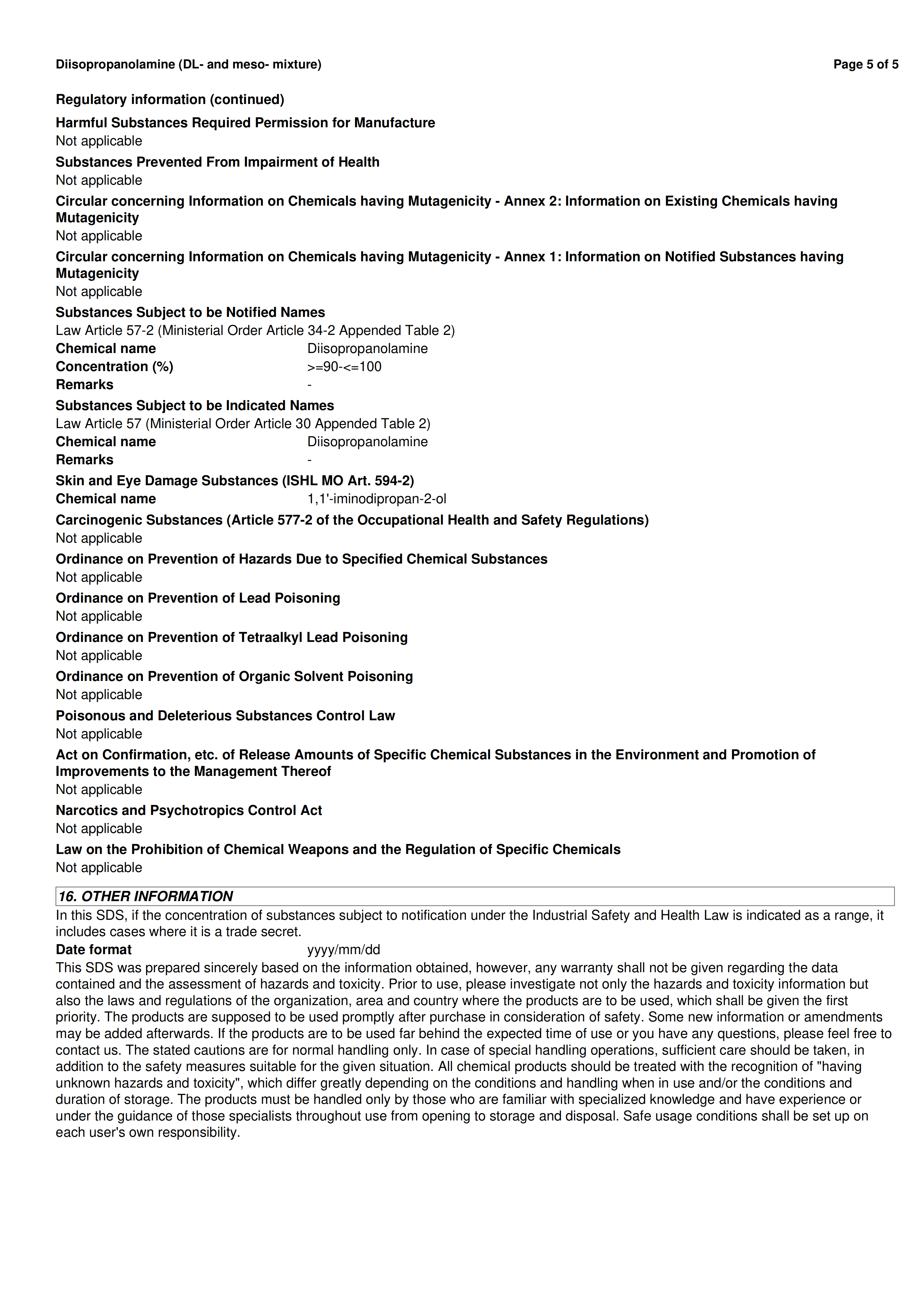

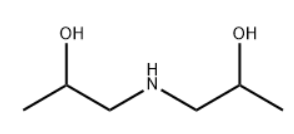
Diisopropanolamine (CAS#110-97-4)
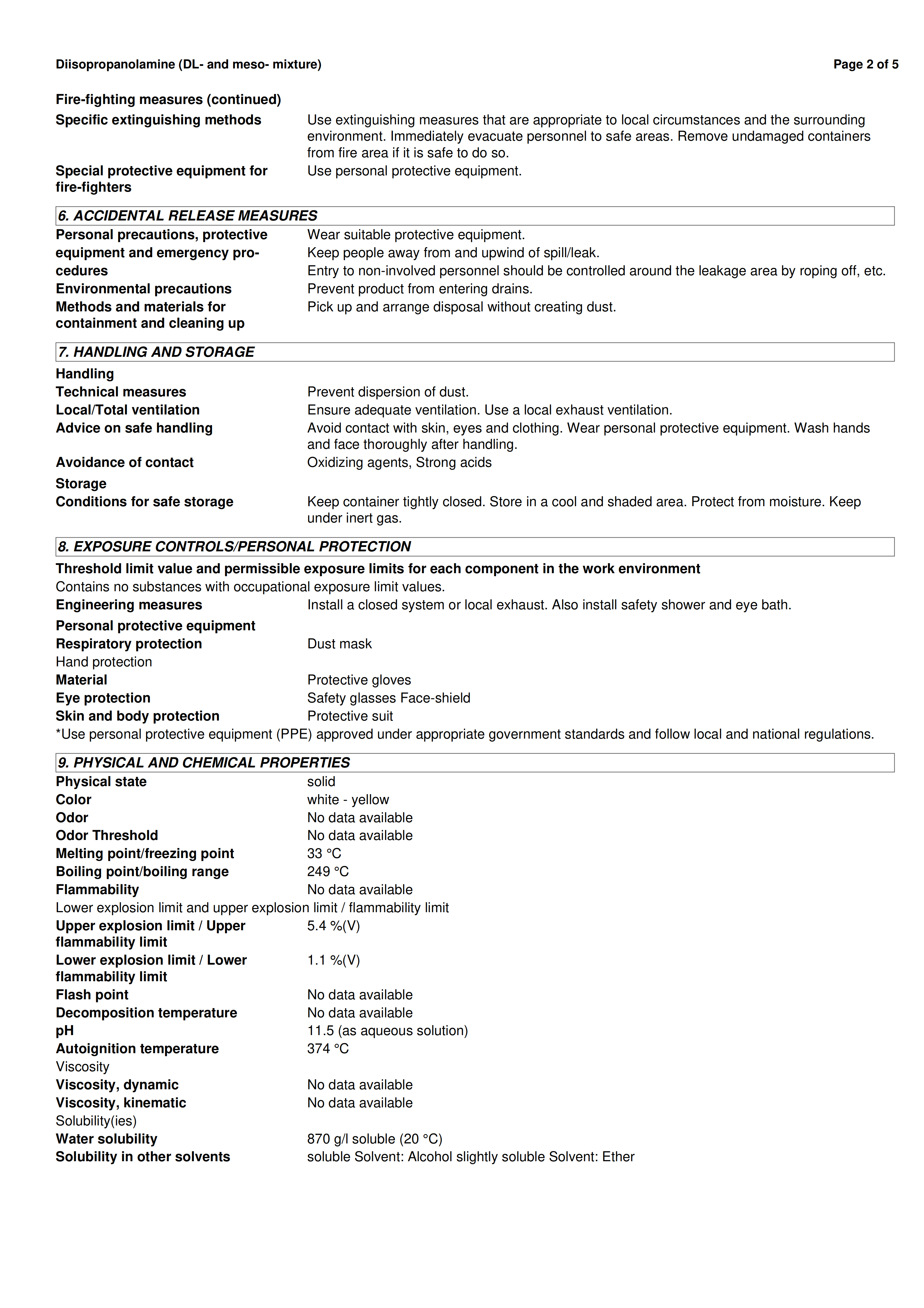
Diisopropanolamine (DIPA), chemically designated as bis(2-hydroxypropyl)amine or 1,1′-iminodipropan-2-ol, is a secondary alkanolamine featuring a secondary amine nitrogen flanked by two 2-hydroxypropyl groups. It is supplied as a white crystalline or fused solid at room temperature, with a mild ammoniacal odor and a melting point of approximately 38–45 °C. The compound is highly hygroscopic and air-sensitive, and is recommended to be stored under an inert atmosphere away from moisture and light. Its density is 1.004 g/mL at 25 °C, and it is very soluble in water (870 g/L at 20 °C) as well as in ethanol and acetone. The boiling point is 249–250 °C, and the flash point lies in the range of 126–135 °C, classifying DIPA as a combustible solid with a relatively wide margin of safety compared to lower alkanolamines.
The molecular structure combines a secondary amine site—which provides moderate basicity and reactivity toward acids and electrophiles—with two secondary hydroxyl groups capable of participating in esterification, urethane formation, and hydrogen bonding. This bifunctionality underpins DIPA's role as a pH adjuster, acid neutralizer, emulsifier, and chemical intermediate across diverse industrial sectors.
Applications
The single largest application of Diisopropanolamine is as a gas sweetening agent for the removal of acidic gases, particularly hydrogen sulfide (H₂S) and carbon dioxide (CO₂), from natural gas and refinery gas streams. Aqueous DIPA solutions chemically absorb these acid gases through the basic amine functionality, enabling their selective removal and subsequent recovery in regenerable absorption–desorption cycles. This application leverages DIPA's lower volatility and reduced corrosivity relative to monoethanolamine (MEA) and diethanolamine (DEA) in certain service conditions.
In metalworking fluids, DIPA serves as a corrosion inhibitor and alkalinity builder, neutralizing acidic components and maintaining the pH of cutting and grinding fluids within the alkaline range required to protect ferrous workpieces and machine tools from rust and corrosion. It also acts as an emulsifier that stabilizes oil-in-water metalworking formulations, extending fluid life and improving surface finish quality.
In personal care and pharmaceutical formulations, DIPA functions as an emulsifier, stabilizer, and pH-adjusting agent. It is used to neutralize fatty acids and sulfonic acid–based surfactants, forming amine soaps that contribute to cleansing and emulsification in cosmetic and dermatological products. Its buffering capacity is exploited in topical pharmaceutical dosage forms where a mildly alkaline, stable pH environment is desired.
Additional applications include use as an intermediate for surfactants, corrosion inhibitors, and textile processing aids (including softeners, dye leveling agents, and dispersants), as well as in coatings, paint strippers, paper, photographic intermediates, polyurethane additives, and plastics. DIPA is also employed in the synthesis of agrochemicals and pharmaceuticals as a versatile amine building block.
Preparation Method
The predominant industrial synthesis of Diisopropanolamine is the ammonolysis of propylene oxide (propylene oxide + ammonia) . In this continuous high-pressure, elevated-temperature process, ammonia undergoes nucleophilic ring-opening of the propylene oxide epoxide via an Sₙ2 mechanism, with attack occurring preferentially at the less sterically hindered terminal carbon of the epoxide. The reaction is non-selective and proceeds through consecutive stages: ammonia first reacts with one molecule of propylene oxide to form monoisopropanolamine (MIPA), which further reacts with a second propylene oxide molecule to yield DIPA, and DIPA can react with a third equivalent to produce triisopropanolamine (TIPA). The relative proportions of MIPA, DIPA, and TIPA in the crude product mixture are controlled primarily by the molar ratio of ammonia to propylene oxide fed to the reactor; lower ammonia-to-epoxide ratios favor the formation of higher substituted products including DIPA and TIPA. The desired DIPA is isolated from the crude mixture by fractional distillation.
Safety Information
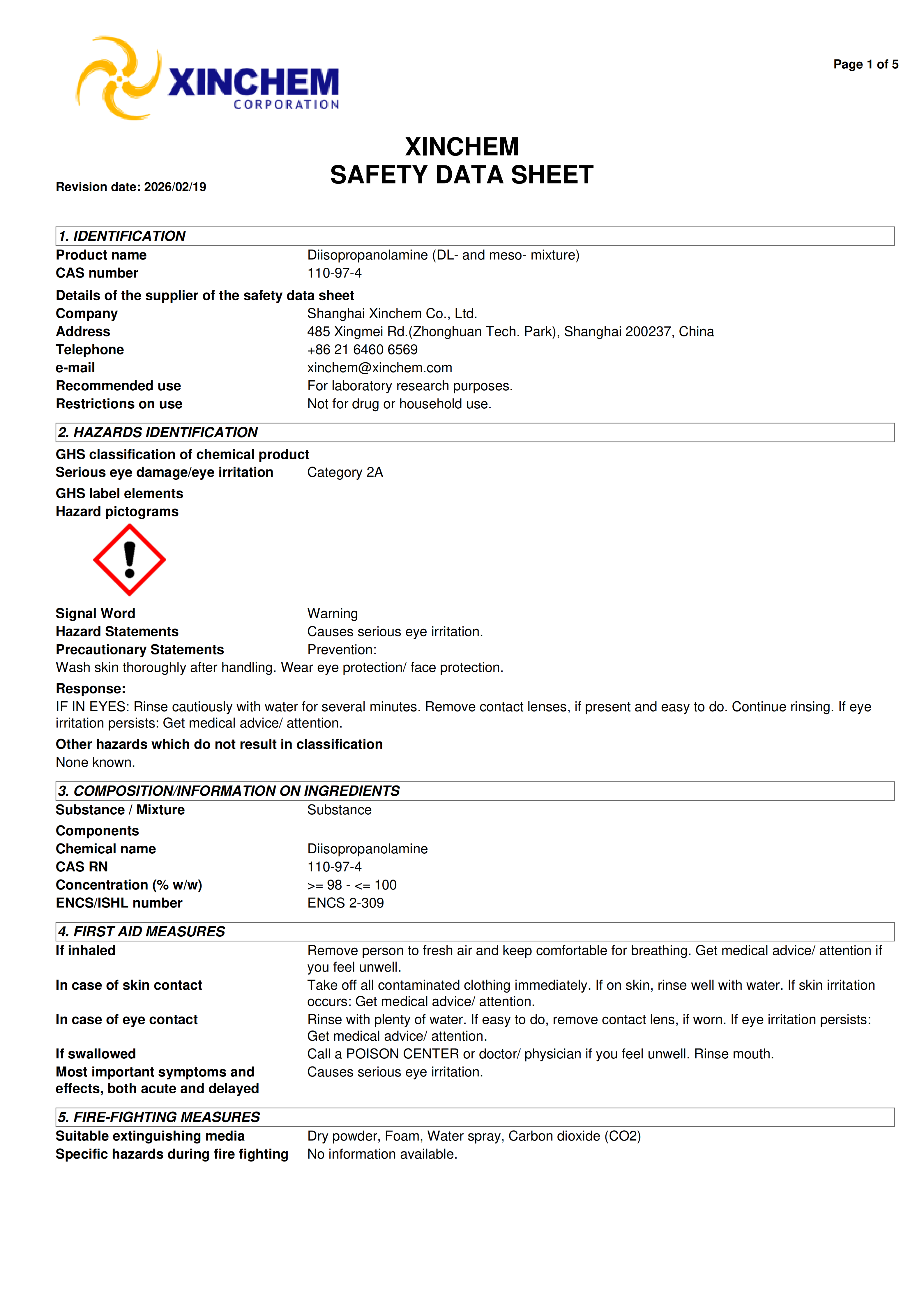
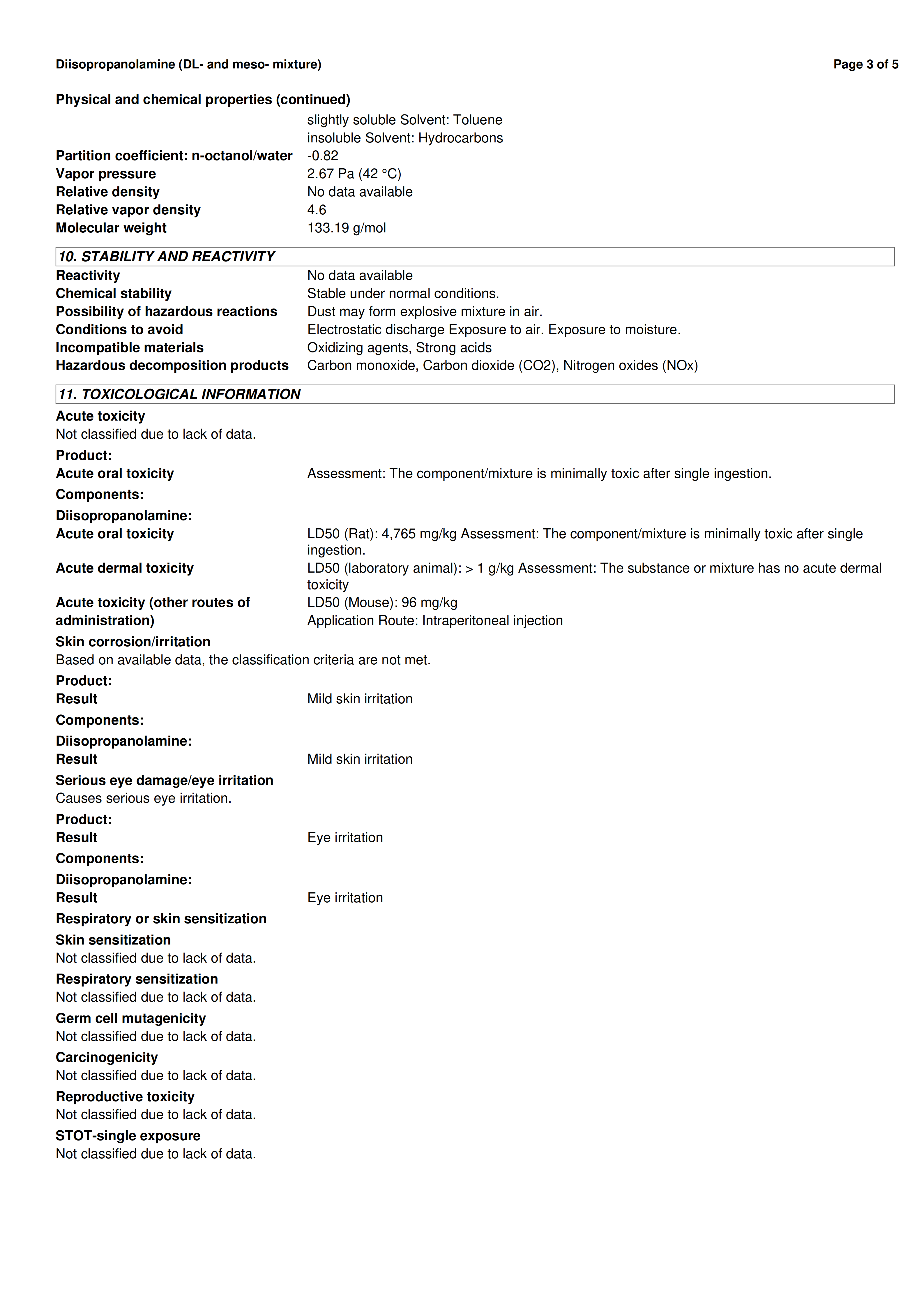
Diisopropanolamine is classified under GHS with the signal word Danger for its corrosive effects, alongside a Warning classification for eye irritation. The harmonized hazard statements include H314 (Causes severe skin burns and eye damage) and H319 (Causes serious eye irritation) . In some supplier safety data sheets, H303 (May be harmful if swallowed) is also listed, although acute oral toxicity data (rat LD₅₀ 4,765 mg/kg) place the substance in a low-toxicity category under JIS criteria. DIPA is hygroscopic and air-sensitive, and in powder or granular form, dust clouds mixed with air may present a dust explosion hazard. The autoignition temperature is 290 °C, and the substance is not classified as flammable under GHS physical hazard criteria because it is a solid at standard conditions.
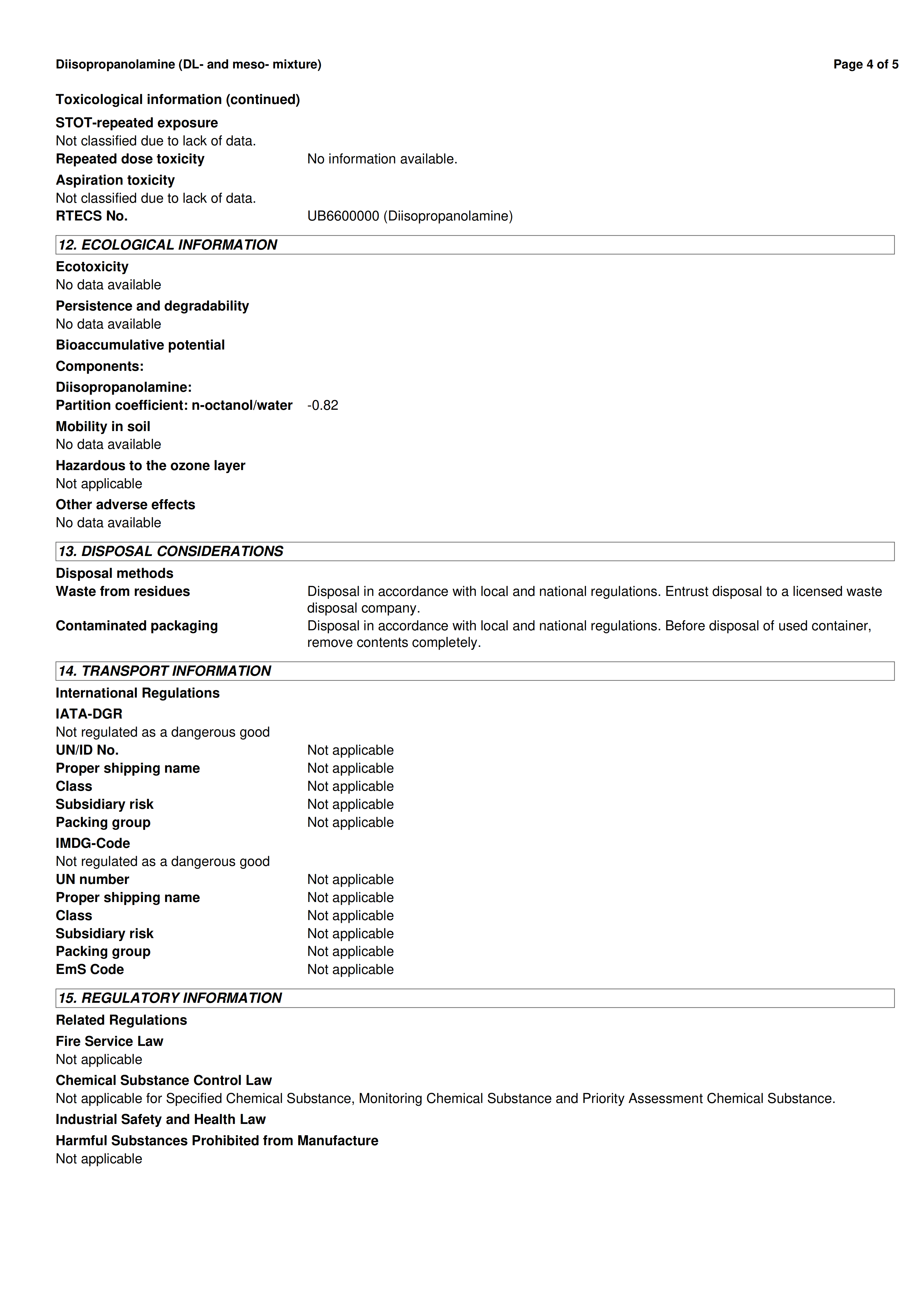
The primary health concern is corrosive damage to the skin and eyes upon direct contact, consistent with the alkaline nature of the secondary amine. Inhalation of dust or mists may irritate the respiratory tract. For safe handling, avoid generating or inhaling dust, and use local exhaust ventilation where dust may be produced. Personal protective equipment must include chemical splash goggles and a face shield, corrosion-resistant gloves, and protective clothing. In case of eye contact, rinse cautiously with water for several minutes, remove contact lenses if present and easy to do so, and seek immediate medical attention (P305+P351+P338). For skin contact, remove contaminated clothing immediately and wash with plenty of soap and water. If inhaled and breathing is affected, move to fresh air and seek medical attention. DIPA should be stored in a cool, dry, well-ventilated area in tightly closed containers, protected from air, moisture, light, and oxidizing agents. Release to the aquatic environment should be avoided.