

1,2,3-Benzotriazole (CAS#95-14-7)
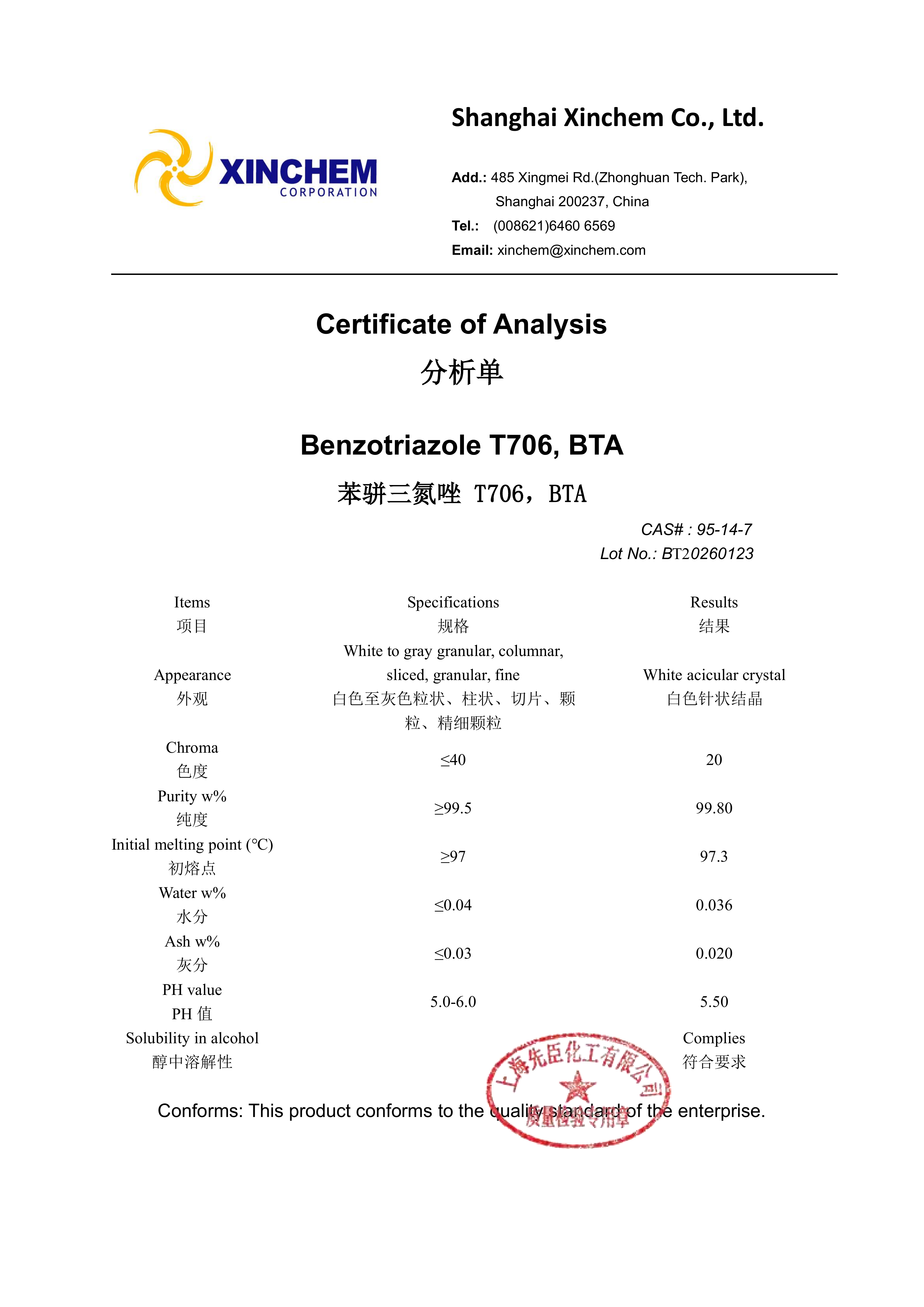
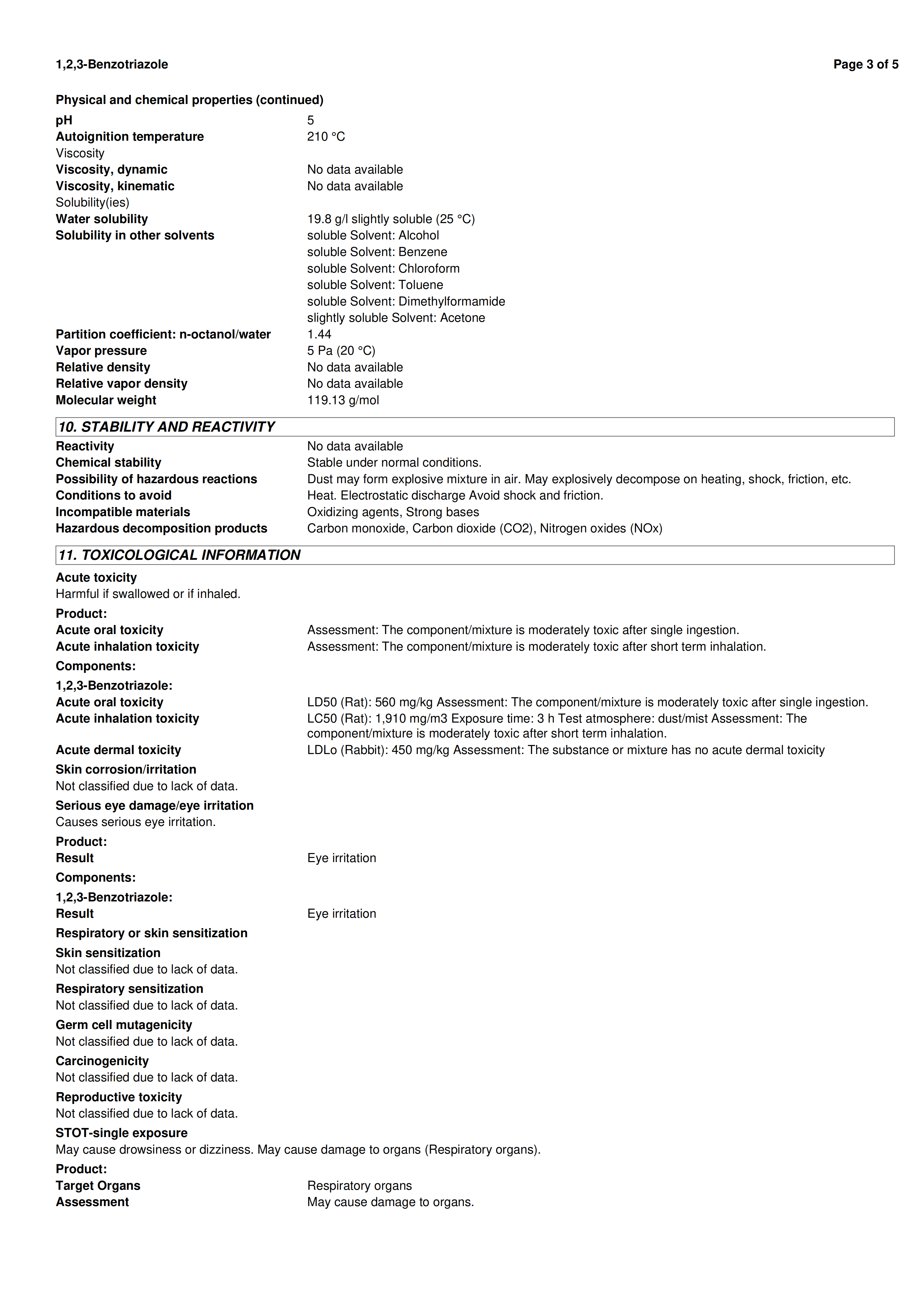
1,2,3-Benzotriazole (BTA) is a fused bicyclic heterocycle consisting of a benzene ring fused to a 1,2,3-triazole ring, with the molecular formula C₆H₅N₃ and a molecular weight of approximately 119.13 g/mol. It is supplied as a white to pale yellow crystalline solid, flake, or granule, and is also commercially available as a yellow-transparent aqueous solution with an active content of 30% or higher. The compound is odorless, melts in the range of 96–101 °C, and boils at 204 °C under 15 mmHg or approximately 350 °C at atmospheric pressure.
BTA is only slightly soluble in water (19.8–25 g/L at 25 °C) but dissolves readily in alcohols, benzene, toluene, chloroform, and dimethylformamide, making it compatible with a broad range of solvent-borne and aqueous formulations. The molecule contains three adjacent nitrogen atoms in the triazole ring, a structural feature that enables strong coordination to transition-metal surfaces and metal ions. This chelating ability is the chemical basis for its best-known function as a corrosion inhibitor. BTA is chemically stable under ordinary conditions, but it should be noted that the substance contains adjacent nitrogen groups associated with explosive properties, and it has been reported to potentially detonate at 220 °C or during vacuum distillation; process design must account for this thermal hazard.
Applications
The single most important application of 1,2,3-Benzotriazole is as a corrosion inhibitor for copper and copper alloys. BTA adsorbs onto copper surfaces and forms a dense, polymeric protective film that suppresses both anodic and cathodic corrosion reactions. It is routinely used in closed-loop water cooling systems, automotive antifreeze formulations, and aircraft deicing fluids to protect copper and brass components from attack. In metalworking fluids, BTA functions as a multi-metal corrosion inhibitor and passivator, typically incorporated at concentrations around 0.05 wt% to prevent staining and corrosion of non-ferrous metals during machining and storage. It is also a preferred non-ferrous metal deactivator in industrial lubricants, greases, hydraulic fluids, and gear oils, where it chelates dissolved copper ions and prevents catalytic degradation of the lubricant base stock.
Beyond corrosion inhibition, BTA serves as a versatile synthesis intermediate and auxiliary. It is an intermediate for the manufacture of dyes, fungicides, plant growth regulators, and pharmaceuticals, and it functions as a polymerization catalyst in certain resin systems. In photographic chemistry, BTA is used as a restrainer in emulsions and as an antifogging agent, and in analytical chemistry it serves as a reagent for the determination of silver. The benzotriazole scaffold is also embedded in UV absorber chemistry, where derivatives such as Drometrizole are accessed through BTA-related intermediates and used to protect polymers and personal care formulations from photodegradation. In dishwasher detergents, BTA acts as a silver polishing and anti-tarnishing agent, preserving the appearance of silverware across repeated wash cycles.
Preparation Method
The industrial and laboratory preparation of 1,2,3-Benzotriazole is based on the diazotization of o-phenylenediamine followed by intramolecular cyclization. In the classical Organic Syntheses procedure, o-phenylenediamine (1 mol) is dissolved in a mixture of glacial acetic acid (2 mol) and water with gentle warming. The solution is cooled to 5 °C, and a cold aqueous solution of sodium nitrite (1.09 mol) is added all at once with stirring. The reaction mixture turns dark green and the temperature rises rapidly to 70–80 °C; the color then changes to clear orange-red. After standing and cooling, BTA separates as an oil that solidifies upon chilling. The crude product is collected by filtration, washed with ice water, dried, and purified by vacuum distillation (b.p. 201–204 °C at 15 mmHg) followed by recrystallization from benzene, affording colorless BTA in 75–81% yield with a melting point of 96–97 °C.
Improved processes described in the patent literature aim to overcome the limitations of low solids concentration and high-temperature operation in the classical route. One such process conducts the entire reaction at low temperature (5–25 °C) with high solids loading and liberates the product by neutralization to pH 6–6.5 with sodium hydroxide, yielding a precipitate that is filtered and washed with cold water. On an industrial scale, BTA can also be recovered as a byproduct from the condensation wastewater of certain pesticide manufacturing processes, and the crude material is upgraded to commercial purity by distillation and recrystallization.
Safety Information
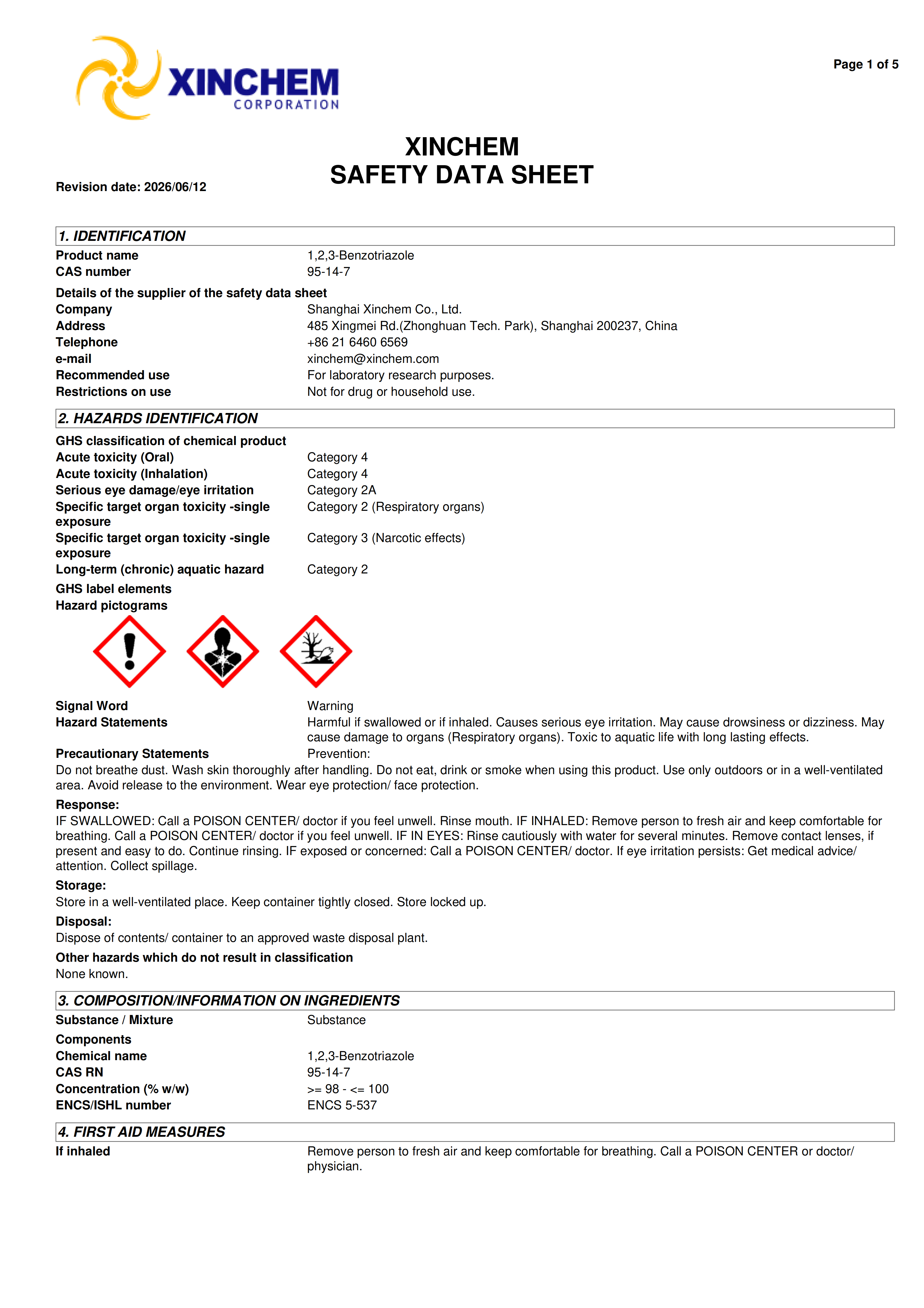
1,2,3-Benzotriazole is classified under GHS with the signal word Warning. The harmonized hazard statements include H302 (Harmful if swallowed) , H319 (Causes serious eye irritation) , and H332 (Harmful if inhaled) . Some regulatory assessments additionally identify H336 (May cause drowsiness or dizziness) and H371 (May cause damage to the respiratory system) for single-exposure narcotic effects and respiratory tract damage, and environmental classifications may include H411 (Toxic to aquatic life with long lasting effects) . Acute oral LD₅₀ values in rats range from 560 to 965 mg/kg, placing the substance in the Category 4 range, while dermal toxicity is low (LD₅₀ > 10,000 mg/kg). The solid is combustible, and dust clouds mixed with air may present a dust explosion hazard; the substance may also form explosive metal salts, particularly with copper and silver, and contact with such metals under certain conditions should be avoided.
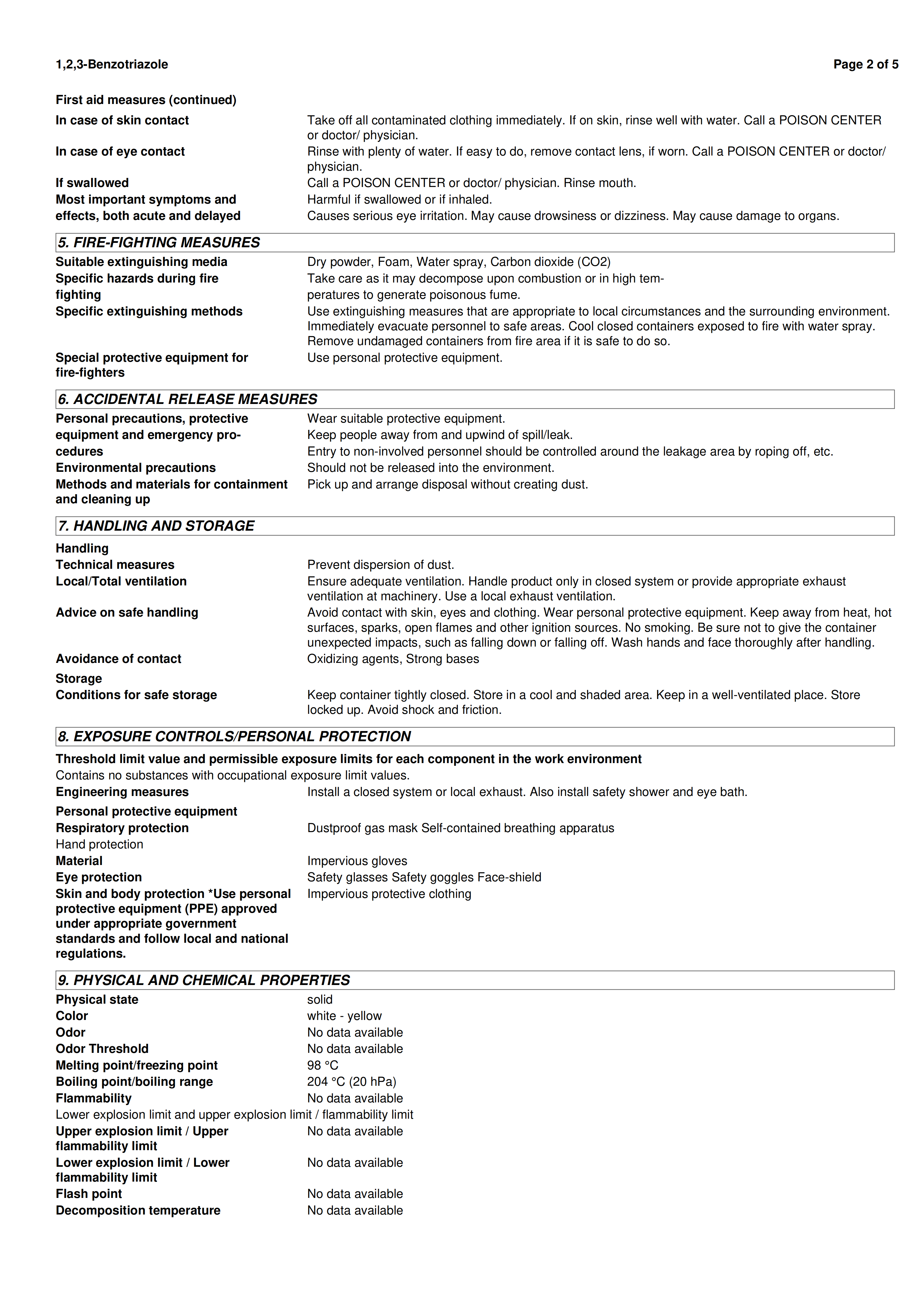
For safe handling, avoid generating or inhaling dust and prevent contact with eyes and skin. Use local exhaust ventilation where dust or mist may be produced, and wear protective gloves, protective clothing, and eye/face protection. In case of eye contact, rinse cautiously with water for several minutes, remove contact lenses if present and easy to do so, and continue rinsing; if eye irritation persists, seek medical advice. If swallowed, rinse the mouth and contact a poison center or physician if feeling unwell. Store in a cool, dry, well-ventilated area with containers kept tightly closed, away from ignition sources, strong oxidizers, and finely divided metals. Release to the aquatic environment should be avoided in accordance with the H411 precautionary statements where applicable.