

Dichlorodiethylsilane (CAS#1719-53-5)
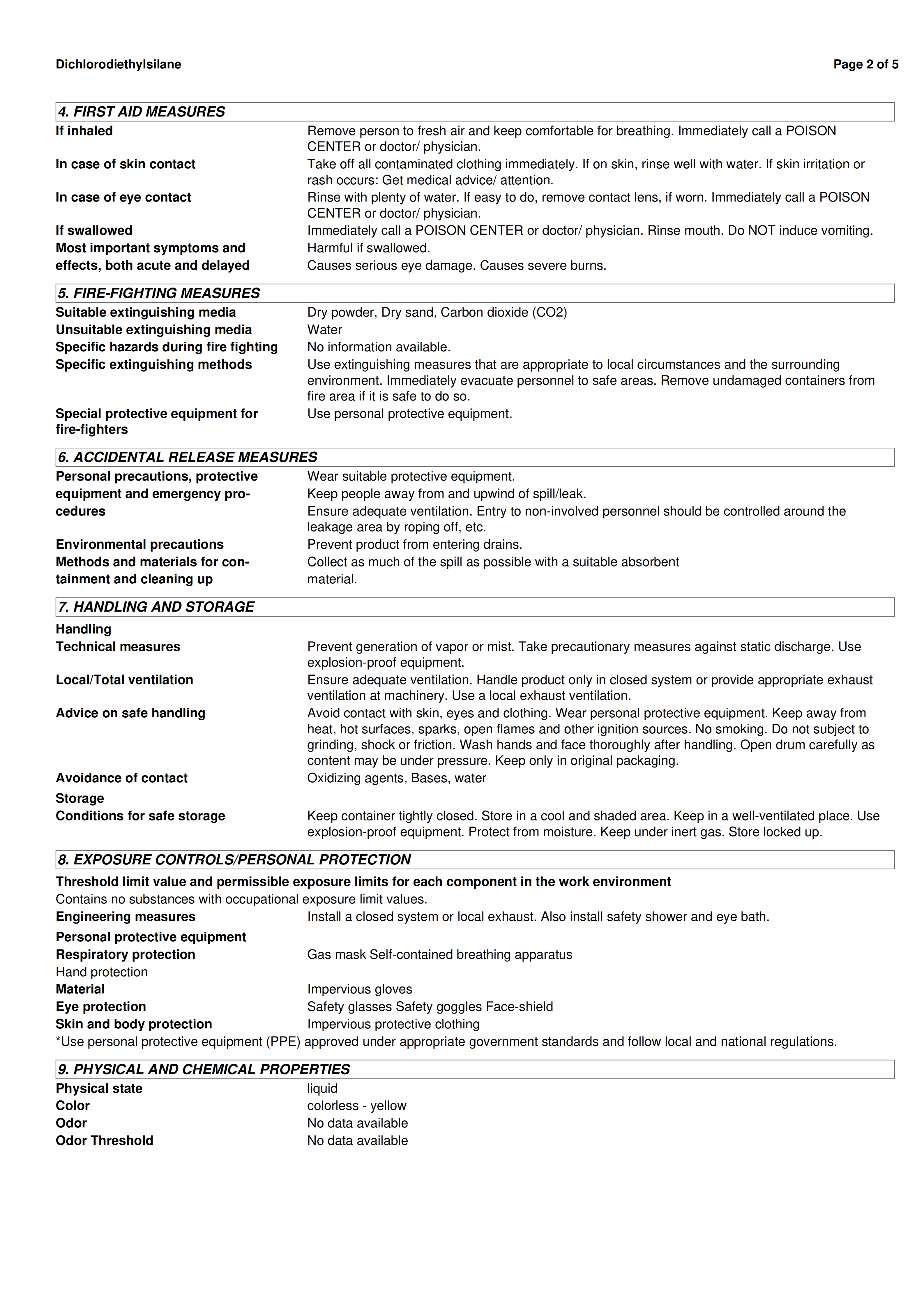
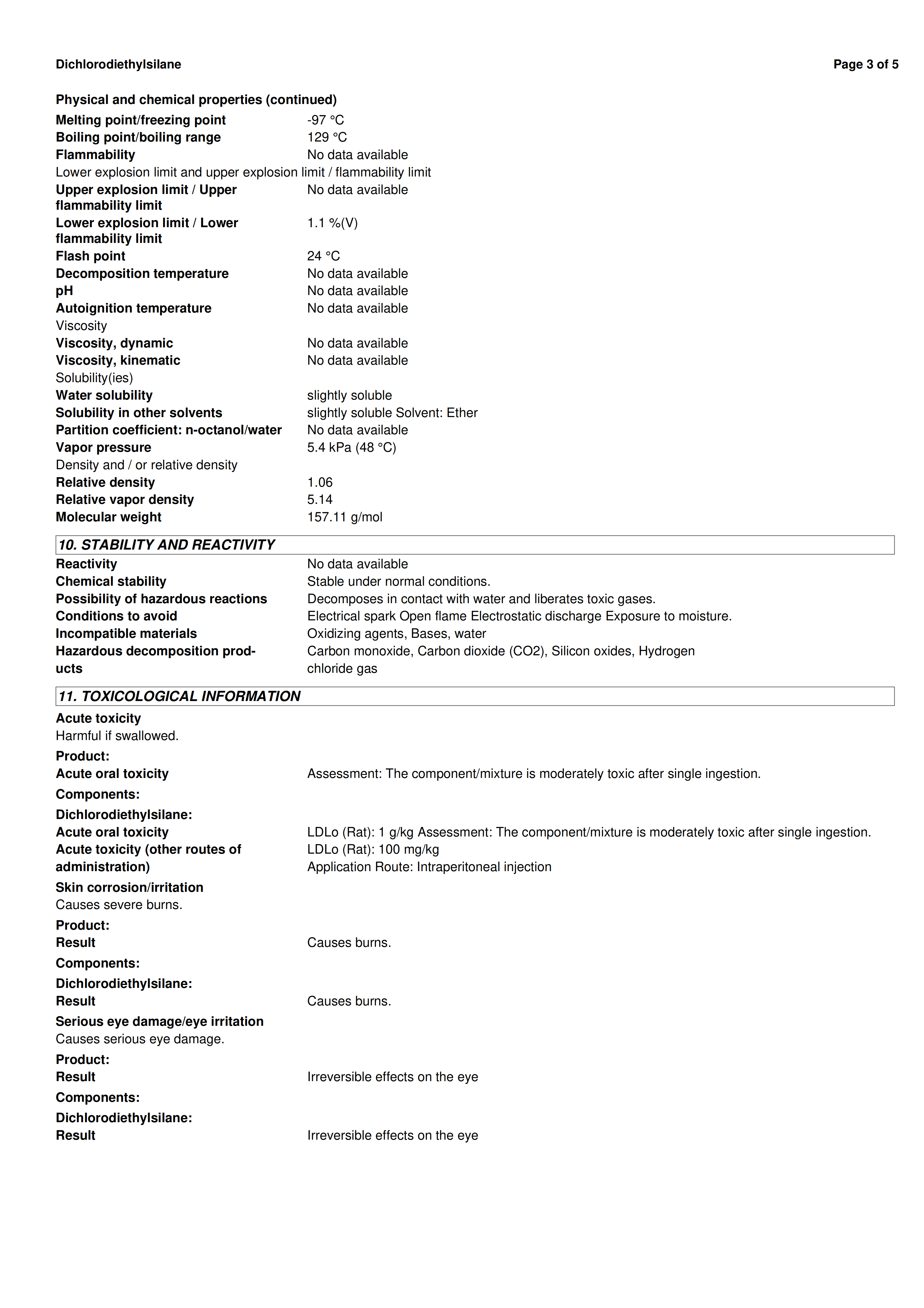
Dichlorodiethylsilane, also known as diethyldichlorosilane or DCDES, is a bifunctional organosilicon compound featuring a central silicon atom bonded to two ethyl groups and two chlorine atoms. It is supplied as a clear, colorless to light brown liquid with a pungent odor. The compound has a molecular weight of 157.11 g/mol, a boiling point of 125–131 °C, and a density of 1.05 g/mL at 25 °C. Its flash point of 26.1 °C classifies it as a flammable liquid.
The two reactive Si–Cl bonds are the defining functional feature of the molecule. Both chlorine atoms are highly susceptible to nucleophilic substitution, enabling the introduction of the diethylsilyl (−Si(C₂H₅)₂−) unit into a wide range of substrates. The compound is highly moisture-sensitive and undergoes rapid, exothermic hydrolysis upon contact with water to produce diethylsilanediol and hydrogen chloride gas. It is therefore handled and stored under an inert atmosphere in tightly sealed containers at 2–8 °C. The ethyl substituents confer different steric and electronic properties compared with the more common methyl or phenyl analogues, influencing the flexibility and hydrophobicity of the resulting siloxane materials.
Applications
Dichlorodiethylsilane is a key bifunctional building block for silicone polymer synthesis. Its primary application is as a precursor to polydiethylsiloxanes (PDES) , which are produced through controlled hydrolysis and subsequent polycondensation of the Si–Cl bonds. These elastomeric and resinous siloxanes are utilized in sealants, adhesives, medical devices, and specialty coatings where the ethyl substituents provide distinct mechanical and surface properties relative to methyl-based silicones.
As a silylating agent and surface modifier, the compound reacts with hydroxyl-bearing surfaces such as glass, silica, metals, and mineral fillers. The bifunctional nature allows the molecule to anchor through one or both Si–Cl sites, depositing a hydrophobic diethylsilyl layer that enhances water repellency and adhesion in coatings, adhesives, and composite materials. This surface treatment is also relevant to electronics manufacturing, where the compound is used for creating protective and insulating layers on semiconductor components.
In organic synthesis, Dichlorodiethylsilane serves as a reagent for forming siloxane linkages and as a silylating agent for alcohols and other nucleophiles, enabling the preparation of diethylalkoxysilanes and related specialty chemicals. It has also been employed in analytical derivatization, including the assay of ethchlorvynol. Additional uses include the synthesis of silicone oils, silicone resins, release agents, leather treatment agents, and textile finishing agents.
Preparation Method
The industrial production of Dichlorodiethylsilane is based on the direct reaction of silicon with ethyl chloride (the Müller-Rochow process). Powdered silicon is reacted with ethyl chloride at elevated temperatures of approximately 300–370 °C in the presence of copper powder as a catalyst. The reaction proceeds according to the idealized equation: Si + 2 C₂H₅Cl → (C₂H₅)₂SiCl₂ + H₂. In practice, the direct process yields a complex mixture of ethylchlorosilanes, including ethyltrichlorosilane, diethyldichlorosilane, triethylchlorosilane, and ethyl dichlorosilane, which are separated by fractional distillation exploiting their differences in boiling point.
On an industrial scale, the reaction is conducted in a fluidized bed reactor to ensure efficient mixing and heat transfer, with the process optimized to maximize the yield of the desired diethyl derivative. An alternative preparation route described in patent literature involves the reaction of ethylene with trichlorosilane (silicochloroform) at a temperature of at least 270 °C in the presence of anhydrous aluminum chloride or aluminum bromide as a catalyst.
Safety Information
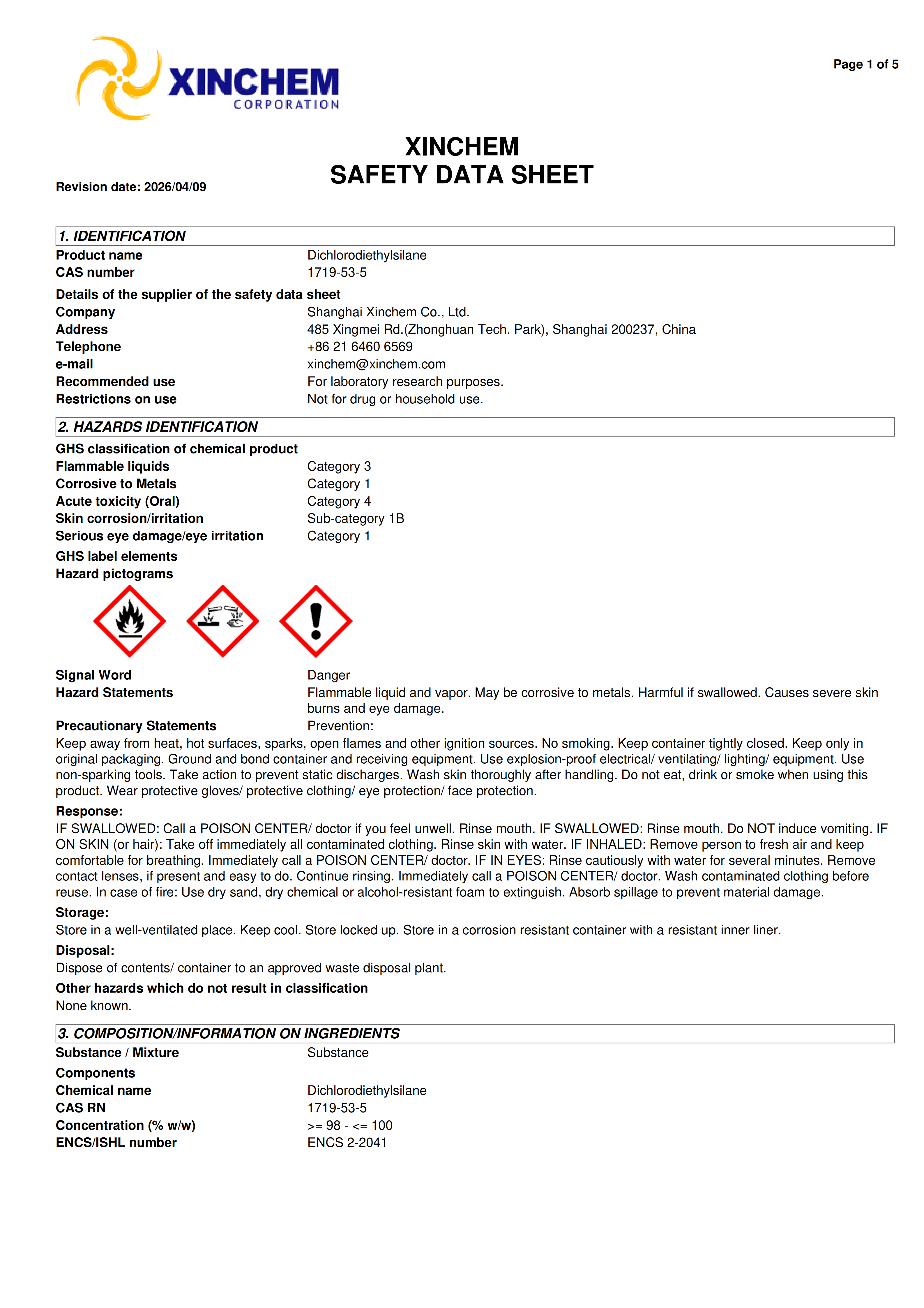
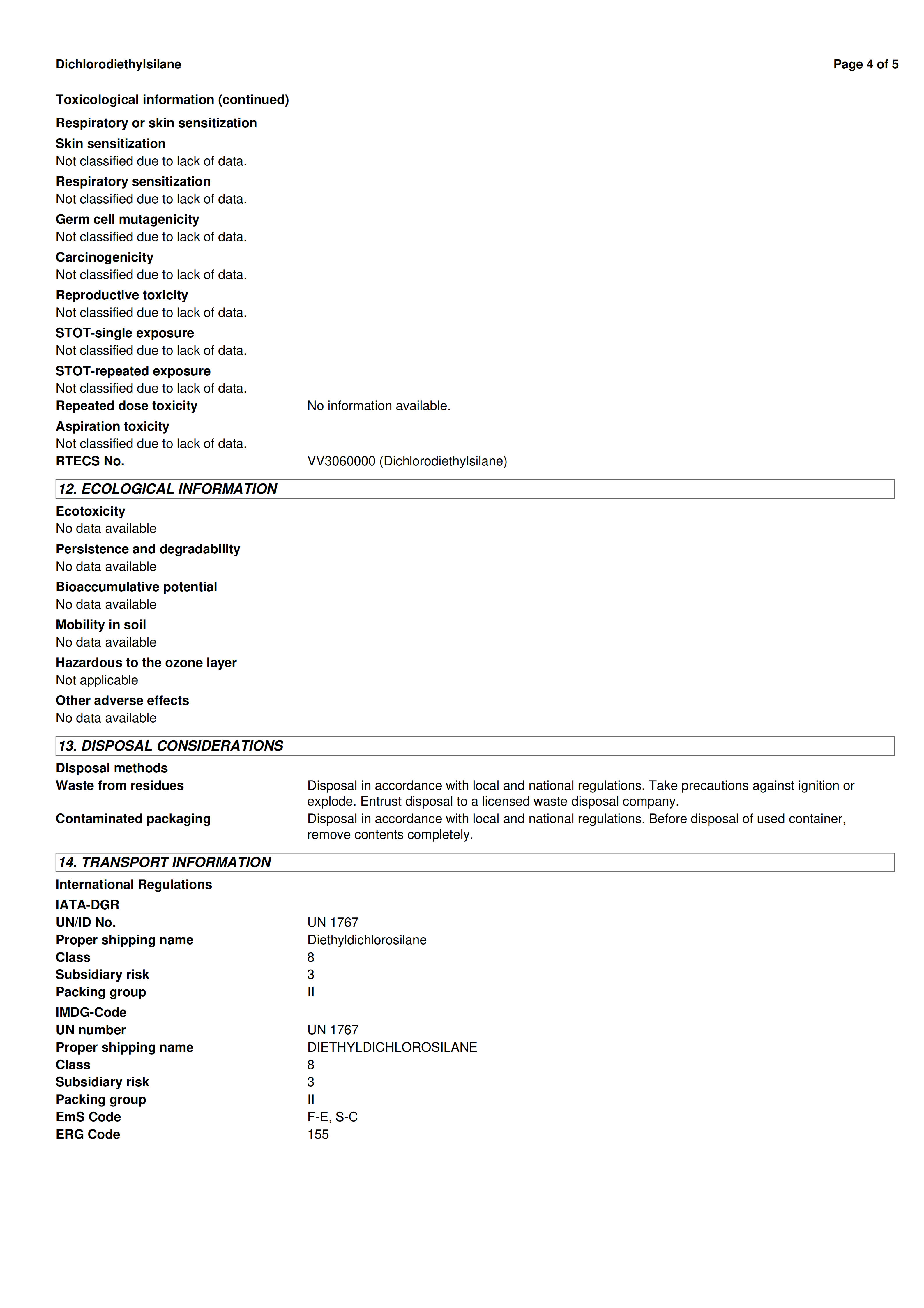
Dichlorodiethylsilane is classified as a flammable, corrosive, and water-reactive liquid under GHS. The harmonized hazard classifications include Flam. Liq. 3, Skin Corr. 1B, Eye Dam. 1, Acute Tox. 4 (oral) , and STOT SE 3 (respiratory system), with the signal word Danger. It is corrosive to metals and tissue and evolves hydrogen chloride gas upon contact with water or moisture, presenting both a chemical burn hazard and an inhalation hazard from the released HCl. The flash point of 26.1 °C and the broad explosive range (0.9%–78.0% in air) underscore the fire and explosion risk associated with its vapors, which are heavier than air and can travel to ignition sources.
For safe handling, all operations should be conducted in a well-ventilated fume hood or under an inert atmosphere, with strict exclusion of water and moisture. Personal protective equipment must include chemical splash goggles and a face shield, corrosion-resistant gloves, protective clothing, and respiratory protection with type ABEK filters where vapors or HCl may be present. In case of skin contact, immediately remove contaminated clothing and flush the skin with copious water; for eye contact, rinse cautiously with water for at least 15 minutes and seek immediate medical attention. Do not induce vomiting if swallowed; seek urgent medical care. In case of fire, use dry chemical, dry sand, or alcohol-resistant foam; water must not be used directly because of the vigorous hydrolysis reaction and the generation of flammable hydrogen and corrosive HCl. Storage should be in a cool (2–8 °C), dry, well-ventilated area under an inert gas, with containers kept tightly closed and protected from moisture, heat, and ignition sources. The compound is slightly harmful to aquatic life and release to the environment must be avoided.