

Chloro dimethylphenylsilane (CAS#768-33-2)
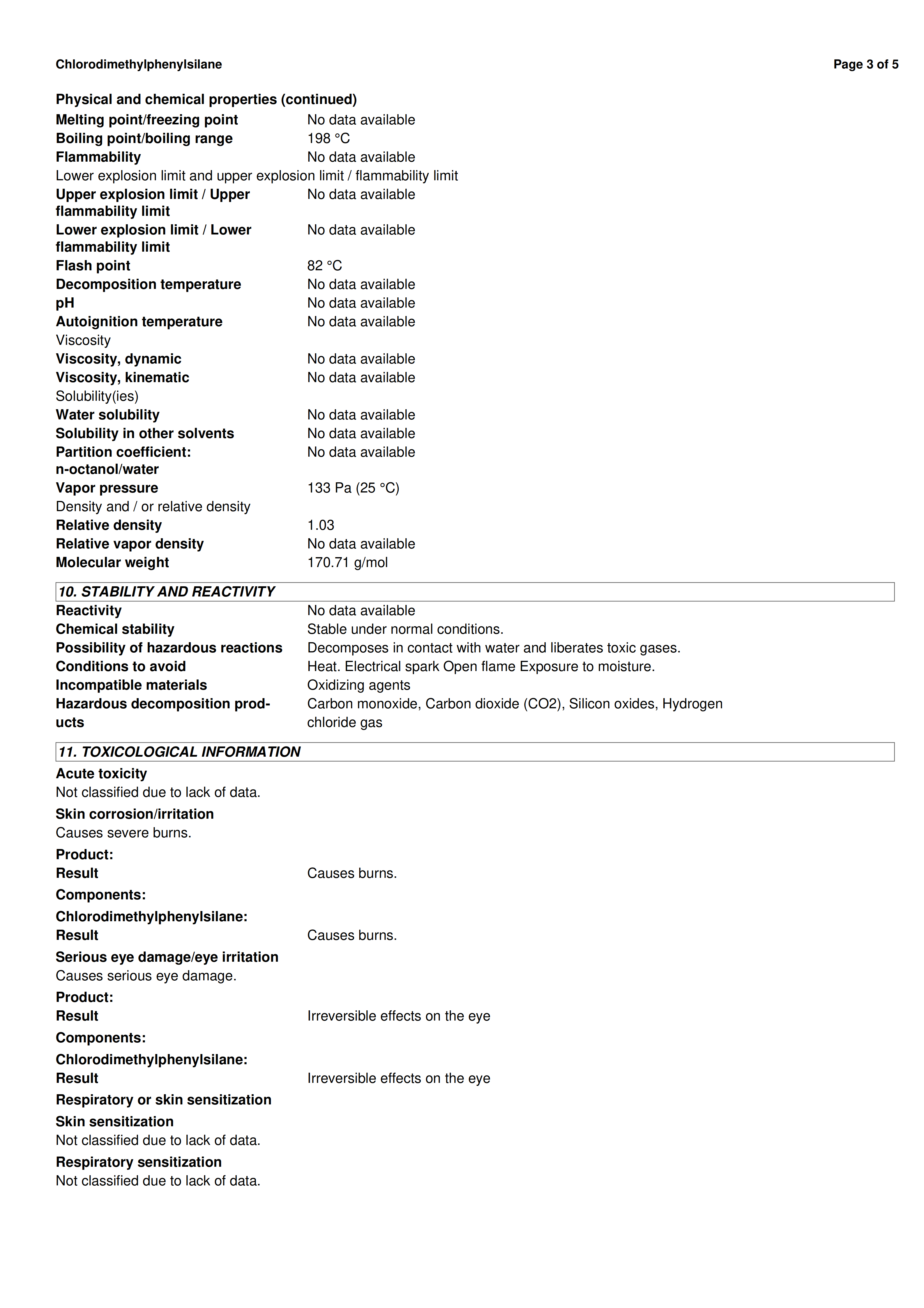
Chloro dimethylphenylsilane, also known as phenyldimethylchlorosilane or DMPSCl, is a monofunctional chlorosilane bearing one phenyl group and two methyl groups on the silicon atom. It is supplied as a clear, colorless to pale yellow liquid with a pungent, characteristic odor. The compound has a molecular weight of 170.71 g/mol and boils at 194–198 °C at atmospheric pressure, with a reduced-pressure boiling point of 63 °C at 2 mmHg that is more commonly used for purification by distillation. Its density is approximately 1.02–1.03 g/mL and its refractive index is 1.5065–1.5105.
The defining reactivity of Chloro dimethylphenylsilane arises from the highly electrophilic silicon center and the good leaving-group ability of chloride. The Si–Cl bond is readily cleaved by nucleophiles, enabling the transfer of the dimethylphenylsilyl (PhMe₂Si–) group to oxygen, nitrogen, and carbon nucleophiles. The compound is highly moisture-sensitive and hydrolyzes rapidly in the presence of water or protic solvents to form the corresponding silanol and, subsequently, siloxane oligomers, with liberation of hydrogen chloride. It is therefore handled and stored under an inert atmosphere of dry nitrogen or argon in tightly sealed containers, protected from moisture and heat.
The phenyl substituent confers thermal stability and lipophilicity that distinguish Chloro dimethylphenylsilane from simpler methylchlorosilanes. The PhMe₂Si group is significantly more robust than the trimethylsilyl (TMS) group under acidic and oxidative conditions, while remaining cleavable under fluoride-mediated or specific oxidative protocols. This balance of stability and latent cleavability makes the reagent a valuable protecting and activating group in multi-step organic synthesis.
Applications
Chloro dimethylphenylsilane is a versatile silylating agent and organosilicon building block with broad utility in organic synthesis, materials science, and surface engineering.
In organic synthesis, its primary application is the transfer of the dimethylphenylsilyl group to alcohols, enolates, and other nucleophiles. It serves as an alcohol derivatization reagent for analytical purposes and as a protecting reagent for hydroxyl and amino functionalities, where the PhMe₂Si group offers greater resistance to acidic hydrolysis than TMS ethers. The reagent is employed in enolate trapping to generate silyl enol ethers, which are key intermediates in directed aldol and Mukaiyama-type bond constructions. A particularly well-documented transformation is the Kumada–Fleming–Tamao oxidation, in which a PhMe₂Si group installed by nucleophilic silylation is subsequently converted to a hydroxyl group with retention of configuration, providing a powerful strategy for stereocontrolled C–O bond formation. Chloro dimethylphenylsilane also enables the synthesis of enantioenriched allenylsilanes through ortho-ester Claisen rearrangement of chiral silylpropargylic alcohols, a transformation that illustrates the reagent's capacity to participate in stereochemically complex rearrangements.
In materials science and surface modification, Chloro dimethylphenylsilane functions as a silane coupling agent that enhances adhesion between organic and inorganic phases in composite materials. It is used to modify the surfaces of glass, metals, ceramics, and mineral fillers, increasing hydrophobicity and improving compatibility with polymer matrices—benefits that are relevant to electronics, packaging, and coating applications. The phenyl group contributes thermal stability and aromatic character to the modified surface, while the silane anchor forms covalent bonds with surface hydroxyl groups.
Additional reported uses include application as a blocking agent, release agent, primer, and reducing agent in specialty chemical formulations. The compound also serves as a chemical intermediate for the preparation of phenyl-substituted siloxanes, silsesquioxanes, and other organosilicon derivatives where a single reactive Si–Cl site is required for controlled functionalization.
Preparation Method
Two principal routes are used for the preparation of Chloro dimethylphenylsilane.
The most direct laboratory method is the Grignard reaction of phenylmagnesium bromide with dichlorodimethylsilane. Phenylmagnesium bromide, prepared from bromobenzene and magnesium turnings in diethyl ether, is added dropwise to an excess of dichlorodimethylsilane at 0 °C. The large excess of the dichlorosilane is maintained to suppress disubstitution and favor the mono-phenyl product. After the addition is complete, the reaction mixture is allowed to warm to room temperature and stirred, typically for 24 hours. Pentane is then added to precipitate magnesium salts, the solids are filtered off, and volatile materials are removed by rotary evaporation. The residue is purified by vacuum distillation (e.g., 85 °C / 6 mmHg) to afford Chloro dimethylphenylsilane.
An alternative industrial route involves the direct chlorination of dimethylphenylsilane with chlorine gas under controlled conditions, typically in the presence of a Lewis acid catalyst such as aluminum chloride to facilitate the chlorination process. This approach benefits from the commercial availability of dimethylphenylsilane and avoids the stoichiometric magnesium waste associated with the Grignard route, although careful control of stoichiometry and temperature is required to avoid over-chlorination or ring chlorination. The compound can also be prepared through related substitution reactions using chlorobenzene and dimethyldichlorosilane as starting materials.
Safety Information
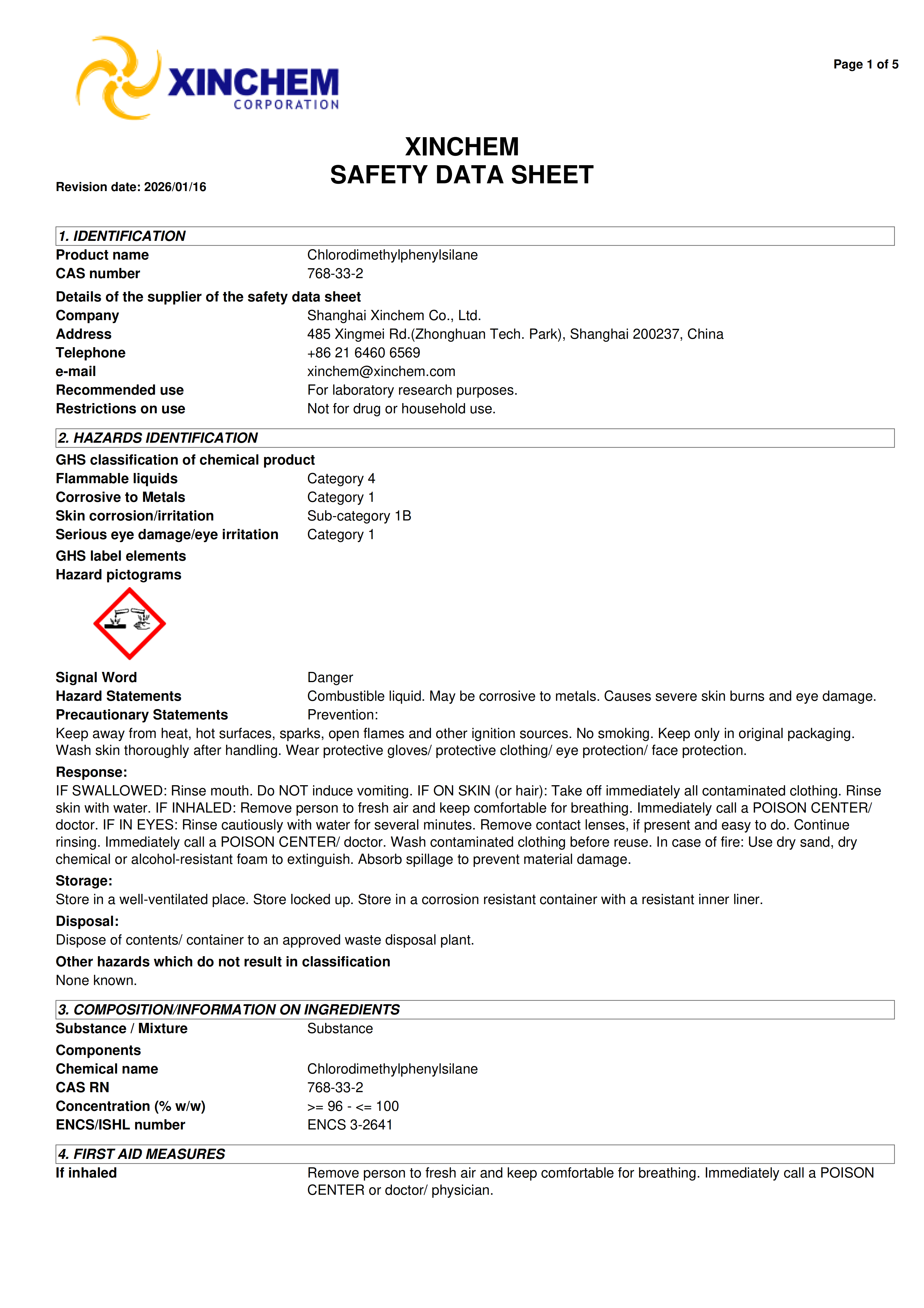
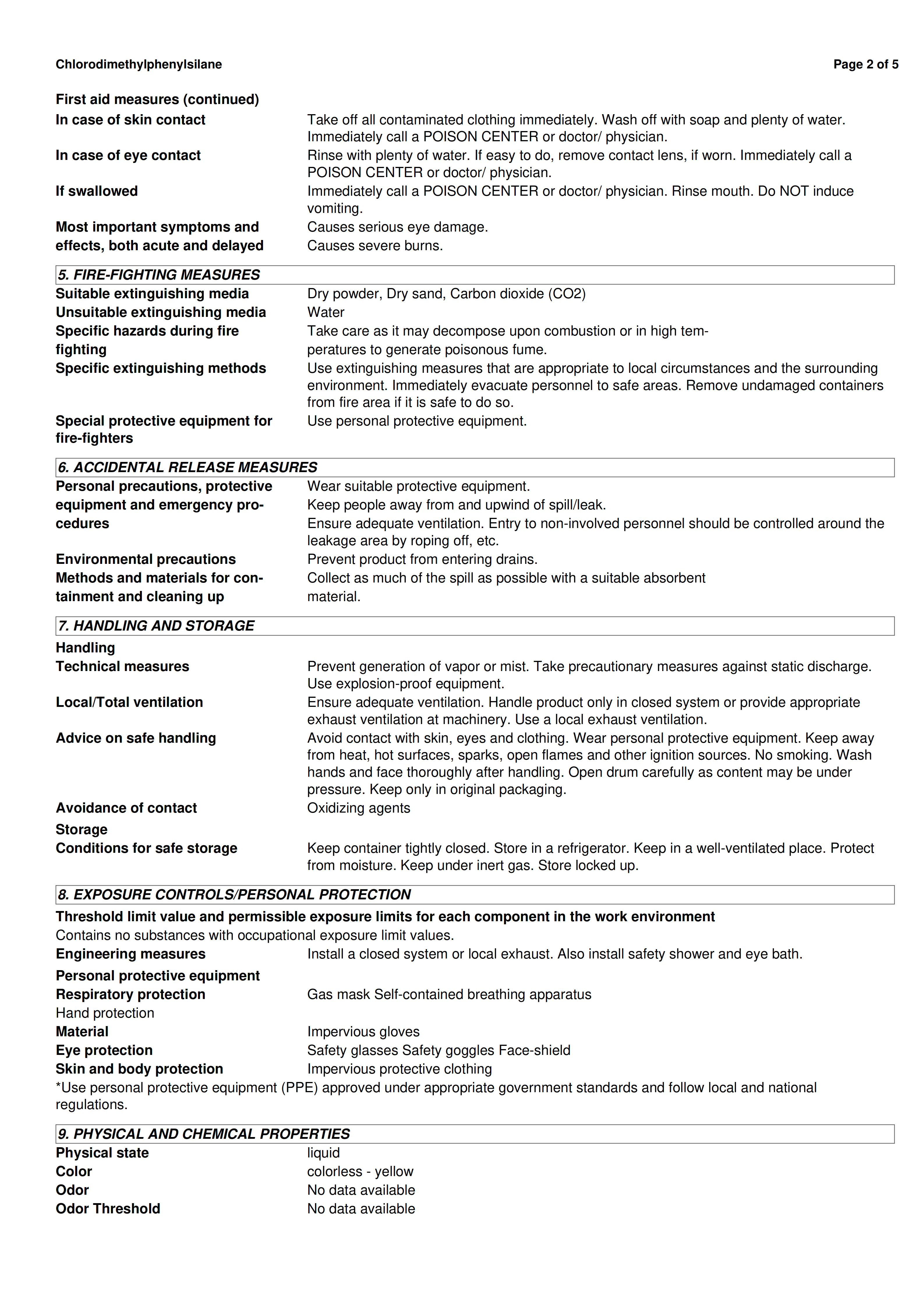
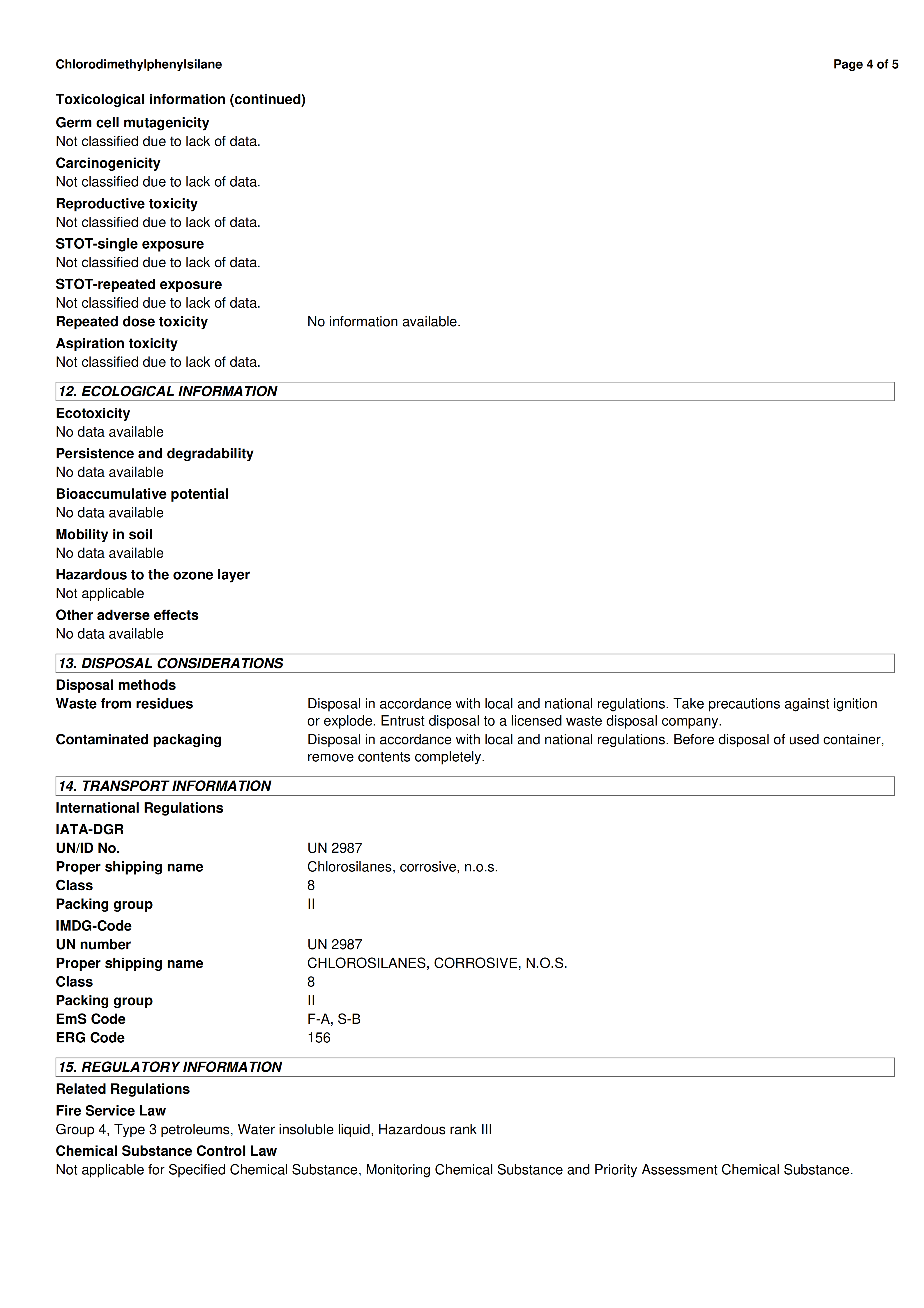
Chloro dimethylphenylsilane is classified as a corrosive and combustible liquid under GHS, with the signal word Danger. The harmonized hazard statements include H314 (Causes severe skin burns and eye damage) , H227 (Combustible liquid) , and H290 (May be corrosive to metals) . It is assigned to Skin Corrosion Category 1B / 1 and Serious Eye Damage Category 1, reflecting its destructive action on mucous membranes, upper respiratory tract, eyes, and skin—a property shared with other reactive chlorosilanes. The flash point is reported in the range of 62–82 °C (closed cup), and the compound is moisture-sensitive, reacting rapidly with water and protic solvents to release hydrogen chloride and heat.
Because the material is corrosive and moisture-reactive, handling must be conducted under strictly controlled conditions. Use in a well-ventilated fume hood or under an inert atmosphere, with local exhaust ventilation where vapors may be generated. Personal protective equipment must include chemical splash goggles and a face shield, corrosion-resistant gloves, protective clothing, and respiratory protection with type ABEK filters where exposure to vapors or acid gases is possible. In case of skin contact, immediately remove all contaminated clothing and rinse the skin with copious water; for eye contact, rinse cautiously with water for at least 15 minutes, remove contact lenses if present, and seek immediate medical attention (P305+P351+P338+P310). Do not induce vomiting if swallowed; rinse the mouth and seek urgent medical care.
Storage should be in a cool, dry, well-ventilated area, with containers kept tightly closed and protected from moisture and heat; storage under an inert gas at temperatures below 15 °C is recommended to maintain product quality. The compound may be corrosive to metals, so storage in compatible containers (e.g., original container, P234) is essential. Keep away from ignition sources (P210) and store separately from water, strong oxidizers, strong bases, and alcohols. Spills should be covered with dry inert absorbent, avoided from entering drains, and cleaned up in accordance with local regulations. Firefighting should use dry sand, dry chemical, or alcohol-resistant foam; water must not be used because it may react violently with the product.